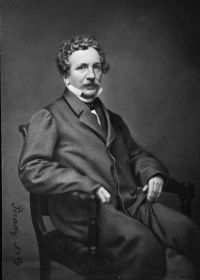
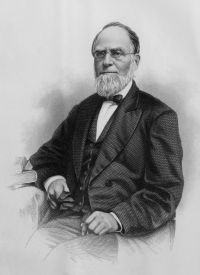
“ It was, indeed, the famous abbé, afterwards Cardinal de Retz, with whom I was then in conversation. Not yet three and twenty years of age, he had already acquired one of the most singular reputations that ever man possessed. Daring, intriguing, and ambitious, nothing daunted him in his enterprises, nothing repelled him in their course. ”
Cardinal de Retz
Definition and stakes
Quotes about “Cardinal de Retz”
Earl of Philip Dormer Stanhope Chesterfield, Letters to His Son, 1749
“ Cardinal de Retz observes, very justly, that every numerous assembly is a mob, influenced by their passions, humors, and affections, which nothing but eloquence ever did or ever can engage. This is so important a consideration for everybody in this country, and more particularly for you, that I earnestly recommend it to your most serious care and attention. Mind your diction, in whatever language you either write or speak; contract a habit of correctness and elegance. Consider your style, even in the freest conversation and most familiar letters. ”
by Alexandre Dumas, Twenty Years After — Chapter 45… (1845)
“ Monsieur de Retz wished to become archbishop in his uncle's place, and cardinal, like Mazarin; and the popular party could with difficulty accord him favors so entirely royal. He therefore hastened to the palace to congratulate the queen on the battle of Lens, determined beforehand to act with or against the court, as his congratulations were well or ill received.The coadjutor possessed, perhaps, as much wit as all those put together who were assembled at the court to laugh at him. ”
Letitia Elizabeth Landon,
Francesca Carrara
(1834)
“ The wars of La Fronde were in reality the struggle of Cardinal de Retz for the post of Cardinal Mazarin. The Coadjutor—for so he was then entitled—was the extraordinary man of his time. Disliking the clerical profession, which his family obliged him to adopt, he was as unprincipled as those necessarily must be upon whom hypocrisy is forced. It is difficult to imagine a more thoroughly bad person. ”
François Guizot,
A Popular History of France from the Earliest Times…
“ Cardinal de Retz was removed to the castle of Nantes, whence he managed to make his escape in August, 1653; for nine years he lived abroad, in Spain, Italy, and Germany, everywhere mingling in the affairs of Europe, engaged in intrigue, and not without influence; when at last he returned to France, in 1662, he resigned the archbishopric of Paris, and established himself in the principality of Commercy, which belonged to him, occupied up to the day of his death in paying his debts, doing good to his friends and servants, writing his memoirs, and making his peace with God. ”
Earl of Philip Dormer Stanhope Chesterfield, Letters to His Son, 1749
“ Cardinal de Retz, very sagaciously, marked out Cardinal Chigi for a little mind, from the moment that he told him he had wrote three years with the same pen, and that it was an excellent good one still.A certain degree of exterior seriousness in looks and motions gives dignity, without excluding wit and decent cheerfulness, which are always serious themselves. A constant smirk upon the face, and a whifing activity of the body, are strong indications of futility. Whoever is in a hurry, shows that the thing he is about is too big for him. Haste and hurry are very different things. ”
Charlotte M. Yonge,
Stray Pearls: Memoirs of Margaret De Ribaumont…
“ The Duke of Orleans professed to be of the same mind, but he was a mere nonentity, and merely acted as a drag on his daughter, who was altogether devoted to the Prince of Conde. Cardinal de Retz vainly tried to persuade him to take the manly part of mediation, that would have been possible to him, at the head of the magistracy and municipality of Paris. The Prince—Heaven forgive him—and the Duke of Beaufort hoped to terrify the magistracy into subservience by raising the populace against them. Foolish people! as if their magistrates were not guarding them from horrible miseries. ”
1911 Encyclopædia Britannica (1911)
“ One of her grandsons was the famous cardinal de Retz. Other noteworthy members of collateral branches of the family were: François (1629–1701) , bishop of Noyon from 1661 until his death, a member of the French Academy, notorious for his inordinate vanity; Stanislas M. A., comte de Clermont-Tonnerre (q.v.) ; and Anne Antoine Jules (1740–1830) , cardinal and bishop of Châlons, who was a member of the states-general in 1789, afterwards retiring into Germany, and after the return of the Bourbons to France became archbishop of Toulouse. ”
Earl of Philip Dormer Stanhope Chesterfield, Letters to His Son, Complete
“ I am likewise particularly pleased to find that you turn yourself to that sort of knowledge which is more peculiarly necessary for your destination: for Mr. Harte tells me you have read, with attention, Caillieres, Pequet, and Richelieu’s “Letters.” The “Memoirs” of the Cardinal de Retz will both entertain and instruct you; they relate to a very interesting period of the French history, the ministry of Cardinal Mazarin, during the minority of Lewis XIV. The characters of all the considerable people of that time are drawn, in a short, strong, and masterly manner ”
Jean François Paul de Gondi de Retz, Memoirs of Jean François Paul de Gondi…
“ Pray, monsieur, considering your reputation and capacity, who can pretend to act this part with more dignity, than yourself? M. de Beaufort and I are already the favourites of the people, and if you declare for the exclusion of the Cardinal, you will be tomorrow as popular as either of us, and we shall be looked upon as the only centre of their hopes. All the blunders of the ministers will turn to our advantage, the Spaniards will caress us, and the Cardinal, considering how fond he is of a treaty, will be under the necessity to court us. ”
Jean François Paul de Gondi de Retz, Memoirs of Jean François Paul de Gondi…
“ You are not a hermit, but a cardinal, and a cardinal, too, of the better rank. At Rome there are many people who love to tread upon men when they are down. Dear sir, take care you do not fall, and do but consider what a figure you will make in the streets with six vergers attending you; otherwise every pitiful citizen of Paris that meets you will be apt to jostle you, in order to make his court to the Cardinal d’Est. You ought not to have come to Rome if you had not had resolution and the means to support your dignity. ”
Jean François Paul de Gondi de Retz, Memoirs of Jean François Paul de Gondi…
“ When a considerable occasion offers, where there is no victory to be gained because there is no difficulty to encounter, which is very rare, it gives a lustre to the authority of ministers which is pure, innocent, and without a shadow, and not only establishes it, but casts upon their administration the merit of actions which they have no hand in, as well as those of which they have. When the world saw that the Cardinal had apprehended the man who had lately brought the King back to Paris with inconceivable pride, men’s imaginations were seized with an astonishing veneration. ”
John Acton,
Historical Essays and Studies
(1907)
“ The Revolution had been started by one priest ; the Republic had been proposed by another. Three out of eight in the Constitutional Committee were ecclesiastics. The Constitution of the year III., as well as that of the year VIII., were chiefly devised by divines. The four ministers who, at the Restoration, inaugurated parliamentary government belonged to the clergy. His own studies were principally profane. The first book he mentions is the Memoirs of Cardinal de Retz, a man often compared to him in point of character and ability. He tells us that he read political writers and historians ”
William Hogan, Auricular Confession and Popish Nunneries
“ There is not to be found, a well informed man, who has not read the life of Cardinal De Retz, and who does not know that his house, and his soirees, were places of rendezvous for gay women, and especially for that portion of them whose character for chastity was not the best Let it be observed here, that the parish priests and cures were all in the pay of these Cardinals, and employed to procure and select for them, through the confessional, the most beautiful and desirable women in Paris; and faithfully did these Popish pimps discharge their commissions. ”
The Great Events by Famous Historians…
“ The populace of Paris at once rose and erected barricades. The [Pg 295] whole city was in an uproar. The news that Masaniello had headed a rising in Naples against the tax-gatherers helped to excite the mob, just as the victories of the English Parliament had encouraged the aspirations of the French Parliament. At this point Paul de Gondi, better known as the Cardinal de Retz, the intriguing coadjutor of the Archbishop of Paris, became prominent. He appeared at the Palais Royal and advised the Queen Regent to yield to the popular wish and release Broussel and Blancmesnil. ”
John Acton,
Historical Essays and Studies
(1907)
“ It is certain that Charles had, during the last years of his exiled secretly adopted the Catholic faith, although the fear of detection prevented a formal abjuration of Protestantism. Burnet says he was received before he left Paris, and that Cardinal de Retz and Aubigny had a hand in it. This information he had obtained from two sources, and indirectly, he affirms, from Retz himself. When Charles was at Paris, after the flight from Worcester, he received instruction in religion from Olier, the celebrated founder of the seminary of St. Sulpice. ”
vicomte de François-René Chateaubriand, The Memoirs of François René Vicomte de Chateaubriand sometime Ambassador to England…
“ The destinies of the world depend on no more potent causes: a too capacious goblet emptied at Babylon caused Alexander to disappear.Next comes to Rome, in the time of Olimpia [37] , the Cardinal de Retz, who, in the conclave held after the death of Innocent X. [38] , enlisted in the "flying squadron," the name given to ten independent cardinals; they carried with them "Sacchetti," who was "only good to paint," in order to pass Alexander VII. [39] , savio col silenzio, who, as Pope, showed himself to be nothing much. ”
Jean François Paul de Gondi de Retz, Memoirs of Jean François Paul de Gondi…
“ I mentioned this dialogue for no other purpose than to observe how dangerous it is to talk disrespectfully of men in high positions; for it was carried to Cromwell, who remembered it with a great deal of resentment on an occasion which I shall mention hereafter, and said to M. de Bourdeaux, Ambassador of France, then in England, “I know but one man in the world who despises me, and that is Cardinal de Retz.” ”
by Alexandre Dumas, Twenty Years After — Chapter 1… (1845)
“ Nothing, therefore, was settled that day, as Emery's head was not steady enough for business after such an occurrence. On the next day Mathieu Mole, the chief president, whose courage at this crisis, says the Cardinal de Retz, was equal to that of the Duc de Beaufort and the Prince de Condé—in other words, of the two men who were considered the bravest in France—had been attacked in his turn. The people threatened to hold him responsible for the evils that hung over them. ”
Jean François Paul de Gondi de Retz, Memoirs of Jean François Paul de Gondi…
“ I was very diligent in paying her my respects, and the satisfaction I had in her company, with some other agreeable diversions, qualified in a great measure the chagrin which attended my profession, to which I was not yet heartily reconciled. This enchantment had like to have raised such a storm as would have given a new face to the affairs of Europe if fortune had been ever so little on my side.M. the Cardinal de Richelieu loved rallying other people, but could not bear a jest himself, and all men of this humour are always very crabbed and churlish ”
Mary Wollstonecraft Shelley, Lives of the most eminent literary and scientific men of France…
“ His vacillation of conduct and feeling at that time caused it to be said, that he always made a quarrel in the morning, and the employment of his day was to make it up by evening. Cardinal de Retz, his great enemy, accuses him or thinking too ill of human nature. [28] Thrown among the fools, knaves, and demoralised women of the Fronde, we cannot wonder that he, seeing the extent of the evil of which {Pg 86} human nature is capable, was unaware that these very passions, regulated by moral principle and religion, would animate men to virtue as well as to vice. ”
Jean François Paul de Gondi de Retz, Memoirs of Jean François Paul de Gondi…
“ If Spain should be worse than her word with respect to the expulsion of Mazarin, what will become of us? And will the honour of our contributing to the general peace atone for the preservation of a minister to get rid of whom they took up arms? You know how they abhor the Cardinal; and, suppose the Cardinal be excluded from the Ministry, according to promise, shall we not still be exposed to the hatred of the Queen, to the resentment of the Prince de Conde, and to all the evil consequences that may be expected from an enraged Court for such an action? There is no true glory but what is durable ”
Jean François Paul de Gondi de Retz, Memoirs of Jean François Paul de Gondi…
“ This circumstance, together with what I saw that afternoon in every street, convinced me how much our friends were dispirited, and I therefore resolved next day to raise their courage. I knew the First President to be purblind, and such men greedily swallow every new fact which confirms them in their first impression. I knew likewise the Cardinal to be a man that supposed everybody had a back door. The only way of dealing with men of that stamp is to make them believe that you design to deceive those whom you earnestly endeavour to serve. ”
Jean François Paul de Gondi de Retz, Memoirs of Jean François Paul de Gondi…
“ At my entrance he snatched the holy water stick from the cure just as he was going to sprinkle me; nevertheless, I took my place, and was resolved to keep up the status and dignity of a French cardinal. This was my condition at Rome, where it was my fate to be a refugee, persecuted by my King and abused by the Pope. All my revenues were seized, and the French bankers forbidden to serve me; nay, those who had an inclination to assist me were forced to promise they would not. ”
Herbert Hayens, My Sword's My Fortune: A Story of Old France
“ As he remained closeted with the Cardinal for more than an hour, it was evident he brought important news, and the people in the ante-room wondered what it could be. "He is a clever fellow," remarked one. "I know him well. No one has greater influence with Mazarin." "The Cardinal is brewing a surprise," whispered another. "Paris will have a chance to gossip in a day or two." "It is rumoured," continued the first, "that De Retz nearly found himself in the Bastille only the other night." "'Twould have served him right, too; he is a regular monkey for mischief. ”
Arvède Barine,
La Grande Mademoiselle, 1627-1652
“ La Rochefoucauld and Saint Simon spoke admiringly of his "prodigious genius." Anne of Austria called him a "factionist." Mazarin, who as he loved neither virtue nor vice, could not judge justly of one of Plutarch's heroes, did not like Retz; but he feared him. Mademoiselle said in her memoirs: "The Cardinal tells me that he believes that Retz has a black soul." People who knew no better laughed at the Archbishop's nephew, and Retz involuntarily fostered their delusion. ”
Jean François Paul de Gondi de Retz, Memoirs of Jean François Paul de Gondi…
“ But heroes have their faults as well as other men, and so had his Highness, who had one of the finest geniuses in the world, but little or no forethought. He did not seek to aggravate matters in order to render himself necessary at Court, or with a view to do what he afterwards did for the Cardinal, nor was he biassed by the mean interests of pension, government, and establishment. He had most certainly great hopes of being arbiter of the Cabinet. The glory of being restorer of the public peace was his first end in view, and being the conservator of the royal authority the second. ”
Jean François Paul de Gondi de Retz, Memoirs of Jean François Paul de Gondi…
“ You may imagine that that word was enough to vex me, but having resolved beforehand to keep my temper, I smiled, and said to the deputies, "Gentlemen, this is fine language." He was nettled at my smile, and said to me in aloud tone, "Do you know whom you talk to? I will teach you how to behave." Now, I confess, my blood began to boil. I told him that the Coadjutor of Paris was talking to Cardinal Mazarin, but that perhaps he thought himself the Cardinal de Lorraine, and me the Bishop of Metz, his suffragan. ”
Jean François Paul de Gondi de Retz, Memoirs of Jean François Paul de Gondi…
“ My friends in France, who commonly judge of other nations by their own, imagined that a persecuted cardinal might, nay, ought to live like a private man even at Rome, and advised me not to spend much money, because my revenues in France were all seized, and said that such exemplary modesty would have an admirable effect upon the clergy of Paris. But Cardinal Chigi talked after another manner: “When you are reestablished in your see you may live as you please, because you will be in a country where everybody will know what you are or are not able to do. ”