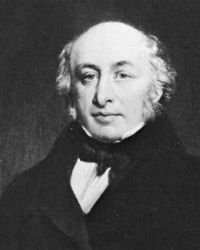
Saadia Gaon

Definition and stakes

Lady Katie Magnus,  Outlines of Jewish History from B.C. 586 to C.E. 1885

“ Oppressed from without, and divided by jealousies from within, the schools of Babylon gradually closed, one after the other, and the scholars migrated to Egypt and to Spain. In 892, to one of these settlers in Upper Egypt there was born a child who grew up and grew famous under the name and title of Gaon Saadia.34 He became head of the college at Sora, and was a great authority on all theological matters. He translated the Bible into Arabic, which language was growing to be a second mother-tongue to the transplanted Eastern Jews. ”
Source: Gutenberg

Isaac Husik,  A History of Mediaeval Jewish Philosophy

“ Saadia knows the Kalam; but though coming originally from Egypt, he spent his most fruitful years in Babylonia, in the city of Sura, where he was gaon. The centres of Arabian rationalism were, as we know, the cities of Bagdad and Basra, nearer to Babylon and Mesopotamia than to Egypt or Kairuan.
The first quotation in Judah ben Barzilai has reference to science and philosophy, their definition and classification. Science is the knowledge of the reality of existing things. It is divided into two parts, theoretical and practical. Theoretical science aims at knowledge for its own sake
”
Source: Gutenberg

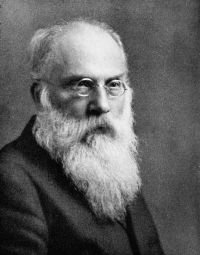
Portrait of Gotthard Deutsch Gotthard Deutsch,  The history of the Jews (1910)

“ In the ninth century we meet the first traces of a scientific literature. Prominent here is Saadya Gaon (892-942) , born in Fayum, and called to Sura as Gaon, quite an unusual event. His literary activity extends over the whole field of Jewish literature. He wrote commentaries on the Bible besides an Arabic translation, and on Talmudic topics. He also composed religious hymns, but the most important of all his works is his ‏‎אמונות ודעות‎‏ (Dogma and Science) , the first attempt at a scientific apology for Judaism from a philosophical point of view. ”
Source: Gutenberg

Get perspective with Kwize: daily news enlightened by great literature