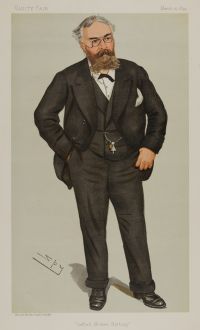
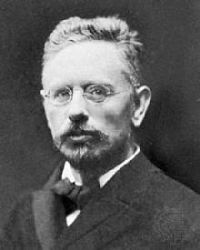
“ The Swedish language seems to be based chiefly upon the dialect of Sœdermanland, with influences from other dialects. Among the Scandinavian languages, Swedish ranks next to the Icelandic in point of purity, and is the foremost of them all in point of beauty.The Swedes are a hardworking, industrious and intelligent race, not fully conscious of their own rich endowment and slow to push their individual claims. In moments of danger and distress, this people give evidence of an active heroism, which offers a great contrast to their usual quiet and peaceful demeanor. ”
Scandinavian languages
Definition and stakes
Quotes about “Scandinavian languages”
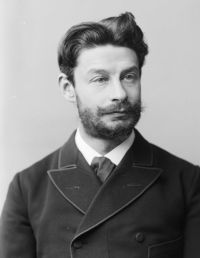
Adolf Gotthard Noreen, Encyclopædia Britannica, Ninth Edition (1886)
“ In several of these points, and indeed generally speaking, the Western Scandinavian languages have preserved the more primitive forms, as may be seen in the oldest Eastern Scandinavian runic inscriptions, dating from a period before the beginning of the literature, as well as in many modern Eastern Scandinavian dialects. For, having regard to the Scandinavian dialects generally, we must adopt quite a different classification from that indicated by the dialects which are represented in the literature. ”
Adolf Gotthard Noreen, Encyclopædia Britannica, Ninth Edition (1886)
“ SCANDINAVIAN LANGUAGES. By this expression we understand the closely allied languages which are and have been spoken by the Germanic population in Scandinavia, and by the inhabitants of the countries that have been wholly or partially peopled from it. Territory.At present the territory of these languages embraces—Sweden, except the most northerly part (Lapland and inland parts of Vesterbotten, where Finnish and Lappish exclusively or chiefly prevail) ; certain islands and districts on the coast of western and southern Finland, as well as Åland ”
“ The English language, in which they find so many words of their own and so many borrowed from the Latin, is cultivated by many of the clergy. The German they find still more easy; and as all the Scandinavian languages proceed from the same root, they have no difficulty in understanding the Danish and the Norwegian tongues. Of all the modern languages or dialects which have sprung from the ancient Norse, spoken a thousand years ago all over Denmark, Sweden, and Norway, none has undergone fewer changes than the Icelandic. ”
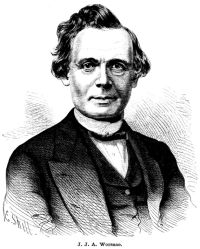
Frederik Winkel Horn, History of the Literature of the Scandinavian North (1884)
“ Not only in antiquity, but also far down into the middle ages, they all employed, absolutely, one and the same tongue, and even now the differences between the three principal languages, Danish, Norwegian and Swedish, are very insignificant. The written languages in Denmark and Norway are very nearly identical, though the Norwegians have recently, to a greater extent than ever before, enriched their tongue by the adoption of words from the dialects which have been preserved by the peasants, and which in many respects are closely related to the ancient common Scandinavian tongue. ”
1911 Encyclopædia Britannica, Volume 24… (1911)
“ A vigorous reform, slowly but firmly carried on almost uniformly during all periods of the Swedish language, is the throwing back of the principal accent to the beginning of the word in cases where previously it stood nearer the end, a tendency that is characteristic of all the Scandinavian languages, but no doubt especially of Swedish. ”
Otto Jespersen,
Language: Its Nature, Development and Origin
“ In the Scandinavian languages the Viking age is probably the period that witnessed the greatest linguistic changes—if I am right, not, as has sometimes been said, on account of the heroic character of the period and the violent rise in self-respect or self-assertion, but for the more prosaic reason that the men were absent and the women had other things to attend to than their children’s linguistic education. ”
1911 Encyclopædia Britannica, Volume 24… (1911)
“ But when Iceland was colonized (c. 900) , chiefly from western Norway, a separate (western) Norwegian dialect gradually sprang up, at first of course only differing slightly from the mother-tongue. It was not until the definitive introduction of Christianity (about A.D. 1000) that the language was so far differentiated as to enable us to distinguish, in runic inscriptions and in the literature which was then arising, four different dialects, which have ever since existed as the four literary languages—Icelandic, Norwegian, Swedish and Danish. ”
R. G. Latham, Opuscula: Essays chiefly Philological and Ethnographical
“ Hastiness of Induction, in favour of particular Languages, when we know these Languages (as every Language, indeed as every kind of Knowledge, must be known) at the expense of some other, comes upon us unconsciously. The Languages of the Gothic Stock that I know best are those of Scandinavia; the Provincial Dialect of England which I have most studied is that of Lincolnshire, and the neighbouring maritime Counties. Here the preeminence of the Danish (Scandinavian) element being acknowledged, the question is whether it be Direct or Indirect. ”
Arthur James Johnes, Philological Proofs of the Original Unity and Recent Origin of the Human Race
“ On the Scandinavian Languages. Resemblances between the Icelandic and Anglo-Saxon. Recent Origin and extensive Nature of the Differences among the Icelandic, Swedish, Danish, and Norwegian Tongues. Approximation of the Ancient Specimens of the Scandinavian and Teutonic Languages. The Island of Iceland abounds in diversified features of interest; and its Language, early History, and Institutions, will be found replete with instruction, in connexion with the inquiry pursued in this volume. ”
1911 Encyclopædia Britannica, Volume 24… (1911)
“ The inscriptions of the following centuries are of far less philological interest, because after the 13th century there exists another and more fruitful source for Old Swedish, viz. a literature in the proper sense of the word. Of runic literature nothing has been preserved to our days. The literature in the Latin letters is both in quality and extent incomparably inferior to Old Icelandic, though it, at least in quantity, considerably surpasses Old Norwegian. In age, however, it is inferior to both of them, beginning only in the 13th century. ”
1911 Encyclopædia Britannica, Volume 24… (1911)
“ Thus, for instance, we find in some manuscripts (as the above-mentioned legendary Olafssaga) that the vowels e, o, ø and long a, æ are followed in terminations by e, o; i, u, y, and short a, æ, on the other hand, by i, u—as in bøner, prayers, konor, women; but tiðir, times, tungur, tongues. The same fact occurs in certain Old Swedish manuscripts. When Norway had been united later with Sweden under one crown (1319) we meet pure Suecisms in the Norwegian literary language. ”
Frederik Winkel Horn, History of the Literature of the Scandinavian North (1884)
“ In the same manner as in the Scandinavian languages, we can trace a national unity in the literature of the North from the most ancient times down to the present. A very natural division is one into two literary epochs, that of ancient, and that of modern times. ”
Arthur James Johnes, Philological Proofs of the Original Unity and Recent Origin of the Human Race
“ Now in relation to these two Languages, a very interesting proposition has been established by Scandinavian scholars—and though they widely differ as to the cause of the results they discuss—they seem to be agreed with respect to the proposition itself. The Icelandic, they have shown, closely approaches to the Anglo-Saxon in numerous features in which it differs from the languages of Norway, Sweden, and Denmark. ”
Otto Jespersen,
Language: Its Nature, Development and Origin
“ In Danish the prefix be-, borrowed from German, is used very extensively with native words: bebrejde, bebo, bebygge, and this is not the only German prefix that is productive in the Scandinavian languages.With regard to syntax, very little can be said except in a general way: languages certainly do influence each other syntactically, and those who know a foreign language only imperfectly are apt to transfer to it methods of construction from their [215] own tongue. ”
1911 Encyclopædia Britannica, Volume 24… (1911)
“ This group is distinctly divided mto three smaller groups—the dialects of southern Sweden (with the island of Bornholm) , of the Danish islands and of Jutland (and Schleswig) . The study of the Modern Scandinavian dialects [32] has been very unequally prosecuted. Hardly anything has been done towards the investigation of the Icelandic dialects, while those of the Faeroes have been studied chiefly by V. U. Hammershaimb, J. Jakobsen, and A. C. Evensen. The Norwegian dialects have been thoroughly examined, first by Aasen, whose works give a general account of them ”
1911 Encyclopædia Britannica, Volume 24… (1911)
“ Already before the beginning of the so-called Viking period Transformation. (since about A.D. 800) the primitive Scandinavian language had undergone a considerable transformation, as is proved, for example, by the remarkable runic stone at Istaby in the south of Sweden, with the inscription (about A.D. 650) :— AFĄTR HARIWULĄFĄ HAþUWULĄFR HAERUWULĄFIR WĄRAIT RUNAR þAIAR; Engl.: In memory of HariwulfR, HaþuwulfR, son of HeruwulfR, wrote these runes. Here, e.g. we find nom. sing. ”
1911 Encyclopædia Britannica, Volume 24… (1911)
“ In the 16th century, again, charters written in Norwegian occur only as rare exceptions, and from the Reformation onward, when the Bible and the old laws were translated into Danish, not into Norwegian, Danish was not only the undisputed literary language of Norway, but also the colloquial language of dwellers in towns and of those who had learned to read. ”
Ivy Kellerman Reed,
Popular Science Monthly
(1909)
“ Yet to be truly a polyglot one must be familiar with not only French and German, English, Spanish, Italian, Russian, each difficult of mastery, and the Scandinavian languages, but also Dutch, Flemish, Portuguese, Roumanian, Catalonian, Greek and the many languages allied to Russian, such as Bohemian, Polish, Servian, Bulgarian, Lithuanian, etc., and also the non-Aryan tongues of Europe, such as Hungarian and Finnish and the scattered Yiddish. ”
R. G. Latham, A Handbook of the English Language
“ In the modern Danish and Swedish, the passive is still preserved, but without the final t. In the older stages of Icelandic, on the other hand, the termination was not -st but -sc; which -sc grew out of the reflective pronoun sik. With these phenomena the Scandinavian languages give us the evolution and development of a passive voice; wherein we have the following series of changes:—1. the reflective pronoun coalesces with the verb, whilst the sense changes from that of a reflective to that of a middle verb; 2. the c changes to t, whilst the middle sense passes into a passive one ”
1911 Encyclopædia Britannica, Volume 24… (1911)
“ Both in vocabulary and syntax we find early, e.g. in the lawbook Jónsbók, printed in 1578 (-1580) , Danish exercising an important influence, as might be expected from political circumstances. In the 18th century, however, we meet with purist tendencies. As one of the leading men of this century may be mentioned the poet Eggert Ólafsson (d. 1768) , whose poems were not printed till 1832. Worthy of mention in the history of Modern Icelandic language are the learned societies which appeared in the same century, of which the first, under the name of “Hið ósýnilega,” was established in 1760. ”
Herbert Spencer,
The Principles of Biology — Chapter III.4
(1898)
“ The illustration furnished by languages will serve us once more. Some dialects of English are but little contrasted; others are strongly contrasted. The alliances of the several Scandinavian tongues with one another are different in degree. Dutch is much less distinct from German than Swedish is; while between Danish and Swedish there is so close a kinship that they might almost be regarded as widely-divergent dialects. Similarly on comparing the larger divisions, we see that the various languages of the Aryan stock have deviated from their original to very unlike distances. ”
E. C. Otté, A Simplified Grammar of the Swedish Language (1902)
“ Here it will be observed that the noun, when preceded by an adjective, takes both the affixed article and the independent definite article. This pleonasm is peculiar to the Swedish branch of the Scandinavian languages, Dano-Norwegian dispensing with the terminal affix when the noun is preceded by an adjective with the requisite independent or adjective form of the definite article. ”
1911 Encyclopædia Britannica (1911)
“ If we confine our attention to changes which probably took place before the middle of the 7th century it will be seen that the English and Frisian languages may fairly be described as lying about midway between Scandinavian and German, though they had already developed well-marked characteristics of their own. They are doubtless to be regarded as the representatives of the old language of the maritime districts, and it is probable that languages of this type were at one time spoken along the whole of the coast between the present frontiers of Belgium and Denmark. ”
George Unangst Wenner, The Lutherans of New York, Their Story and Their Problems
“ Some of the languages at present used in our church services may be of negligible importance. The Slovak, Magyar and Finnish for example, as well as the Lettish, Esthonian and Lithuanian of the Baltic Provinces, will never have more than a restricted use in this city. The Scandinavians and those whose vernacular is the Low German easily substitute English for their mother tongue. Scandinavian is kindred to English, while Low German is the very group of which, philologically speaking, English is the most conspicuous member. ”
Henrik Ibsen,
The Feast at Solhoug
“ The only comment that need be made upon his rejoinder to his critics has been made, with perfect fairness as it seems to me, by George Brandes in the following passage:** "No one who is unacquainted with the Scandinavian languages can fully understand the charm that the style and melody of the old ballads exercise upon the Scandinavian mind. The beautiful ballads and songs of Des Knaben Wunderhorn have perhaps had a similar power over German minds ”
1911 Encyclopædia Britannica, Volume 24… (1911)
“ Towards the end of the middle ages the Danish influence shows an immense increase, which marks the gradual decline of Norwegian literature, until at last Norwegian as a literary language is completely supplanted by Danish. During the 15th century Norway has hardly any literature except charters, and as early as the end of that century by far the greatest number of these are written in almost pure Danish. ”
Georg Brandes,
Eminent Authors of the Nineteenth Century…
“ ESAIAS TEGNÉR. 1878. Literary fame in the Scandinavian countries is for the most part a matter of mere local importance. Works written in languages which are spoken by a few million people only, and which in no portion of the world are studied or read as polite languages, are likely to have every chance of European and American renown against them. As a general thing, but few poetic productions are translated into other tongues ”
Arthur James Johnes, Philological Proofs of the Original Unity and Recent Origin of the Human Race
“ The Changes which have occurred in the English, Scandinavian, and Celtic Languages, sufficient to account for the Differences among all Human Tongues. Causes which give rise to the Abandonment and specific Appropriation of Synonymes. Total Differences of Grammatical Forms no Proof of a fundamental Difference of Language. The Relation which the Languages of one Continent, viewed in the aggregate, bear to the individual Languages of such Continent, the same as that which the ancient Scandinavian bears to its derivative Dialects, &c. Incipient Changes in the Language of Australia. ”
G. A. F. Van Rhyn, The American Cyclopædia (1879)
“ The first germs of Swedish and Danish are considered to have existed long before the 11th century in the dialects of the Scandinavian tribes. Swedish scholars distinguish between the East and West Scandinavian, which division they consider as having taken place before the Northmen settled in Norway and Sweden. ”
Mary Wilhelmine Williams,
Cousin-hunting in Scandinavia
“ The foundation of my Scandinavian conversational medium, as you know, is very bad Danish. In Sweden I stuck in a few Swedish words for flavoring and the intelligent Swedes understood my utterances and called my jargon “bra Svensk”; in Norway I remembered to pronounce m-e-g-e-t (much) phonetically instead of “myet” as the Danes do, and the Aalesund merchant lady declared that what I spoke was not Danish at all, but Norwegian. I seem to possess a variety of “three-in-one” Scandinavian linguistic equipment. Fortunately, it works, and is very convenient when one is traveling. ”