Senate of the Russian Empire

Definition and stakes

1911 Encyclopædia Britannica (1911)

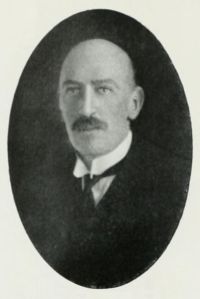
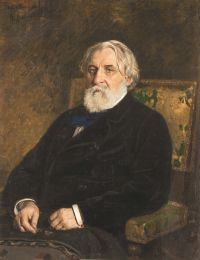
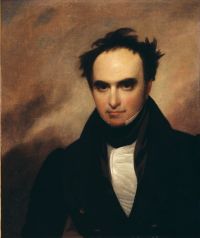
Born in Moscow in 1827, he studied at the School of Law in St Petersburg, and entered the public service as an official in one of the Moscow departments of the senate. From 1860 to 1865 he was professor of Russian civil law in the Moscow University, and instructed the sons of Alexander II. in the theory of law and administration. In 1868 he became a senator in St Petersburg, in 1872 a member of the council of the empire, and in 1880 chief procurator of the Holy Synod. He always showed himself an uncompromising Conservative, and never shrank from expressing boldly his opinions.
Source: Wikisource

published by the National Geographic Society The National Geographic Magazine…

There is nothing new under the sun. Recent events in Russia have not introduced an entirely new system of government into that great empire, but the revolution of the past few weeks, as we hastily but inaccurately call it, is in truth a reversal to an earlier form of democratic government in which the Russian people centuries ago had made progress and in which they stood in the forefront of the European nations.
Source: Wikisource

P. V. N. Myers General History for Colleges and High Schools

Either through wise concessions on the part of its rulers, or through the throes of a terrible revolution, like that of 1789 in France, the Russian empire will sooner or later come to possess a constitutional representative government. The Czar of Russia is simply fighting the hopeless battle that has been fought and lost by the despotic sovereigns of every other European country—a battle which has the same invariable issue, the triumph of liberal principles and the admission of the people to a participation in the government.
Source: Gutenberg

Get perspective with Kwize: daily news enlightened by great literature