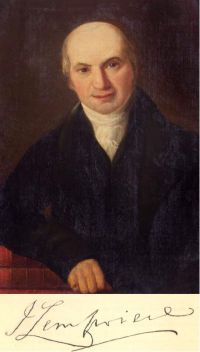
Seneca the Younger

Definition and stakes

Harold Edgeworth Butler,  Post-Augustan Poetry From Seneca to Juvenal

“ Moreover, Seneca was his uncle: a comparison shows how profoundly the elder poet influenced the younger. There is the same self-conscious arrogance begotten of Stoicism, the same brilliance of wit and absence of humour. Their defects and merits alike reveal them as kindred, though Lucan stands worlds apart as a poet from Seneca, the ranting tragedian. He was but twenty-five when he died. Age might have brought a maturity and dignity of spirit which would have made rhetoric his servant and not his master, and refined away the baser alloys of his character. ”

Source: Gutenberg

Portrait of T. G. Tucker T. G. Tucker,  The foreign debt of English literature (1907)

“ The style everywhere is lofty, the thinking is serious and helpful, if not profound or original, and it is difficult to over-estimate the influence exercised by these books upon the later thought of Rome, of the Middle Ages, or of the Renaissance. Seneca the younger, writing under Claudius and Nero, is a philosopher in the more strict sense of the term. Living in an age which demanded striking phrase, point, and epigram, he is a master in that style. ”
Source: Gutenberg

Portrait of Seneca Seneca,  Moral letters to Lucilius — Letter 104…

“ Take that of the younger Marcus Cato, with whom Fortune dealt in a more hostile and more persistent fashion. But he withstood her, on all occasions, and in his last moments, at the point of death, showed that a brave man can live in spite of Fortune, can die in spite of her. His whole life was passed either in civil warfare, or under a political regime which was soon to breed civil war. And you may say that he, just as much as Socrates, declared allegiance to liberty in the midst of slavery – unless perchance you think that Pompey, Caesar, and Crassus [13] were the allies of liberty! ”
Source: Wikisource

Get perspective with Kwize: daily news enlightened by great literature