Siraj-ud-Daulah

Definition and stakes

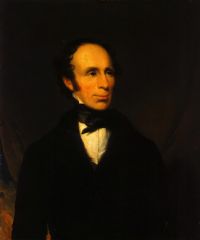
Portrait of Samuel Charles Hill Samuel Charles Hill,  Three Frenchmen in Bengal

“ The Seths and the English had long found the chief difficulty in their way to be the choice of a man of sufficient distinction to replace Siraj-ud-daula on the throne. At this moment the Nawab himself gave them as a leader Mir Jafar Ali Khan, who had married the sister of Aliverdi Khan, and was therefore a relative of his. Mir Jafar was Bukshi, or Paymaster and Generalissimo of the Army, and his influence had greatly contributed to Siraj-ud-daula's peaceful accession. ”
Source: Gutenberg

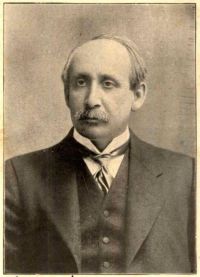
Portrait of Samuel Charles Hill Samuel Charles Hill,  Three Frenchmen in Bengal

“ Often
they are combined towards the same object, but, when they
are opposed, fear always conquers. A proof of this is easily
to be seen in all the events connected with, the revolution
in Bengal. When, in 1756, Siraj-ud-daula determined to
expel the English, fear and greed combined to make him
act. As soon as he had himself proved the superiority of
the English troops, fear took the upper hand in his mind,
grew stronger day by day, and soon put him in a condition
in which he was unable to follow, and often even to see, his
true interests.
"I mention the Nawab first.
”
Source: Gutenberg

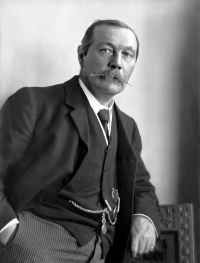
Portrait of Samuel Charles Hill Samuel Charles Hill,  Three Frenchmen in Bengal

“ No one would have acknowledged
him. Forced by Mir Jafar and the English to flee to
a foreign country, he would have been a burden to us rather
than an assistance.
"In India no one knows what it is to stand by an
unfortunate man. The first idea which suggests itself is to
plunder him of the little [102] which remains to him. Besides,
a character like that of Siraj-ud-daula could nowhere find a
real friend."
Siraj-ud-daula, defeated by Clive at Plassey on the 23rd of June, was, says Scrafton
”
Source: Gutenberg

Get perspective with Kwize: daily news enlightened by great literature