“ The main line of railway runs, like an iron vertebra, a kind of backbone, from north to south; the directors of the southern line of railway, realising the necessity of extension, and desirous of giving easy access to all parts of the country, have laid down branch lines in all directions, running out like the arms of an octopus, grasping at distant towns and villages, and halting at the most beautiful secluded spots in the inmost quarters of the land. ”
Southern Railway
Definition and stakes
The theme of “Southern Railway” has been addressed by authors such as Edwin A. Pratt, Joseph Tatlow, Samuel Smiles, Ignaz Jastrow and Lady Duffus Hardy. It is often associated with terms like railroad, South, states, train and new.
Quotes about “Southern Railway”
“ The prosperity of the South in the next decade, and in those to follow after, depends upon the ability of the owners and managers of southern railways to foresee and provide for future necessities, and upon the promptness with which the work is accomplished. ”
“ I therefore feel that the southern railroad situation is gradually becoming better understood, not only by the public at large, but by the railway men of the South, who are jointly appreciative of the fact that the greatest need of southern railroads is the confidence and support of the communities through which they run and serve. ”
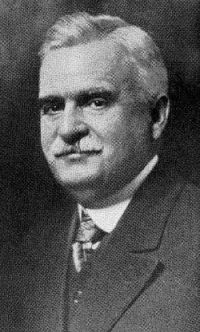 Charles De Lano Hine,
Letters from an Old Railway Official…
“ True Southerners thank God that human slavery has been abolished. They are striving earnestly and successfully to adjust conditions created in the birth pangs of a social revolution. Well managed railroads like the Louisville & Nashville adjust their working policies to these basic conditions. Nearly a decade ago Samuel Spencer, as president, felt that the Southern Railway needed an infusion of new operating blood and a rotation of types, both excellent things in themselves, but, as experience showed, easily overdone and carried to an irrational degree. ”
John Moody, The Railroad Builders: A Chronicle of the Welding of the States
“ Finally in 1907 Morgan sold his Georgia properties to Charles W. Morse. They subsequently passed to Edward H. Harriman, who afterwards merged them into the Illinois Central system, under which control they have since remained. As compared with the old Richmond Terminal aggregation with its broken-down rails and roadbed, poor equipment, and miserable service, the modern Southern Railway system shows startling changes. The Southern States have grown enormously in population and wealth during the last generation ”
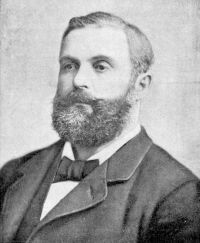 Thomas Wallace Knox,
The Land of the Kangaroo
“ A gentleman who was in the carriage with them said they would find equally good work on the western line of railway, the one on which they were traveling being the southern.“The range of mountains that winds around the whole coast of Australia,” said the gentleman, “has made our railways cost us very dearly. To go any distance at all into the interior, we had to traverse the mountains, and for a long time it was believed that it would be absolutely impossible to get through them. The first railway line in New South Wales was surveyed about 1847, and ground for it was broken in July, 1850. ”
Owen J. Roberts, Piedmont Northern Railway Company v…
“ The balance is built and operated on private right of way, and goes around, rather than through, the cities. The tracks are standard gauge and of standard railroad construction, were, at the time they were laid, of higher class than those of the Southern Railway Company in the same territory, were intended for handling substantial interchange freight traffic in connection with steam railroads, have the same ruling grades as the latter in the same territory, and are of 80-pound rail. ”
“ I doubt if there is a single southern railway system, the officers of which would not gladly today take up, consider and block out a scheme for the improvement and betterment of their property, and commence preparations to enable their system to fully perform the increased functions of a common carrier, which the abundant years [64] of the immediate future promise to require, if they could be sure, and in turn could assure their financial backers, that the earnings of their road would be amply and safely sufficient to provide for, and take care of, the investment necessary. ”
“ In its calls for capital the southern railroads must come into competition in the markets of the world, not only with the railroad requirements of the North, of the East and the West, but with all the lines of human industry and endeavor throughout the wide world. ”
“ The adoption of a policy of fairness and liberality towards the railroad interests on behalf of all the Southern States, and the ability to convince the financial world that this action is sincere and genuine and will be permanent, is the great paramount need of the railroads of the South today. ”
Philip Mennell, The Coming Colony (1892)
“ For the immigrant that Western Australia wants, the man whose mission is to make the wilderness blossom as the rose, the two private railways, built on the land-grant system, have been the necessary precursor. Take the Great Southern line as an example of how these companies have paved the way for settlement. The railway, admirably built, carefully maintained, and well furnished with first-class rolling stock, traverses a country that ten years ago was practically unknown. ”
Joseph Tatlow, Fifty Years of Railway Life in England…
“ In the first, 1899, two Bills came before a Select Committee of the House of Commons, one promoted jointly by the Great Southern and Western and the Waterford and Limerick Companies, the other by the Great Southern and the Waterford and Central Ireland. But the Great Southern were the real promoters of both; they paid the piper and, therefore, called the tune. The Great Southern being the largest railway company in Ireland aspired to be greater still, nor need this be considered in the least surprising, for who in this world, great or small, is ever satisfied? ”
Great Britain. Board of Trade. Railway Department, Report of the Railway Department of the Board of Trade on the London…
“ The accommodation of Herefordshire, Worcestershire, South Wales, and the important districts lying to the west of the present lines of Railway, will evidently, at no distant period, require not only a wide-gauge Railway along the Southern coast, to place them in communication with London, but also a narrow-gauge Railway to place them in direct and unbroken communication, through Birmingham, with the manufacturing districts and the great Railway system of the rest of the kingdom. ”
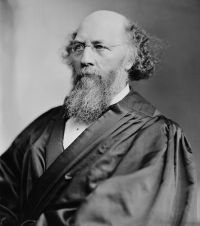 Stephen Johnson Field,
United States v. Southern Pacific Railroad Company…
“ Congress desired to connect by a railway the states on the Mississippi with the Pacific coast, and for that purpose, by the act of July 27, 1866, created a corporation known as the Atlantic & Pacific Railroad Company, and gave it a grant of lands to aid in the construction of a railway between Springfield, in the state of Missouri, and the Pacific coast. ”
 Charles A. Beard,
History of the United States — XVIII
(1921)
“ United States in 1870 Western Railways Precede Settlement.—In the Old World and on our Atlantic seaboard, railways followed population and markets. In the Far West, railways usually preceded the people. Railway builders planned cities on paper before they laid tracks connecting them. They sent missionaries to spread the gospel of "Western opportunity" to people in the Middle West, in the Eastern cities, and in Southern states. ”
Edward Hungerford, Our Railroads To-Morrow
“ Here then are four railways created out of fifty-four—some 24,500 miles of line as compared with the 27,000 miles of French railway. The groupings have followed the lines that I have just shown and take the names of the Southern; the Northeastern, the Eastern, and the East Scottish; the Western; and the Northwestern, Midland, and West Scottish groups respectively. The smaller and comparatively unimportant lines of the United Kingdom fall easily into some one of these four great regions. ”
Albert Perry Brigham, Cleveland Abbe, David Hale Newland, Alvin Sydney Johnson, Theophilus F. Rodenbough, Lewis Sayre Van Duzer, Isaac J. Cox, James Wilford Garner, Harry A. Cushing, and others, The New International Encyclopædia…
“ In 1870-80 there were important gains in the Upper Mississippi Valley and in eastern Texas, which was the first Southern State to show activity in railway construction after the war. In 1880-90 the Southern States doubled their mileage. Since 1895 (in which year there was the least construction after the Civil War, 1650 miles) the most rapid progress has been between the Gulf of Mexico and the Kansas and Missouri rivers. The greatest railway density is in the region north of the Ohio and Potomac rivers. New Jersey leads with 30 miles of line for each 100 square miles of area. ”
“ Having due regard to the fact that people will not travel unless they can do so with a tolerable amount of ease and comfort, the projectors of the southern lines of railway have paid due respect to the requirements of the public, and have formed their plans and carried on their operations with a view to the convenience and comfort of their temporary guests. ”
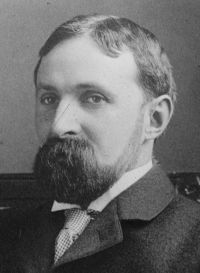 Albert Bushnell Hart,
The Southern South
“ States like Louisiana and Georgia are fairly gridironed with railroads, and new ones building all the time: indeed, in the “Delta” of Mississippi a railroad can live on local business if it has a belt of its own twelve miles wide. [Pg 227] Nevertheless, the present railroad system in the South, comprising about 80,000 miles, has been mostly built since 1880. This system includes several lines from the Middle West to the seaboard, so that Baltimore, the James River ports, New Orleans, and Galveston are enriched by commerce passing through their ports to regions outside the Southern states. ”
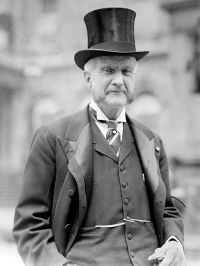 Henry Clews,
Fifty years in Wall Street
(1908)
“ So great is this material development and so great the consequent demand for transportation facilities, that every railway in the South may well need double tracking, while to keep pace with the South’s present rate of progress, thousands of miles of new railways will have to be constructed every year for many years to come. The South should therefore continue to encourage capital no less than immigration, on a scale extensive enough to meet all its legitimate requirements. ”
“ Coming back to the South, from which we have been temporarily led astray, it is self-evident to the careful observer that all the diverse interests of this section—agriculture, mining, manufacture, commerce and banking—are unavoidably and irrevocably bound up with the transportation facilities furnished and to be furnished by the railway systems ramifying its territory and performing a service for the South similar to that performed by the arteries and blood-vessels in the body of corporeal man. ”
“ During the past 25 years the total products of the South, from agriculture, forest, mines and manufactures, have increased in valuation over 225 per cent. During the last five years of this period, ending in 1906, the increase has been 50 per cent.The common fallacy that a railroad is completed when opened for traffic has long since passed away, at least in the minds of intelligent men.The railroad of today is no sooner completed as a single track, than it becomes necessary to provide industrial spurs; additional or enlarged terminals ”
Everard Cotes, Down Under with the Prince
“ Norris Bell, the eminent engineer who controlled the construction of the line, and is now running it in such a way that, despite almost total absence of local traffic, it is nearly paying its working expenses, a remarkable achievement considering the desolate nature of the country through which it passes. The railway connects the populous States of Victoria, New South Wales and South Australia, with the vast and potentially rich, but presently undeveloped, western territories. ”
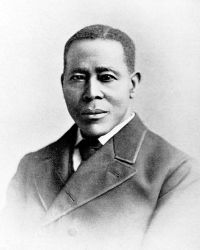 William Still,
The Underground Railroad
“ I pray that the time may come when we will all be men in the United States. We have read here of the great disturbance in the South. My prayer is that this may be a deathblow to Slavery. Do you ever have any Underground Rail Road passengers now? Times have been very prosperous in Canada this year. The commercial trade and traffic on the railways has been very dull for these few months back. Business on the Buffalo and Lake Huron railway has been so dull that a great number of the hands have been discharged on account of the panic in the South. Canada yet cries, Freedom! Freedom! Freedom! ”
Frederick Arthur Ambrose Talbot, The Railway Conquest of the World (1911)
“ As the country traversed develops and more traffic accrues to the road, rendering improvement advisable, the track is overhauled and relaid with heavier metals, the lighter rails being shipped to another point to enable the pioneering process to be continued.This is an elastic system eminently adapted to such a country as South Australia, which is still in its infancy, and where the demand for railway communication is confined almost entirely to agricultural requirements and to the transportation of farming produce, especially in the more remote up-country districts. ”
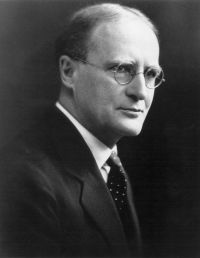 Oscar D. Skelton,
The Railway Builders: A Chronicle of Overland Highways
“ The first result of the swarming of thousands to the West was a demand for new railways, to open up plain and prairie and mineral range, and to make connection with East and West. The building of the railways in its turn gave a stimulus to every industry. As in the early fifties and early eighties, this period of rapid railway expansion—much longer, however, than previous periods—was {183} an era of optimistic planning and feverish speculation. ”
“ It is also apparent to the impartial observer that if the South is to reach its highest state of development its transportation facilities should not lag, but should lead the march of progress, and that this development should be stimulated in every possible way; and men of the South should never forget for a single moment that the needs of the railroads are the needs of the South. ”
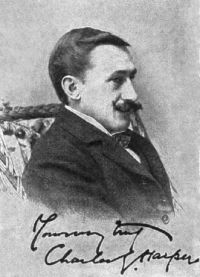 Charles G. Harper,
Cycle Rides Round London
“ But then the South-Western has, for some reason or another, always been allowed to cut up and practically destroy the open spaces along its route, so that there is scarce a common in the south-western suburbs but that line has a cutting through or an embankment across it, with level crossings innumerable, at which those who use the roads must needs wait the pleasure of the railway, until the crowded traffic of passenger and goods trains has passed by! ”
Railway Adventures and Anecdotes…
“ The conversion of the gauge on the South Wales section of the Great Western railway in 1872 was of the heaviest description, the period of labour lasting from seventeen to eighteen hours a day for several successive days. It was the greatest work of its kind, and nothing exactly like it will ever be done in England again. The lines of rail to be connected would have made about 400 miles in single length, the number of men employed was about 1500 ”
 Henry Billings Brown,
Pearsall v. Great Northern Railway Company…
“ As the Northern Pacific road also controls, by its own construction and by the purchase of stock, other roads extending from the Mississippi river to the Pacific Ocean, and operates, as a single system, an aggregate mileage of 4,500 miles, most of which is parallel to the Great Northern system, the effect of this arrangement would be to practically consolidate the two systems, to operate 9,000 miles of railway under a single management, and to destroy any possible advantages the public might have through a competition between the two lines. ”
Oscar D. Skelton,
The Railway Builders: A Chronicle of Overland Highways
“ All-red speeches might adorn a banquet or win an election, but facts—or fictions—as to freight and dividends were needed to beguile the capital from investors' pockets. The hope of securing for the Canadian provinces the trade and traffic of the golden West was, in early years as in late, much the strongest factor in railway policy. When the white man came to North America, he found himself hemmed in to the Atlantic coast by the long range of the Appalachians. ”
 Elinor Mordaunt,
On the Wallaby Through Victoria
“ But gradually, as people began to return to their farms and sheep-runs, and the agricultural possibilities of the State again seemed worth considering, the numbers of railway-lines began to increase, and during the twenty years which followed 1874 no fewer than 2,498 miles of railway were constructed and opened for traffic, since which only 348 miles of line have been added, chiefly in the wheat-growing districts of the North-West. ”
Related terms
Authors who wrote about “Southern Railway”
 Edwin A. PrattJoseph TatlowSamuel Smiles
 Ignaz Jastrow
 Lady Duffus HardyRobert SomervellOscar D. SkeltonSir Cusack P. RoneyArthur H. BeavanFrederick Arthur Ambrose TalbotAlbert Bushnell HartCharles De Lano HineCharles G. HarperThomas Wallace KnoxEverard CotesVarious
 Sir Francis Bond HeadPhilip MennellWilliam Zebina RipleyHenry Clews
