Stanford-Binet Intelligence Scales

Definition and stakes

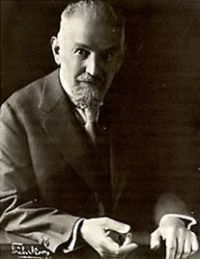
Portrait of Lewis M. Terman Lewis M. Terman,  The measurement of intelligence

“ Those who graded feeble-minded in the first test graded feeble-minded in the second test: the dull remained dull, the average remained average, the superior remained superior, and always in approximately the same degree. [18]
It is unnecessary to emphasize further the importance of having an intelligence scale which is equally accurate at all points. Absolute perfection in this respect is not claimed for the Stanford revision, but it is believed to be at least free from the more serious errors of other Binet arrangements.
”

Source: Gutenberg

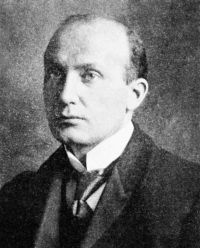
Portrait of Lewis M. Terman Lewis M. Terman,  Condensed guide for the Stanford revision of the Binet-Simon intelligence tests

“ General directions for the use of the Stanford Revision have been fully set forth in chapter VIII of The Measurement of Intelligence. As this guide is only a handbook of procedure for the tests themselves, I shall not here undertake either to summarize that chapter or to add to it. I trust it may safely be assumed that no responsible person will attempt to apply the tests who is not familiar with the book which explains them and presents the general considerations which should govern their use. ”
Source: Gutenberg

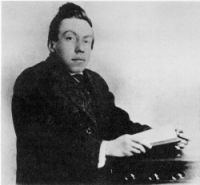
Portrait of Lewis M. Terman Lewis M. Terman,  The measurement of intelligence

“ For this purpose there is nothing else as significant as the I Q. All who test below 70 I Q by the Stanford revision of the Binet-Simon scale should be considered feeble-minded, and it is an open question whether it would not be justifiable to consider 75 I Q as the lower limit of “normal” intelligence. Certainly a large proportion falling between 70 and 75 can hardly be classed as other than feeble-minded, even according to the social criterion. ”
Source: Gutenberg

Get perspective with Kwize: daily news enlightened by great literature