“ The frightful beast is but a hare!” After they had recovered from their fright the seven Swabians sought new adventures, and by and by they arrived at the River Moselle, a smooth and deep water, over which there are not many bridges; so that one must cross in boats to the other side. The seven Swabians, however, were ignorant of this, 164and they therefore shouted to a man who was working on the other side of the river and asked him how they were to pass over. ”
Swabians
Definition and stakes
The theme of “Swabians” has been addressed by authors such as Jacob Grimm and Mór Jókai. It is often associated with terms like people, Swaziland, indigenous, Americas and savage.
Quotes about “Swabians”
 Jacob Grimm,
Grimm's Household Tales
(1884)
Jacob Grimm,
Grimm's Household Tales
(1884)
“ Compare Fischart's Geschichtsklitterung (1590) , p. 74. 119.—The Seven Swabians. From a story in Kirchhof's Wendunmut (1. St. 274) , and a Meistersong in the MS. which formerly belonged to Arnim (compare the ballad in the Wunderhorn, 2. 445, which had its origin in this) . In both of these there are nine Swabians. Lastly, from a Nuremberg chap-book, by Fr. Campe, in which the seven Swabians are portrayed, and their discourse is given in rhyme. Eyering relates the affair with the hare in his Sprichwörter, 2. 227. It runs across the field in front of them, and they present their spear at it. ”
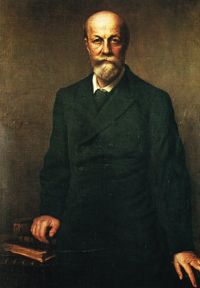 Mór Jókai,
The Strange Story of Rab Ráby
Mór Jókai,
The Strange Story of Rab Ráby
“ The Rascians are the defaulters against the vintage rights, and loudly they shriek and curse as the blows are administered, whilst the outragers of the forestry laws are mostly Swabians, who take advantage of the pauses between the lashes roundly to abuse the overseer. ”
Owen Rowe O'Neil, Adventures in Swaziland: The Story of a South African Boer
“ My impi backed me up, and it began to look as though some one would be badly hurt when Oom Tuys dashed out of the house and scattered us."Mzaan Bakoor, you little devil!" he shouted, catching me by the ears. "Why do you make so much fight? Why do you tell such lies? 'Black Hand Tom' will only eat the dust of these Johannesburg horses. They are race horses!"Now this was sacrilege. To hear my uncle, the great "White King of Swaziland," say such a thing gave me such a shock that I forgot to kick his shins for tweaking my ears. ”
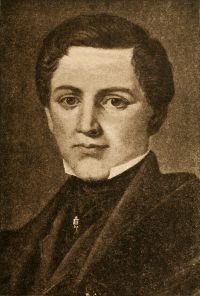 Wilhelm Hauff,
The Banished: A Swabian Historical Tale
Wilhelm Hauff,
The Banished: A Swabian Historical Tale
“ It is a delightful custom of the inhabitants of the country, and also of the stranger from distant parts, to visit Lichtenstein and Ulerich's cavern on Whitsunday. Many hundreds of Swabia's children are attracted to these mountains on that day. They descend into the heart of the earth, whose crystal walls, lighted up by thousands of wax tapers, are made to reflect their sparkling beauties in numberless fantastic forms ”
Owen Rowe O'Neil, Adventures in Swaziland: The Story of a South African Boer
“ You and your two men shall become indunas [368] in the royal impi. Never before has a white man been worthy to be taken into a Swazi impi, and you shall be the first!"This was a decided shock. I had never thought I would like to be a Swazi, even if I were an induna. In fact, I would not have enjoyed being King of Swaziland, with all the power that Buno had. But here we were face to face with the proposition of being forced to become indunas in the crack impi of the new King of Swaziland. Even the distinction of being the first white men to be admitted did not lessen the blow. ”
Richard Savage, A Fascinating Traitor: An Anglo-Indian Story
“ For she will never tell our little secret! And she will surely come again! She may be my salvation here! Madame Louison, I now debit you just thirty pounds!” laughed Major Alan Hawke, as he deftly blew a kiss in the direction of Allahabad. “You shall pay for this bracelet, and much more! You shall pay for all! And I’ll set this soft-hearted Swiss woman on to watch you, and you shall pay her well, too! Now, for my old friend, Hugh Johnstone!” He waited in a most happy frame of mind till his carriage bore him to the club for an elaborate Anglo-Indian toilet. ”
Owen Rowe O'Neil, Adventures in Swaziland: The Story of a South African Boer
“ Shortly before noon a kaffir came out of the royal kraal and shouted in our direction. He waved his shield, and I sent Sibijaan to see what he wanted. Through my glasses I recognized him as one of the few old indunas I had seen in Swaziland. There are practically no old men or women in the country. This is [356] due to the rigid belief in the doctrine of the survival of the fittest, the old ones usually being removed when unable to protect themselves. This old induna was some sort of an officer for the queen and acted as a tutor for Sebuza. ”
J. W. Matthews, Incwadi Yami; or, twenty years' personal experience in South Africa (1887)
“ Swaziland is a small native state bounded on the north and west by the Transvaal; from its eastern border to the sea stretches the Portuguese territory of Delagoa Bay, and to the south lie the land of the Zulus and the colony of Natal. The Swazi King rules over a realm of about 9,000 square miles, containing a population of 50,000. His people are of the same Zulu race whose prowess has been proved on more than one ‘well foughten field,’ but of finer physique, and 15,000 warriors are at his beck and call. ”
Owen Rowe O'Neil, Adventures in Swaziland: The Story of a South African Boer
“ Then came a hurried mobilization of all the fighting Boers within a day's ride of Rietvlei. Word was sent far and wide over the veldt—to the outlying farms, to the small towns, to Belfast, and to every place where men might be found.Within three days the Valley of Reeds became an armed camp. There were more than a thousand well armed, hard-riding Boers waiting for the word to trek into Swaziland. These people of ours were a hardy lot. There were men of sixty and even seventy years, and mixed in with them were their sons and grandsons, many of the latter being boys of sixteen and seventeen. ”
Owen Rowe O'Neil, Adventures in Swaziland: The Story of a South African Boer
“ Playing at war had taught me to hide as much as possible, and soon I slipped out of the tent and started for the royal kraal. There seemed to be thousands of natives all about me, each band gathered around a fire. They were dancing and singing and eating, particularly eating. The Swazi always eats whenever possible, and a number of cattle had been slaughtered to provide a feast in honor of Oom Tuys. ”
Owen Rowe O'Neil, Adventures in Swaziland: The Story of a South African Boer
“ Sebuza's indunas tried to put up a fight and resisted for a short time. Then the enemy overpowered them and stabbed them to death.So it was war after all! In spite of my efforts to prevent it, the question of who should be ruler of Swaziland was to be settled in the old-fashioned way.Tuys and I went to the royal kraal and found Tzaneen and Lochien already up. Thousands of warriors and scores of indunas were on guard and the whole place was in whirl of excitement. ”
Marie-Catherine Hommasel Hecquet, An Account of a Savage Girl, Caught Wild in the Woods of Champagne (1768)
“ The Negroes of Africa, when carried to the West Indies, a climate much of the same temperature with their own, accommodate themselves to it without any difficulty, and thrive extremely well; but all attempts to naturalize the savages of the northern regions to that country, have proved unsuccessful. The English, Dutch, and Danes, who have colonies in several of the West India islands, as well as we, have more than once carried off some of the Esquimaux savages who inhabit the country of Labrador to the north of Canada. ”
Owen Rowe O'Neil, Adventures in Swaziland: The Story of a South African Boer
“ Tuys noted that we had been hurrying and asked the reason. I told him about the shadows on the trail."It is well that you hid," he said. "It would have been better yet if you had not been so foolish as to wander about at night. Don't you know that sudden death is always walking abroad at night in Swaziland? Have I not told you?"Then he explained that practically all Swazis travel at night, whenever possible, so as to avoid the heat. He said that those we had met were going to Zombode, as the king had issued a call for his warriors to attend the celebration in our honor. ”
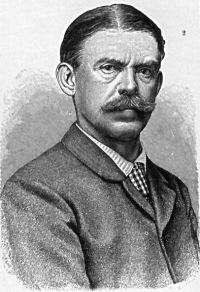 Georg August Schweinfurth,
The heart of Africa, Vol. 2 (of 2…
(1873)
Georg August Schweinfurth,
The heart of Africa, Vol. 2 (of 2…
(1873)
“ The African savages are not like the American Indiana, who are always prepared to see a few of their party killed at the outset, provided that they can only make sure of ultimate success and can get their plunder at last; not that the Africans underrate the advantage they possess in the superiority of their numbers, nor that they entertain too high an estimate of the bravery of the Nubians, but they are conscious that no attack could be ventured without one or two of them having to pay the penalty of their lives. ”
Owen Rowe O'Neil, Adventures in Swaziland: The Story of a South African Boer
“ When the last man was sacrificed, the witch-doctor made another speech. It was about what heroes the ten indunas had been and what a great king they had lost. One sentence I remember."So long as warriors are willing to die for Swaziland," he shouted, "our country is safe! So long as our [116] best face death without fear, we need not fear the Zulus, Boers, or British. The white men fear death. They can never stand against our impis if our warriors are led by such men as those who died to-night!" ”
Bertha Phillpotts, Frederick Beck, James Sime, W. Alison Phillips, James Headlam and Arthur William Holland, 1911 Encyclopædia Britannica (1911)
“ The citizens, who were called upon to fight their battles, were usually unable to contend successfully with men whose whole lives had been passed in warfare; the isolation of the cities was not favourable to the creation or mobilization of an active and homogeneous force; and, moreover, at this time many of them were disturbed by internal troubles. However, they minimized this handicap by joining league to league; in 1381 the Swabian and the Rhenish cities formed an alliance for three years, while the Swabian League obtained promises of help from the Swiss. ”
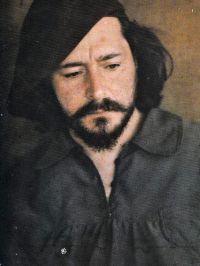 Leonid Andreyev,
Savva and the Life of Man: Two plays by Leonid Andreyev
Leonid Andreyev,
Savva and the Life of Man: Two plays by Leonid Andreyev
“ SAVVA, twenty-three, large, broad-shouldered, with a suggestion of the peasant in his looks. He walks with a slight stoop, elbows out, feet in. The motions of his hands are rounded and graceful, his palms being turned up as if he were carrying something. His features are large and rough-hewn, and his cheeks and chin are covered with a soft light down. When agitated or angry, he turns gray as dust, his movements become quick and agile, and his stoop disappears. He wears the blouse and boots of a workingman. ”
The Perth gazette and Western Australian journal…
“ It is difficult to imagine any race of Savages, more degraded in the scale of humanity than the wretched aborigines of Australia—they are hardly one remove from the brute creation, and appear to be totally destitute of any sort of fixed habitation. They live in tribes, and wander about the jungles in search of food, the supply of which it may be easily imagined, is both scanty and precarious. ”
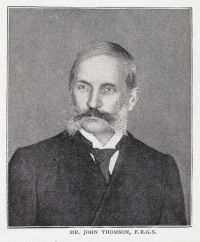 John Thomson,
Through China with a camera
(1898)
John Thomson,
Through China with a camera
(1898)
“ Swaboi, one of the most powerful villages in the province, stands about two miles distant from Swatow, and for many years has monopolised the right to supply coolies to that town. Several years ago, seventeen other villages combined against Swaboi, and resolved by force, if necessary, to put a stop to its monopoly of labour. The war lasted four years, and termin- ated in favour of Swaboi. At such times the villagers practise the most heartless cruelties on each other, burying their enemies, for example, while still alive, and head downwards, in graves prepared with quicklime and earth. ”
Owen Rowe O'Neil, Adventures in Swaziland: The Story of a South African Boer
“ The Swazi warrior chanting and dancing in the sunlight [55] is awesome enough, but when he becomes a silent swift-moving shadow of the night, he is terrifying. Particularly is this true when you are only a small boy and know that the shadow is fully armed and is deplorably careless with his weapons!Sibijaan was shaking with terror, and as soon as the shadows passed on we started back to camp. Neither of us spoke. We didn't need to. We knew that we wanted Oom Tuys and without a word started for him.A moment later we saw another band of warriors coming swiftly up the trail, so again we hid. ”
Richard Savage, A Fascinating Traitor: An Anglo-Indian Story
“ Berthe Louison had not reached the idle luxury of employing a dozen Hindus in infinitesimal labors near her person. For she fathomed easily Ram Lal’s devotion to Major Alan Hawke. The presence of keen-eyed Marie Victor’s brass camp-bed in My Lady’s sleeping-room was a source of wonder to the velvet-eyed spy who was Ram Lal’s especial “Bureau of Intelligence.” “Strange ways has this Mem-Sahib,” murmured the Hindu when he craved to know if the Daughter of the Sun and Light of the World desired aught. “I will then have two to watch. The waiting woman has the eye of a tiger.” ”
Owen Rowe O'Neil, Adventures in Swaziland: The Story of a South African Boer
“ We broke camp shortly after and started on the short climb to the top of the plateau. With our escort we made a party of about five hundred, and I felt very proud to be riding with Oom Tuys at the head of so imposing a procession.When we reached the top, Tuys reined in and pointed [58] across the Valley of Heaven to where two rounded peaks rose about a thousand feet above the river."You see those?" he asked. "Those mountains are Sheba's Breasts and are known everywhere in Swaziland. Beyond them is the Place of Execution. If you look closely, you can see that sharp cliff to their left." ”
Owen Rowe O'Neil, Adventures in Swaziland: The Story of a South African Boer
“ The Swazi is a very primitive savage; he has no hell or heaven and, under normal circumstances, no god. Their only supernatural belief is in a sort of evil spirit or devil. This devil, however, is under the control of the ruler and usually is most active in sending or holding back the rain so necessary to the scanty crops grown by the Swazis.In connection with this devil it is important to know that Queen Labotsibeni was the "rain-maker" of Swaziland. This gave her great power, since the natives fully believed in her supernatural powers. ”
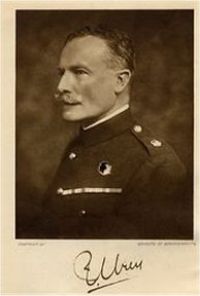 Percival Christopher Wren,
Cupid in Africa
Percival Christopher Wren,
Cupid in Africa
“ Near the ration-dump squatted a solid square of naked black men, not precisely savages, raw shenzis of the jungle, but something between these and the Swahilis who work as personal servants, gun-bearers, and the better class of safari porters. They were big men and looked strong. They smelt stronger. ”
Richard Savage, A Fascinating Traitor: An Anglo-Indian Story
“ The house was locked, the Indian servants having the Madame’s orders to admit no one, on any pretense. “Damn her!” growled Alan Hawke, when the door was shut in his face. “She feared I would give her away to Johnstone. No address! Not a line or a telegram! Only wait—only wait!” Ram Lal infuriated him later with the news that nothing could be learned from the baffled spies of the household in the Silver Bungalow as to the first or second interwiew of Johnstone and the resolute Alixe Delavigne. “Money will not do it! Not a lac of rupees. The Frenchman and woman never leave her day or night. ”
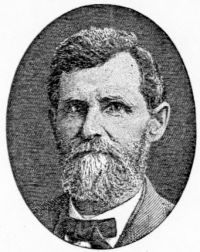 Lafayette Houghton Bunnell,
Discovery of the Yosemite, and the Indian War of 1851…
Lafayette Houghton Bunnell,
Discovery of the Yosemite, and the Indian War of 1851…
“ One of his five squaws assured him that a combination was maturing among the mountain Indians, to kill or drive all the white men from the country, 3a and plunder them of their property. To strengthen his influence over the principal tribes, Savage had, according to the custom of many mountain men, taken wives from among them, supposing his personal safety would be somewhat improved by so doing. This is the old story of the prosperous Indian trader. ”
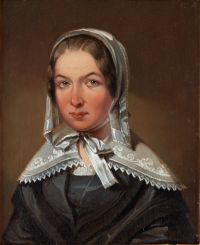 Fredrika Bremer,
The Homes of the New World
(1853)
Fredrika Bremer,
The Homes of the New World
(1853)
“ But I like Savannah. I find here a more vigorous spiritual life, a more free and unprejudiced looking at things and circumstances, in particular at the great question of slavery, than in Charleston, and I have here become acquainted with some excellent, true people—people who will look the question directly and fairly in the face; who, themselves slave holders from the more remote times, are yet labouring for the instruction of the slave, for emancipation and free colonisation. ”
Owen Rowe O'Neil, Adventures in Swaziland: The Story of a South African Boer
“ My desire to visit King Buno—How I won the trip on a bet—A Boer race meet—"Black Hand Tom," the hope of Rietvlei—Klaas's ride to save his skin—Father gives permission for my visit—Belfast celebrates the Boer victory.My absolute conviction that no one in the world owned a faster horse than "Black Hand Tom," my father's favorite, earned me my first visit to Swaziland. This was during the summer after the Great Drought, when the bloody rule of King Buno had become the shame of South Africa. ”
 James George Frazer,
The Golden Bough: A Study in Magic and Religion…
James George Frazer,
The Golden Bough: A Study in Magic and Religion…
“ Similar notions and practices prevail among the peasantry of southern Germany. Thus the Swabian peasants think that during an eclipse of the sun poison falls on the earth; hence at such a time they will not sow, mow, gather fruit or eat it, they bring the cattle into the stalls, and refrain from business of every kind. If the eclipse lasts long, the people get very anxious, set a burning candle on the mantel-shelf of the stove, and pray to be delivered from the danger. ”
