Syriac Christianity

Definition and stakes

Philip Khuri Hitti,  Syria: A Short History (1959)

“ Monasticism was a favoured way of life. Its ideals of celibacy, poverty and obedience held wide appeal. The decline of population, the waning of prosperity and the civil disturbances that marked the late Roman and early Byzantine decades, had led to a widespread loss of confidence in secular institutions. Christianity pre- sented something supernatural and ultramundane, including a belief in spiritual values worth renouncing this world for and dying for.
Linguistically the church in Syria had developed along two lines : Greek on the coast and in the Hellenized cities, Syriac in the interior.
”
Source: Wikisource

Walter Frederic Adeney,  The Greek and Eastern Churches (1908)

“ In the first place, then, we must understand that Syrian Christianity—in the early stages of its development—is the Christianity of the people speaking Syriac and living so far to the east that we scarcely think of their home as Syria at all Meanwhile the Greek-speaking Syrians in the west, with their headquarters at Antioch, are a different body of Christians, and form an integral portion of the Greek Church till they too are cut off, first by heresy, and then by Islam. ”
Source: Wikisource

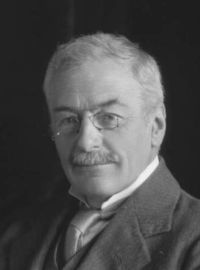
Portrait of Francis Crawford Burkitt Francis Crawford Burkitt,  Early Christianity outside the Roman Empire (1899)

“ In studying the Syriac-speaking branch of the Church, therefore, we may not hope to find an organisation more primitive than that of Justin Martyr or Hegesippus. But we know too little about the Church of the second century not to be grateful for anything that promises to throw light upon its aims and beliefs. And here the Syriac evidence is of real value. The Christianity planted in the Euphrates valley in the latter half of the second century seems to have developed more slowly—in other words, changed less—than that of the Greeks. ”
Source: Wikisource

Get perspective with Kwize: daily news enlightened by great literature