The Nore

Definition and stakes

Thomas Benfield Harbottle,  Dictionary of Historical Allusions

“ This tenet was preached by the Anglican clergy in the times of the Stuarts. It was also called the “Doctrine of Passive Obedience.”
Nore, Mutiny at the.
The name usually given to the mutinies in the fleet at the Nore and Spithead, which broke out in 1797. The discontent, due to real grievances, first showed itself at Spithead, where Lord Howe, who was in command, succeeded by his tact in arranging matters satisfactorily, and nothing very serious occurred. At the Nore the mutiny assumed a political character, the men demanding a revision of the Articles of War and other impossible concessions.
”
Source: Gutenberg

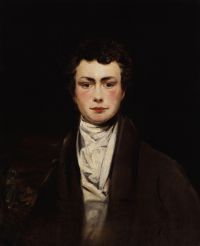
Portrait of Thomas Moore Thomas Moore,  The Complete Poems of Sir Thomas Moore

“ Sweeter 'tis to gaze upon
My Nora's lid that seldom rises;
Few its looks, but every one,
Like unexpected light, surprises!
Oh, My Nora Creina, dear,
My gentle, bashful Nora Creina,
Beauty lies
In many eyes,
But love in yours, My Nora Creina.
Lesbia wears a robe of gold,
But all so close the nymph hath laced it,
Not a charm of beauty's mould
Presumes to stay where nature placed it.
Oh! my Nora's gown for me,
That floats as wild as mountain breezes,
Leaving every beauty free
To sink or swell as Heaven pleases.
Yes, my Nora Creina, dear.
”
Source: Gutenberg

Baron Edward Bulwer Lytton Lytton,  "My Novel" — Volume 11

“ But whenever some whisper of romance did soften his hard, strong mind, or whenever moon or stars did charm his gaze from earth, Nora's bright Muse-like face, Nora's sweet loving eyes, were seen in moon and star-beam, Nora's low tender voice heard in the whisper of that which we call romance, and which is but the sound of the mysterious poetry that is ever in the air, would we but deign to hear it! ”
Source: Gutenberg

Get perspective with Kwize: daily news enlightened by great literature