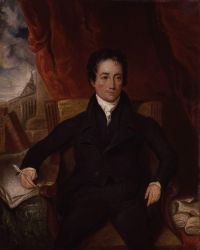
Thomas Collier

Definition and stakes

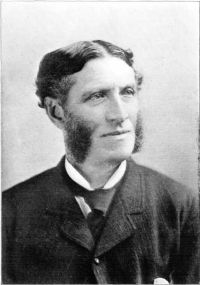
Portrait of Charles Lamb Charles Lamb,  The Works of Charles and Mary Lamb…

“ Collier's Poetical Decameron, in two volumes, was published in 1820: a series of imaginary conversations on curious and little-known books. His "Twelfth Night" discoveries will be found in the Eighth Conversation; Collier deduces the play from Barnaby Rich's Farewell to Military Profession, 1606. He also describes Thomas Lodge's "Rosalynde," the forerunner of "As You Like It," in which is the character Rosader, whom Lamb calls Osrades. ”
Source: Gutenberg

Portrait of O. Henry O. Henry,  Heart of the West (1907)

“ I guess that’s why Sis got soft on him. He don’t eat nothing. He’s going to fast forty-nine days. This is the sixth. That’s him.’
“I looked at the name Thomas pointed out—‘Professor Eduardo Collieri.’ ‘Ah!’ says I, in admiration, ‘that’s not so bad, Ed Collier. I give you credit for the trick. But I don’t give you the girl until she’s Mrs. Freak.’
“I hit the sod in the direction of the show. I came up to the rear of the tent, and, as I did so, a man wiggled out like a snake from under the bottom of the canvas, scrambled to his feet, and ran into me like a locoed bronco.
”
Source: Wikisource

Charles William Sutton,  Dictionary of National Biography… (1887)

“ Collier's eldest son, John, was settled for many years as a coachmaker at Newcastle-on-Tyne, and there published ' An Essay on Charters, in which are particularly considered those of Newcastle, with remarks on its constitution, customs, and franchises' (1777, 8vo, pp. vi, 108) , and 'An Alphabet for Grown-up Grammarians,' 1778, 8vo. His second son, Thomas, printed at Penrith in 1792 a pamphlet entitled 'Poetical Politics,' but the whole impression was seized and burnt with the exception of a single copy. Charles, his third son, was a portrait painter. ”
Source: Wikisource

Get perspective with Kwize: daily news enlightened by great literature