Thomas Newton

Definition and stakes

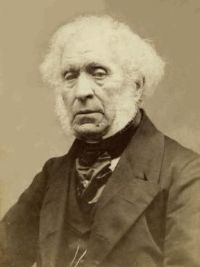
Portrait of David Brewster David Brewster,  The Life of Sir Isaac Newton

“ With the exception of Hooke, Huygens, and Euler, almost all the contemporaries and successors of Newton maintained the doctrine of the materiality of light. It was first successfully assailed by Dr. Thomas Young, and since that time it has been shaken to its foundation by those great discoveries109 which have illustrated the commencement of the present century. The undulatory theory, which has thus triumphed in its turn, is still subject to grave difficulties, and we fear another century must elapse before a final decision can be pronounced on this long-agitated question. ”
Source: Gutenberg

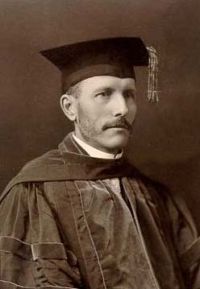
Portrait of Thomas Henry Huxley Thomas Henry Huxley,  Collected Essays, Volume V

“ According to my reading of the best authorities upon the history of science, Newton discovered neither gravitation, nor the law of gravitation; nor did he pretend to offer more than a conjecture as to the causation of gravitation. Moreover, his assertion that the notion of a body acting where it is not, is one that no competent thinker could entertain, is antagonistic to the whole current conception of attractive and repulsive forces, and therefore of "the attractive force of gravitation." ”
Source: Gutenberg

Portrait of Thomas Henry Huxley Thomas Henry Huxley,  Lay Sermons, Addresses and Reviews

“ It was by the aid of the Royal Society that Newton published his "Principia." If all the books in the world, except the Philosophical Transactions, were destroyed, it is safe to say that the foundations of physical science would remain unshaken, and that the vast intellectual progress of the last two centuries would be largely, though incompletely, recorded. ”
Source: Gutenberg

Get perspective with Kwize: daily news enlightened by great literature