Tibetan Plateau

Definition and stakes

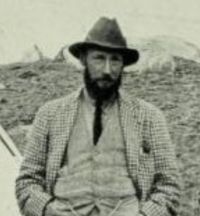
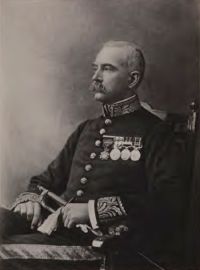
Portrait of Arnold Henry Savage Landor Arnold Henry Savage Landor,  An Explorer's Adventures in Tibet

“ People are right when they call it the "roof of the world." Nothing, or next to nothing, grows on that high plateau, except poor shrubs and grass in the lower valleys. The natives live on food imported from neighboring countries. They obtain this by giving in exchange wool, borax, iron, and gold.
High mountain ranges bound the Tibetan plateau on all sides. The highest is the Himahlya range to the south, the loftiest mountain range on earth. From the south it is only possible to enter Tibet with an expedition in summer, when the mountain passes are not entirely blocked by snow.
”
Source: Gutenberg

Portrait of Arnold Henry Savage Landor Arnold Henry Savage Landor,  In the forbidden land

“ Under the lee of a large rock we found temporary shelter, and through my telescope scanned the Tibetan plateau spread out before us. From this high eyrie we obtained a superb bird's-eye view. Huge masses of snow covered the Tibetan side of the Himahlyas, as well as the lower range of mountains immediately in front of us, running almost parallel to our range. Two thousand feet below, between these two ranges, flowed, in a wide barren valley, a river which is afterwards called the Darma Yankti or Lumpiya Yankti. ”
Source: Gutenberg

John Thomas Bealby and Peter Alexeivitch Kropotkin,  1911 Encyclopædia Britannica, Volume 15… (1911)

“ On the other hand, the precipitation on the Tibetan plateau is so copious, and so uniformly distributed, that it is able to retain the loosened material in situ, and causes it to heap itself up in rounded masses on the flanks of the mountains that are its primitive source of origin, these projecting in great part like skeletons from the midst of their own ruins. ”
Source: Wikisource

Get perspective with Kwize: daily news enlightened by great literature