Turanians

Definition and stakes

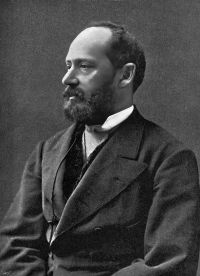
Portrait of Lothrop Stoddard Lothrop Stoddard,  The New World of Islam

“ According to Pan-Turanian teaching, the historic peoples of southern Asia—Arabs, Persians, and Hindus—are hopelessly degenerate. As for the Europeans, they have recently passed their apogee, and, exhausted by the consuming fires of modern industrialism, are already entering upon their decline. [Pg 167] It is the Turanians, with their inherent virility and steady nerves unspoiled by the wear and tear of Western civilization, who must be the great dynamic of the future. ”
Source: Gutenberg

Zénaïde A. Ragozin,  Chaldea: From the Earliest Times to the Rise of Assyria

“ It seems always to have been broken up into a great many tribes and peoples, whom it has been found convenient to gather under the general designation of Turanians, from a very ancient name,—Tur or Tura—which was given them by the white population of Persia and Central Asia, and which is still preserved in that of one of their principal surviving branches, the Turks. All the different members of this great family have had very striking features in common,—the most extraordinary being an incapability of reaching the highest culture, of progressing indefinitely, improving continually. ”
Source: Gutenberg

William Charles Benett,  Gazetteer of the Province of Oudh Vol-2 -- H. to M. (1877)

“ The Turanians it is not denied colonized India; they were the great builders of antiquity; they held Oudh before the Arian invasion; they must have built cities; the towns whose names end as abovementioned are in every case so ancient that their origin is lost in obscurity; their antiquity corresponds with the Turanian age; no other urban traces of that age are found; they bear the district traces of Turänian origin; in fact history, tradition, and etymology are in harmony. ”
Source: Wikisource

Get perspective with Kwize: daily news enlightened by great literature