“ The ordinary English man or woman, unconnected with Oxford, has never heard of them. The undergraduate and the ordinary don has seen some part just now and then, when some enthusiastic guests have had to be taken round the sights.And yet a book of many volumes might be written to tell of the things both rare and exquisite that Oxford hugs most close to her breast. He who cares to look may find them everywhere. There is not a college in all the University that does not possess something precious, either for its intrinsic beauty or for its historical interest. ”
University College, Oxford
Definition and stakes
University College, Oxford, established in 1249, is a constituent college of the University of Oxford, celebrated for its rich history and distinguished graduates. Although discussions continue regarding its claim to being the oldest college, its legacy is defined by architectural development, academic excellence, and a balance between tradition and modernity. Authors such as F. D.
How admired Oxford’s concealed gems, while J. Wells highlighted the college system’s ability to adjust to societal shifts. Andrew Lang described Oxford as a microcosm of English intellectual culture, illustrating its function as both a breeding ground for ideas and a reflection of national conversation. These viewpoints together emphasize the college’s lasting connection between its heritage and its evolution.
Quotes about “University College, Oxford”
“ If Oxford thus, to some extent, moulded to her pattern men who, welcome as they were, were only accidental, surely the college spirit may be trusted to assimilate whatever material the changed conditions of social or of political life furnish to it. The hope of many at Oxford is that there will be a great development and a great change. On one side it will be good if Oxford becomes to a much greater extent not only an all-British, but also a world university; on another side it is to be hoped that far more than ever before men of all classes in England will come to Oxford. ”

“ We shall have considered Oxford to very little purpose, if it is not plain that the University has been less a home of learning, on the whole, than a microcosm of English intellectual life. At Oxford the men have been thinking what England was to think a few months later, and they have been thinking with the passion and the energy of youth. The impulse to thought has not, perhaps, very often been given by any mind or minds within the college walls; it has come from without—from Italy, from France, from London, from a country vicarage, perhaps, from the voice of a wandering preacher. ”


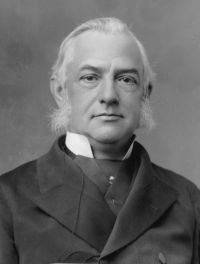
Related terms
Authors who wrote about “University College, Oxford”
J. Wells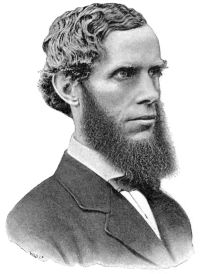 George C. Brodrick
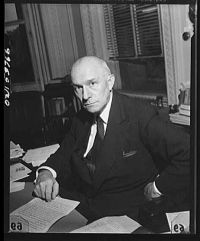 Stanley Kuhl HornbeckJohn Corbin
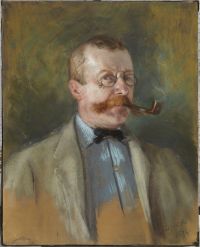 Laurence HuttonOsbert John Radcliffe HowarthCecil HeadlamJohn Richard MagrathM. A. R. TukerRichard Gooch
 Edward ThomasBenjamin Homer Hall
 Nicholas AmhurstF. D. HowEvelyn AbbottGreville John ChesterA. G. Little
 Falconer Madan
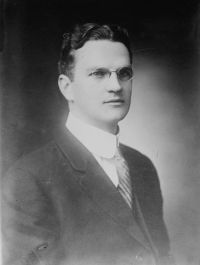 William Trufant Foster
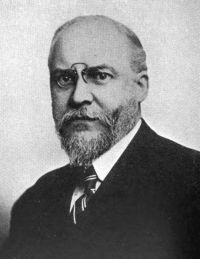 William Raimond Baird
George C. BrodrickStanley Kuhl HornbeckJohn CorbinLaurence HuttonOsbert John Radcliffe HowarthCecil HeadlamJohn Richard MagrathM. A. R. TukerRichard GoochEdward ThomasBenjamin Homer HallNicholas AmhurstF. D. HowEvelyn AbbottGreville John ChesterA. G. LittleFalconer MadanWilliam Trufant FosterWilliam Raimond Baird