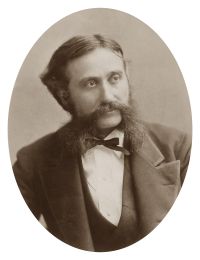
The Utah Territory, established in 1850 and admitted as the 45th state in 1896, was a crucial administrative region encompassing present-day Utah, parts of Nevada, Colorado, and Wyoming. Its history is closely linked to Mormon settlement under Brigham Young’s leadership, territorial governance, and discussions regarding slavery and statehood.
Authors such as Sir Richard Francis Burton emphasized its strategic function as a “half-way station,” while Theodore Roosevelt commended pioneers for converting arid landscapes into thriving communities. Erastus Snow observed its effective management, and Mrs. Stenhouse discussed tensions between Mormon independence and federal control. The territory’s transformation—from a contested frontier to a self-governing region—illustrates larger themes of expansion, cultural conflict, and the pursuit of statehood.
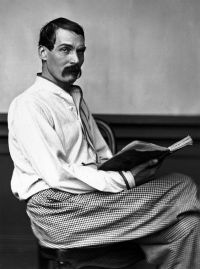 Sir Richard Francis Burton,
The City of the Saints, and Across the Rocky Mountains to California
Sir Richard Francis Burton,
The City of the Saints, and Across the Rocky Mountains to California