William Davenant

Definition and stakes

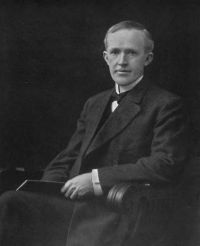
Portrait of Andrew Lang Andrew Lang History of English Literature from "Beowulf" to Swinburne

Sir William Davenant (1606-1668) was more interesting as a man, and in his relations with greater men of letters, than as a poet. His vast "epic" "Gondibert," concerned with the heroic age of Lombardy, and written in quatrains of alternately rhyming decasyllabic lines, is a monument of misplaced ambition. Davenant's father was landlord of the Crown Inn, at Oxford, and Davenant did not discourage the legend that Shakespeare was his mother's admirer. At a very early age, Davenant wrote the briefest of elegiac odes on Shakespeare's death.
Source: Gutenberg

Portrait of Samuel McChord Crothers Samuel McChord Crothers The Gentle Reader

The Gentle Reader feels that whatever may be the merits of Gondibert, Sir William Davenant is a gallant gentleman and worthy of his lasting friendship.
The Gentle Reader has a warm place in his heart for those whom he calls the paradisaical writers. These are the unfallen spirits who reveal their native dispositions and are not ashamed. They write about that which they find most interesting—themselves. They not only tell us what happens, but what they think and how they feel. We are made partners of their joys and sorrows. The first person singular is glorified by their use.
Source: Gutenberg

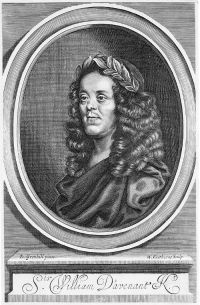
Portrait of William Davenant William Davenant Gondibert: An Heroick Poem (1651)

Dive deep in Seas, through Forrests follow winds,
Or reach with Optick Tubes the ragged Moon,
My sight no cause of Love's swift motion finds.
56.
Love's fatal haste, in yours, I will not blame,
Because I know not why his wings were giv'n;
Nor doubt him true, not knowing whence he came,
Nor Birtha chide, who thought you came from Heav'n.
57.
If you lay snares, we erre when we escape;
Since evil practise learns Men to suspect
Where falshood is, and in your noble shape,
We should by finding it, our skill detect.
Source: Wikisource

Get perspective with Kwize: daily news enlightened by great literature