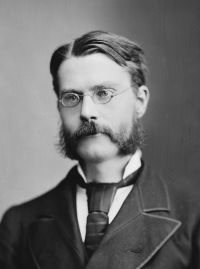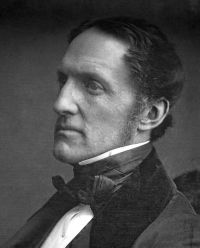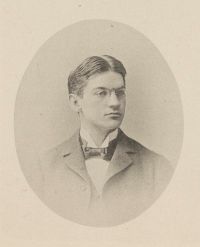
William Watson

Definition and stakes

Portrait of William Lyon Phelps William Lyon Phelps The Advance of English Poetry in the Twentieth Century

Nearly all English poetry smells of the sea; the waves rule Britannia. Alfred Noyes loves the ocean, and loves the old sea-dogs of Devonshire. He is not a literary poet, like William Watson, and has seldom given indication of possessing the insight or the interpretative power of his contemporary in dealing with pure literature. He has the blessed gift of admiration, and his poems on Swinburne, Meredith, and other masters show a high reverence; but they are without subtlety, and lack the discriminating phrase.
Source: Gutenberg

Portrait of Edward Singleton Holden Edward Singleton Holden Sir William Herschel, his life and works (1881)

William Watson, a Fellow of the Royal Society, distinguished for his researches in electricity, happened to see him at his telescope, and this led to a visit and an invitation to Herschel to join the Philosophical Society of Bath, then forming. This he gladly did, and it was of use to him in many ways.
He there formed acquaintance with men of his own way of thinking, and he himself became known. Better than all, he learned to measure himself with other men, and by his early papers read to the Society, he gained skill in putting his thoughts before his hearers.
Source: Wikisource

William Price James 1911 Encyclopædia Britannica, Volume 28… (1911)

Except in his political verse there is more thought than passion. Bearing trace enough of the influence of the romantic epoch, his poetry recalls the earlier classical period in its epigrammatic phrasing and Latinized diction. By the distinction and clarity of his style and the dignity of his movement William Watson stands in the true classical tradition of great English verse, in a generation rather given over to lawlessness and experiment.
Source: Wikisource

Get perspective with Kwize: daily news enlightened by great literature