“ There are moral, metaphysical, physical professors; professors of languages, of history, of mathematics, of experimental science. Lists of questions are published, wonderful for their range and depth, variety and difficulty; treatises are written, which carry upon their very face the evidence of extensive reading or multifarious information; what then is wanting for mental culture to a person of large reading and scientific attainments? what is grasp of mind but acquirement? where shall philosophical repose be found, but in the consciousness and enjoyment of large intellectual possessions? ”
Academicism
Definition and stakes
The theme of “academicism” has been addressed by authors such as . It is often associated with terms like education, science, knowledge, literature and university.
Quotes about “academicism”
 Charles Dudley Warner,
Certain Diversities of American Life
Charles Dudley Warner,
Certain Diversities of American Life
“ But the higher education has been transformed, and mainly by the application of scientific methods, and of the philosophic spirit, to the study of history, economics, and the classics. When we are called to defend the pursuit of metaphysics or the study of the classics, either as indispensable to the discipline or to the enlargement of the mind, we are not called on to defend the methods of a generation ago. ”
Charlotte M. Mason, An Essay Towards a Philosophy of Education…
“ What we may call the ‘Academic’ solution of the problem is,—teach a boy to know one thing thoroughly, say, Greek or Chemistry or Mathematics, and you give him the key to all knowledge. Therefore, we are told, it is not what you know that matters, but how you learn it; and a grammar grind, a mathematics grind or a laboratory ‘stunt,’ with a few odd matters thrown in, is supposed to answer all the purposes of education. The plan answers fairly well with the dozen best boys or girls in any school, because these are so keen and intelligent that they forage for themselves in various directions ”
Charles H. Ham, Mind and Hand: Manual Training the Chief Factor in Education (1900)
“ It is the most astounding fact of history that education has been confined to abstractions. The schools have taught history, mathematics, language and literature, and the sciences, to the utter exclusion of the arts, notwithstanding the obvious fact that it is through the arts alone that other branches of learning touch human life. ”
Harvard Psychological Studies, Volume 2
“ Every year our universities reward our most advanced young scholars of philology and history, of literature and economics, of physics and chemistry, of mathematics and biology with the degree of Ph.D., that is of Doctor Philosophiae, thus symbolically expressing that all the special sciences are ultimately only branches of philosophy; but the truth of this symbol has faded away from the consciousness of the academic community. ”
James J. Walsh, The century of Columbus
“ For centuries education had occupied itself with science, and particularly the ethical sciences. Philosophy in its various aspects constituted the curriculum of the old universities. Metaphysics, logic, rhetoric, grammar, the ethical philosophies or, as we would say, sciences of the world, of thought, of speech, and of political and moral science, though of course also mathematics, music and astronomy, had been the subjects of special attention. Now men {244} were trained by means of the classics, the New Learning, as it was called. ”
James Gall, A Practical Enquiry into the Philosophy of Education
“ But if, as we have seen, education must bend to the same rigid discipline to which the other sciences have had to submit,—and if teaching can be improved only by following the laws which have determined the success of the other arts—the question [Pg 33] naturally arises, "What is to be done now for education?"—"Where are we to begin?"—"How are we to proceed?"—"In what manner are the principles of the science to be investigated, so that they shall most extensively promote the success of the art? ”
 Helen Keller,
Optimism
(1903)
Helen Keller,
Optimism
(1903)
“ Education broadens to include all men, and deepens to reach all truths. Scholars are no longer confined to Greek, Latin and mathematics, but they also study science; and science converts the dreams of the poet, the theory of the mathematician and the fiction of the economist into ships, hospitals and instruments that enable one skilled hand to perform the work of a thousand. ”
Various, The Yale Literary Magazine (Vol…
“ But it is that that he should be taught; it is that which should absolutely be driven home to him, lest chaos become dissolution.And how? The answer, in part, is the old, old answer which must ring true so long as discipline, intellectually, means the more perfect, and therefore the more beautiful result—the Classics. In this age of science, such a suggestion, no doubt, is heretical—but only consider it for a moment, one small phase of it as it applies to us in the college world. Consider the undergraduate in a university. ”
 Richard Claverhouse Jebb,
Essays and Addresses
(1907)
Richard Claverhouse Jebb,
Essays and Addresses
(1907)
“ We gladly recognise that such specialists are doing invaluable service, in their several lines, to the cause of knowledge; but we may also wish that the desire to be scientific was more uniformly tempered by a regard for the nature of the materials with which all scholarship has to deal. Those materials are the creations of the human intellect, whether as seen in the evolution of language, or of literature, or of art. ”
Popular Science Monthly (1880)
“ Let our schools and our colleges and universities make men first, and then let them make lawyers and physicians and teachers. Ordinarily, so far as education is concerned—and we are confining our discussion to that now—the only path to true completed manhood is through a thorough course of educational training. Latin and Greek and the higher mathematics, rhetoric and logic and mental and moral philosophy, these are the useful studies in education. ”
Charlotte M. Mason, An Essay Towards a Philosophy of Education…
“ Science, history, philosophy, literature, must [43] no longer be the luxuries of the ‘educated’ classes; all classes must be educated and sit down to these things of the mind as they do to their daily bread. History must afford its pageants, science its wonders, literature its intimacies, philosophy its speculations, religion its assurances to every man, and his education must have prepared him for wanderings in these realms of gold. ”
 William Trufant Foster,
Should Students Study?
(1917)
William Trufant Foster,
Should Students Study?
(1917)
“ History, sociology, government, music, fine arts, literature, logic, psychology, philosophy, religion, and various sciences presented as liberal rather than technical education—mathematics, biology, physics, chemistry, and astronomy—these subjects are often condemned as impractical. ”
 John Henry Newman,
The Idea of a University Defined and Illustrated
John Henry Newman,
The Idea of a University Defined and Illustrated
“ Nor, lastly, am I disparaging or discouraging the thorough acquisition of any one of these studies, or denying that, as far as it goes, such thorough acquisition is a real education of the mind. All I say is, call things by their right names, and do not confuse together ideas which are essentially different. A thorough knowledge of one science and a superficial acquaintance with many, are not the same thing; a smattering of a hundred things or a memory for detail, is not a philosophical or comprehensive view. Recreations are not education; accomplishments are not education. ”
George Thompson, Convocation Addresses of the Universities of Bombay and Madras (1892)
“ Hitherto your course has been shaped and your education directed by others; 'now you must think and act for yourselves, and realize the rules and principles you have been taught. You are able to appreciate in some degree the merits and defects of the culture you have received. Your knowledge of the laws of matter, force and mind, rudimentary though it may be at present, is yet sufficient to place you on the ladder of intellectual progress, and your own efforts well directed, will enable you to ascend. ”
Charlotte M. Mason, An Essay Towards a Philosophy of Education…
“ Shortly we shall have a new rule,—every school must educate every scholar in the three sorts of knowledge proper to him as a human being. What is knowledge? some one will say, and there is no pat, neatly-framed answer to be given; only this we can assert,—Knowledge is that which we know; and the learner knows only by a definite act of knowing which he performs for himself. ”
John Henry Newman,
The Idea of a University Defined and Illustrated
“ You may as well call drawing and fencing education, as a general knowledge of botany or conchology. Stuffing birds or playing stringed instruments is an elegant pastime, and a resource to the idle, but it is not education; it does not form or cultivate the intellect. Education is a high word; it is the preparation for knowledge, and it is the imparting of knowledge in proportion to that preparation. ”
 Ralph Waldo Emerson,
Essays — First Series
Ralph Waldo Emerson,
Essays — First Series
“ My will never gave the images in my mind the rank they now take. The regular course of studies, the years of academical and professional education have not yielded me better facts than some idle books under the bench at the Latin School. What we do not call education is more precious than that which we call so. We form no guess, at the time of receiving a thought, of its comparative value. And education often wastes its effort in attempts to thwart and balk this natural magnetism, which is sure to select what belongs to it. ”
Various, The Catholic World, Vol. 25, April 1877 to September 1877
“ Did it depend on us to have the recasting of the system of education, we should be inclined to add on a year of further study as a requisite for graduation, and during the last two years of a young man’s course we would employ him entirely in the study of metaphysics and ethics, including the principles of political economy, of the philosophy of history—in which the great questions of history, as far as possible, might be reviewed—and in the further polish of his literary English training. ”
 Simon Newcomb,
Side-Lights on Astronomy and Kindred Fields of Popular Science
Simon Newcomb,
Side-Lights on Astronomy and Kindred Fields of Popular Science
“ It seems to me that the true educational want is ignored both by those who advocate a classical and those who advocate a scientific education. What is really wanted is to train the intellectual powers, and the question ought to be, what is the best method of doing this? ”
Lives of Distinguished North Carolinians…
“ Education is not [167] completed within these walls. When you shall have quitted this peaceful retreat, and selected the profession or state in life in which you are to be engaged, then you should apply all your efforts to the acquisition of that species of knowledge which is more especially needed. Here are inculcated those elementary principles of science and literature which experience has shown to be best fitted to form the foundation of the character of the scholar and gentleman—those rudiments of instruction, which, omitted here, are rarely indeed acquired afterwards. ”
 H. G. Wells,
Mankind in the Making
H. G. Wells,
Mankind in the Making
“ Our work now is to broaden both the conception of research and of teaching, to recognize that whatever imports fresh and valid ideas, fresh and valid aspects—not simply of chemical and physical matters, but of aesthetic, social, and political matters, partakes of the honour and claims of research—and that whatever conveys ideas and aspects vividly and clearly and invigoratingly, not simply by word of mouth but by book or picture or article, is teaching. ”
“ And now, if I may take for granted that the true and adequate end of intellectual training and of a university is not learning or acquirement, but rather, is thought or reason exercised upon knowledge, or what may be called philosophy, I shall be in a position to explain the various mistakes which at the present day beset the subject of university education.I say then, if we would improve the intellect, first of all, we must ascend; we cannot gain real knowledge on a level ”
 Herbert Spencer,
Essays on Education and Kindred Subjects
Herbert Spencer,
Essays on Education and Kindred Subjects
“ Before educational methods can be made to harmonise in character and arrangement with the faculties in their mode and order of unfolding, it is first needful that we ascertain with some completeness how the faculties do unfold. At present we have acquired, on this point, only a few general notions. These general notions must be developed in detail—must be transformed into a multitude of specific propositions, before we can be said to possess that science on which the art of education must be based. ”
Henry Fortey, Convocation Addresses of the Universities of Bombay and Madras (1892)
“ Devote your best energies to these objects, remembering that between the young student, however successful, and the ripe and mature scholar, there is a vast space which can only be passed over by years of patient and laborious toil. Remember also that every profession is both an Art and a Science, and that dreamy theorism and vulgar empiricism are equally to be avoided. ”
 John Stuart Mill,
Inaugural address delivered to the University of St…
(1867)
John Stuart Mill,
Inaugural address delivered to the University of St…
(1867)
“ Let me first say a few words on the great controversy of the present day with regard to the higher education, the difference which most broadly divides educational reformers and conservatives; the vexed question between the ancient languages and the modern sciences and arts; whether general education should be classical let me use a wider expression, and say literary—or scientific. ”
 Thomas Henry Huxley,
Critiques and Addresses
Thomas Henry Huxley,
Critiques and Addresses
“ Professors must live; to live they must occupy themselves with practice, and if they occupy themselves with practice, the pursuit of the abstract branches of science must go to the wall. All this is a plain and obvious matter of common-sense reasoning. ”
 Carl Schurz,
Phi Beta Kappa Oration at Harvard
Carl Schurz,
Phi Beta Kappa Oration at Harvard
“ Every institution of learning should, therefore, as I think, strenuously endeavor to draw every one of its students, whatever his plan of life may be, into the influence of this study, by making it peculiarly attractive. And to this end historical instruction should be — and I trust here it is — put into the hands of men who with a thorough mastery of the subject unite a high degree of perfection in the art of teaching. ”
William Walter Phelps, Appletons' Cyclopædia of American Biography (1900)
“ But the effects of twenty-five years of most varied discipline, cheerfully accepted and faithfully used, begin now to show themselves, and to give to history one of its most striking examples of what education — the education of books and of circumstances — can accomplish. ”
 Dorothea Beale,
Work and Play in Girls' Schools
Dorothea Beale,
Work and Play in Girls' Schools
“ And lastly in the highest teachings, which have to do, not with the objective surroundings, but with the man himself, with his thoughts and aspirations, with the expression of these in literature, in art, in ethics, and politics, and philosophy, the student will find enough to develop the highest powers of thought, as he wrestles with the problems of life, when he has reached the later period of study. ”
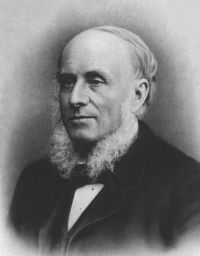 Alexander Bain,
Practical Essays
Alexander Bain,
Practical Essays
“ Many of you in these days pass into another vocation—Letters, or the Press. Here too, almost everything you learn will pay you professionally. Still, I am careful not to rest the case for general education on professional grounds alone. I might show you that the highest work of all—original enquiry—needs a broad basis of liberal study; or at all events is vastly aided by that. Genius will work on even a narrow basis, but imperfect preparatory study leaves marks of imperfection in the product. ”
Francis William Blagdon, Paris as It Was and as It Is
“ From an attentive perusal of the plan, of which I have traced you the leading features, you will be convinced that the study of the sciences will gain by the new system, without that of literature being in danger of losing. The number of professors is increased, and yet the period of education is not prolonged. A pupil will always be at liberty to apply himself more intensely to the branch to which he is impelled by his particular inclination. He may confine himself to one course of lectures, or attend to several, according to his intellectual means. ”
Harvey Newcomb, How to be a man
“ But, understanding the design of education to be, to discipline the mind, and furnish it with the elements of knowledge, there is no science, no branch of learning, but what is useful for these objects; and the only question, where education cannot be liberal, is, What branches will best secure these ends? ”
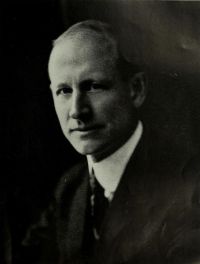 Frank Pierrepont Graves,
A student's history of education
Frank Pierrepont Graves,
A student's history of education
“ In consequence of this scientific progress, the educational theorists began to introduce science and a knowledge of real things into the curriculum. It came to be widely felt that humanism gave a knowledge only of words, books, and opinions, and did not even at its best lead to a study of real things. ”
Amos R. Wells, Sunday-School Success
“ But your scholars are loaded, objectors. Though they may not be loaded with precisely the information you have been seeking from them, they are loaded with experiences,—all their short lives will hold. They are loaded with temptations and troubles and needs. They are loaded with questions and curiosity. They have information, too, any amount of it, that may be brought into suggestive connection with the lesson, if you know how to make shrewd use of their public-school history and geography and science. ”
