 Gloria Macapagal-Arroyo,
Eighth State of the Nation Address
Gloria Macapagal-Arroyo,
Eighth State of the Nation Address
“ Agrarian reform should not merely subdivide misery, it must raise living standards. Ownership raises the farmer from his but productivity will keep him on his feet. ”
Gloria Macapagal-Arroyo,
Eighth State of the Nation Address
“ Agrarian reform should not merely subdivide misery, it must raise living standards. Ownership raises the farmer from his but productivity will keep him on his feet. ”
 Corazon Aquino,
Third State of the Nation Address
Corazon Aquino,
Third State of the Nation Address
“ Fourth, as the lynchpin of our efforts to lift the mass of our people from poverty, we must implement agrarian reform with greater vigor, doing our best to combine speed with the necessary caution. I would like to stress again the aim of agrarian reform. ”
 Fidel V. Ramos,
Fourth State of the Nation Address
Fidel V. Ramos,
Fourth State of the Nation Address
“ We seek legislation to improve the urban poor's easier access to decent and affordable housing. And I ask this Congress to continue its predecessor's work of setting the framework of agrarian reform and modernizing agriculture -- as the foundation of industrialization and sustainable, broad-based development. I ask you to give maximum legislative support towards the increase of the Agrarian Reform Fund, and to pass the Irrigation Crisis Act, if we are to make our small farmers competitive in the world. ”
Corazon Aquino,
Second State of the Nation Address
(1988)
“ Central to our strategy for improving rural incomes is the Comprehensive Agrarian Reform Program whose highest aim, I must stress again, is not mere land redistribution, but higher productivity from the land and a higher standard of living for the farming communities that are the backbone of our nation. ”
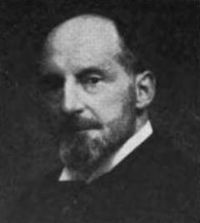 Charles Stanton Devas,
Catholic Encyclopedia
(1913)
Charles Stanton Devas,
Catholic Encyclopedia
(1913)
“ Neither George nor Kautsky are true to facts, but both are good witnesses to the importance of agrarian reform as fatal to agrarian socialism. The misuse of the rights of property, such as the misdeeds of Scotch and Irish landlordism, and of the tenement-owners of Europe and America, are the food that feeds agrarian socialism. To make such misdeeds impossible is the task of social reform under a wise government. ”
Fidel V. Ramos,
Second State of the Nation Address
“ But you and I know agrarian reform is more than just the redistribution of land. We have therefore taken decisive steps also to ensure that the land remains productive for farmers. We increased agricultural support services and livelihood assistance to CARP beneficiaries. We encouraged them to organize cooperatives and to take advantage of economies of scale to enhance their productivity. ”
Constituent Assembly of Portugal, Constitution of the Portuguese Republic
“ TITLE IV Agrarian Reform ARTICLE 96. (Objectives of Agrarian Reform) Agrarian reform is one of the fundamental instruments for building a socialist society, and its aims are: (a) to promote the improvement of the economic, social and cultural situation of rural workers and small and medium-sized farmers by the transformation of landholding structures and the progressive transfer of the useful ownership of land and the means of production directly used in its exploitation to those who work it, as a first step towards the creation of new relations of production in agriculture ”
Common Program of the Chinese People's Political Consultative Conference
“ In areas where agrarian reform has not been carried out, the peasant masses must be set in motion to establish peasant organisations and to put into effect the policy of "land to the tiller" through such measures as the elimination of local bandits and despots, the reduction of rent and interest and the distribution of land. ”
Portal:United States Department of State, Documents on the Nicaraguan Resistance (1986)
“ To carry out an integral agrarian reform, which responds to the natural right of private property, taking into account efficiency in the utilization of resources and the utility of giving land to those who work it ”
 Ferdinand Marcos,
Ninth State of the Nation Address
Ferdinand Marcos,
Ninth State of the Nation Address
“ We have moved on agrarian reform, and I need not go into this I will make a more detailed presentation of agrarian reforms when we inaugurate the proclamation of land reform sometime in the later part of this month.But now, I would like to move into what I consider one of the most important pillars of agricultural development, which is the Cooperatives Development Program. Our agrarian reform program, to be faithful to our hopes, and to liberate our farmers from bondage rather than imprison them in failed expectations, must now move swiftly in rural areas. ”
Common Program of the Chinese People's Political Consultative Conference
“ In this way all components of the social economy can, under the leadership of the state-owned economy, carry out division and co-ordination of labour and play their respective parts in promoting the development of the social economy as a whole.ARTICLE 27. Agrarian reform is the necessary condition for the development of the nation's productive power and for its industrialization. In all areas where agrarian reform has been carried out, the ownership of the land required by the peasants shall be protected. ”
Fidel V. Ramos,
Second State of the Nation Address
“ We can then free some three million hectares now devoted to marginal rice and corn growing to other uses -- to pasture, to aqua-culture and to high value crops. These efforts in agriculture must be matched by equally resolute efforts at agrarian reform. ”
Constituent Assembly of Portugal, Constitution of the Portuguese Republic
“ Without prejudice to the right of ownership, agrarian reform will strive to achieve an adequate resizing of holdings in minifundia regions, preferably through cooperative integration of the various units or, whenever necessary, through land consolidation or leasing, through the mediation of the agrarian reform coordinating body. ”
R. H. Tawney, The Agrarian Problem in the Sixteenth Century
“ The State is to do no more than restore the old usages, and the end of all is to be a sort of idealised manorial customary enforced by a strong central Government throughout the length of the land, free use of common lands, reduced rents of meadow and marsh, reasonable fines for copyholds, free fisheries, and the abolition of the lingering disability of personal villeinage. The most striking thing about these demands is their conservatism. Almost exactly a hundred years later agrarian reform will be demanded as part of a new heaven and a new earth. ”
Common Program of the Chinese People's Political Consultative Conference
“ In newly-liberated areas, every step in agrarian reform shall be linked up with reviving and developing agricultural production.The People's Government shall, in accordance with the state plan and the requirements of the people's livelihood, strive to restore the output of grain, industrial raw materials and export goods to the pre-war production level and to surpass it within the shortest possible time. ”
Fidel V. Ramos,
Fifth State of the Nation Address
“ While we have provided 3,500 scholarship slots per year to train students to become technicians, scientists and engineers, we should at least treble this number in the next two years. In agrarian reform, we have achieved significant progress during the last four years in the distribution of agricultural land to our landless farmers. ”
 Anton Ivanovich Denikin,
The Russian Turmoil; Memoirs: Military…
Anton Ivanovich Denikin,
The Russian Turmoil; Memoirs: Military…
“ It is difficult to form an exhaustive idea of the motives which prompted the land-owners to defend their rights so stubbornly and so energetically: was it atavism, a natural yearning for the land, statesmanlike considerations as to the desirability of increasing the productivity of the land by introducing higher methods of agriculture, a desire to maintain a direct influence over the people, or was it merely selfishness?... One thing is certain—the agrarian reforms were overdue. ”
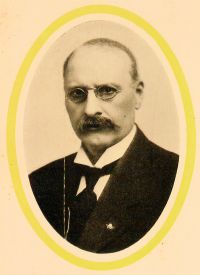 John H. Worst,
The Stewardship of the Soil
John H. Worst,
The Stewardship of the Soil
“ What the state needs to encourage, therefore, is farm ownership by the many rather than by the few, and farm ownership rather than farm tenantry. We must retain on the farm, as farmers, the best type of American manhood and womanhood or the nation will fall into decay, just as Rome fell with the decline of her agrarian influence. ”
R. H. Tawney, The Agrarian Problem in the Sixteenth Century
“ Any one who turns over the Statutes and State Papers of the sixteenth century will be aware that statesmen were much exercised with an agrarian problem, which they thought to be comparatively new, and any one who follows the matter further will find the problem to have an importance at once economic, legal, and political. ”
J. N. Larned, History for ready reference, Volume 6 (1895)
“ The 'Junker' has long since given up the hope of making both ends meet by his own industry, and while endeavoring to raise the rent of land by various kinds of protective measures, he is really at the same time struggling for bread-and-butter and upholding a tradition of political supremacy. "No government can really satisfy these claims, and hence each in turn is compelled, sooner or later, to oppose the agrarian movement. ”
Harriett Bradley, The Enclosures in England: An Economic Reconstruction
“ The first agrarian statutes were of a characteristically restrictive nature, and no constructive policy was attempted by the government until after a century of futile attempts to deal with the separate evils of engrossing, enclosure, conversion to pasture, destruction of houses and rural depopulation. The first remedy these evils suggested was limitation of the amount of land which one man should be allowed to hold. ”
Proceedings of the second National Conservation Congress at Saint Paul…
“ The loss in farm values in nearly all of the older States, as shown by the census records from 1880 to 1900, varies from $1,000,000 to $160,000,000 in each State and aggregates the enormous total of more than $1,000,000,000. Is this not sufficient to arouse the entire Nation and cause such a wave of reform as will put into activity every agency and instrumentality for scientific and progressive methods of agricultural reconstruction? ”
R. H. Tawney, The Agrarian Problem in the Sixteenth Century
“ Or are we to view it as permitting a good deal of mobility, and as already slowly developing a less rigid and cumbrous organisation when it was partially overwhelmed by rapid, and for the mass of the peasantry disastrous, changes? What place ought the agrarian revolution of the sixteenth century to be given in that transition from mediæval to modern conditions of agriculture which, starting in England, has spread eastwards through almost every European country, and which is beginning to-day even in India. ”
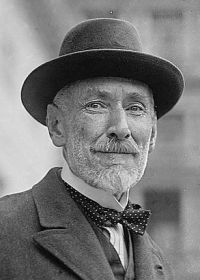 Sir Horace Curzon Plunkett,
The Rural Life Problem of the United States
Sir Horace Curzon Plunkett,
The Rural Life Problem of the United States
“ I have to commend to the statesmen and the philanthropists of the town the somewhat incongruous proposal that they should take the initiative in rural reform. Neither the thought nor the influence which can set in motion what in agricultural communities is no less than an economic revolution are to be found in the open country. ”
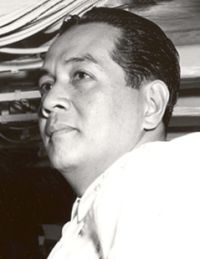 Diosdado Macapagal,
Second State of the Nation Address
Diosdado Macapagal,
Second State of the Nation Address
“ Having passed successfully through the crucial period of transition from a controlled economy to free enterprise, it is time that decisive action be taken to effect the now long-delayed land reform. Land being our most valuable resources, salutary changes is imperative in the land system. Our agricultural productivity has tended to be static; farm incomes have remained below subsistence level. ”
Gloria Macapagal-Arroyo,
First State of the Nation Address
“ To fight poverty, agricultural modernization will be socially equitable. We shall redeem in earnest the promise of land reform, a commitment that spans several presidents. Isa pa itong pangakong hindi dapat mapako. ”
R. H. Tawney, The Agrarian Problem in the Sixteenth Century
“ What made the new methods of agriculture not simply an important technical advance in the utilisation of the soil, but the beginning of a social revolution, was the insecurity of the tenure of large numbers of the peasantry, in the absence of which they might gradually have adapted themselves to the altered conditions, without any overwhelming shock to rural life such as was produced by the evictions and by the loss of rights of common. ”
R. H. Tawney, The Agrarian Problem in the Sixteenth Century
“ They are to be carefully distinguished from the sweeping innovations of the sixteenth century, which alone deserve the name of an Agrarian Revolution. But they are closely connected with that revolution. ”
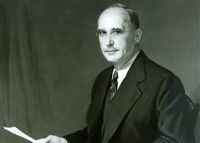 Solon J. Buck,
The Agrarian Crusade: A Chronicle of the Farmer in Politics
Solon J. Buck,
The Agrarian Crusade: A Chronicle of the Farmer in Politics
“ All the unrest which had been gathering during the previous decade, all the venom which had been distilled by fourteen cent corn and ten 133 per cent interest, all the blind striving to frustrate the industrial consolidation which the farmer did not understand but feared and hated, found expression in the political campaign of 1890. ”
R. H. Tawney, The Agrarian Problem in the Sixteenth Century
“ Thus a collision of interests, a weakening of communal restrictions before the enterprise of the capitalist farmer, the strengthening of some kinds of property and the weakening of others, and the growth of new sorts of social relations in the villages, were consequences to be expected from the increasing predominance of the large farm, and especially of the large pasture farm. ”
R. H. Tawney, The Agrarian Problem in the Sixteenth Century
“ In forming any estimate, however, of rural conditions, the hand to mouth economy of the poorer peasants, and their consequent helplessness in the face of any unexpected catastrophe, such as an unusually bad harvest, a cattle plague, and (in the fifteenth century) the destruction of crops by civil disturbances, must not be forgotten. ”
Alfred John Morris, The Moral and Religious Bearings of the Corn Law (1841)
“ We have to consider not only what would be the state of agricultural labourers if the Corn Law were abolished, but also to consider their state if not abolished. The population is increasing at the rate of more than a thousand souls per day. What is to become of them? The land cannot find occupation for them. They must be employed in manufactures. ”
R. H. Tawney, The Agrarian Problem in the Sixteenth Century
“ Precisely because it is new, it is of the greatest economic significance. It shows what may be called, by contrast with later developments, the old agrarian régime, producing the new type of well-to-do peasant who is one of the protagonists in the class struggles of the sixteenth century. ”
Ferdinand Marcos,
Third Inaugural Address
(1981)
“ We speak to our farming communities who had long been disenchanted by slogans promising land and progress and who, at last, under the 1972 program of land reform now have their own lands to till but also need the continuing assistance of their government to attain both advancement in their lives and growth in their communities. ”
Ferdinand Marcos,
Presidential Decree No. 2
(1972)
“ Whereas, among such objectives is to achieve dignified existence for the small farmers free from the pernicious institutional restrains and practices which have not only retarded the agricultural development of the country but have also produced widespread discontent and unrest among our farmers, one of the causes of the existing national emergency; andWhereas, it is believed that the lasting objectives of land reform may be sooner realized if the whole country is declared a land reform area ”
R. H. Tawney, The Agrarian Problem in the Sixteenth Century
“ The economic justification of ploughing land which no modern farmer would touch had lain in the fact that the impossibility of moving food supplies had made it necessary for each village to be virtually self-supporting, and had thus prevented the specialisation of districts in different types of agriculture. ”
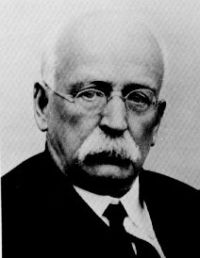 Sir Ebenezer Howard,
Garden Cities of To-Morrow
Sir Ebenezer Howard,
Garden Cities of To-Morrow
“ The holders of agricultural land, at least those who are willing to sell—and many of them are even now most anxious to do so—will welcome the extension of an experiment which promises to place English agriculture once again in a position of prosperity: the holders of city lands will, so far as their merely selfish interests prevail, greatly fear it. In this way, landowners throughout the country will be divided into two opposing factions, and the path of land reform—the foundation on which all other reforms must be built—will be made comparatively easy. ”
Gordon Ross, Argentina and Uruguay
“ The matter is not that such silly methods of rack-renting, bonanza farming, land gutting and money lending have wrought their own confusion. It is the loss to the industrial community, to the rural population, and to the national thrift that lays bare the defects of the system. These are the fruits. We have to look into the ordering of our agricultural industry, not as determined by a “good year” or “bad year,” a “dry” or “wet” year, but by such a readjustment of our rural economy that the soil shall be no longer cultivated at a loss. It is necessary to unmuzzle the ox. ”
Gilbert Slater, The English Peasantry and the Enclosure of Common Fields
“ A wise programme of rural reform is necessary both in order that the possible agricultural prosperity may be secured, and in order that the nation mayvii reap in full its possible fruits of physical and moral well-being for the people. ”
United States. Central Intelligence Agency, CIA World Fact Book, 2004 — Zimbabwe (2004)
“ The government's land reform program, characterized by chaos and violence, has badly damaged the commercial farming sector, the traditional source of exports and foreign exchange and the provider of 400,000 jobs. ”
Fidel V. RamosCharles Stanton DevasGloria Macapagal-ArroyoFerdinand MarcosCorazon AquinoR. H. TawneyConstituent Assembly of PortugalPortal:United States Department of StateAnton Ivanovich DenikinJohn H. WorstJ. N. LarnedHarriett BradleySir Horace Curzon PlunkettDiosdado MacapagalSir Ebenezer HowardGilbert SlaterUnited States. Central Intelligence Agency William Le Queux
 Percy Bysshe Shelley
 Victor Hugo