Agricultural chemistry

Definition and stakes

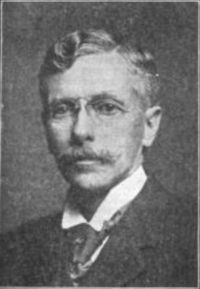
Portrait of Harvey Washington Wiley Harvey Washington Wiley Principles and practices of agricultural analysis (1894)

It is as necessary to plant growth and development as water, phosphoric acid, lime, and potash, and far more costly. While a large quantity of nitrogen exists in the air in an uncombined state, it is, nevertheless, one of the least abundant of the elements of high importance in plant nutrition.
The conservation and increase of the stores of available nitrogen in the soil is one of the chief problems occupying the attention of agricultural chemistry. Nitrogen, which is not immediately available for the growth of plants, is conserved and restored by natural processes in various ways.
Source: Gutenberg

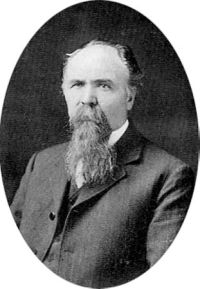
Thomas Anderson Elements of Agricultural Chemistry

The choice of a special manure is necessarily dependent on a great variety of circumstances, and is governed partly by the nature of the soil, and partly by that of the crop. It is obvious that cases may occur in which any individual element of the plant may be deficient, and ought to be supplied, but experience has shown that, as a rule, nitrogen and phosphoric acid are the substances which it is most necessary to furnish in this way, and which in all but exceptional cases produce a marked effect on the crop.
Source: Gutenberg

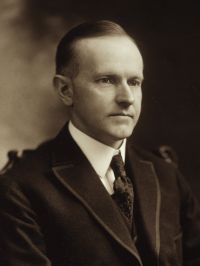
James P. Boyd Triumphs and Wonders of the 19th Century…

In the case of leguminous plants, nitrogen is rendered available for nutrition by means of bacteria inhabiting nodules in the roots of the legumes. These two great discoveries have proved of incalculable benefit to practical agriculture. Chemical science in its relations to agriculture has shown that the fertility of the soil may be conserved and increased, while the magnitude of the crops harvested is sustained or augmented. Thus, no matter how rapid may be the increase of population, agricultural chemistry will provide abundant food.
Source: Gutenberg

Get perspective with Kwize: daily news enlightened by great literature