Ailerons

Definition and stakes

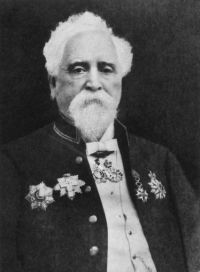
Portrait of Claude Grahame-White Claude Grahame-White,  The Aeroplane

“ A man flying in a wind may, by vigorous use of his ailerons, recover the balance of his machine time after time; but as the wind rises, he may be struck ultimately by a gust that tilts his planes to an abnormal angle, despite his efforts to check them. The machine will then heel till it stands almost vertical—till it reaches such an angle, in fact, that it ceases to move forward and begins to slip sideways—skidding away, beyond the pilot’s control, like a motor on a greasy road. ”
Source: Gutenberg

Portrait of Claude Grahame-White Claude Grahame-White,  Learning to Fly: A Practical Manual for Beginners

“ A pilot must be able to do more than cause his aeroplane to ascend and to alight: he must have means to check the lateral movements which, under the influence of wind gusts, may develop while the biplane is in flight. At the rear extremities of the main-planes as illustrated in the photograph facing page 34—and marked D.D.—are flaps, or ailerons, which are hinged so that they may be either raised or lowered. These ailerons are operated, through the medium of wires, by the same hand-lever which governs the movement of the elevator. ”
Source: Gutenberg

Glenn Hammond Curtiss,  The Curtiss Aviation Book

“ These ailerons are so arranged that the front edge remains in the same position; while one swings upward, the other swings downward, at the back, thus giving an upward pressure of air on the under side of the one, while the other is depressed by the air which strikes it on top. This movement is controlled by a movable back to the aviator's seat or a frame or yoke which fits around the shoulders of the aviator in such a way that he moves the ailerons to the proper position when he leans to the high side of the aeroplane as it tilts and is thus able automatically to correct its balance. ”
Source: Gutenberg

Get perspective with Kwize: daily news enlightened by great literature