Air race

Definition and stakes

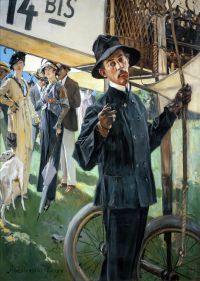
Portrait of Claude Grahame-White Claude Grahame-White,  The Aeroplane

“ To stand near one of the pylons—wooden towers which mark the turning-points of the course—and see the air-racers come rushing by, is to gain such an impression of speed as almost makes the watcher hold his breath. The pilot in a flying race has one chief aim: to fly the shortest way. Every fraction of a second is of importance; and if he can circle the pylons more skilfully than his rivals, he may win the race, even though his machine—in its actual speed—may be no faster than theirs. ”
Source: Gutenberg

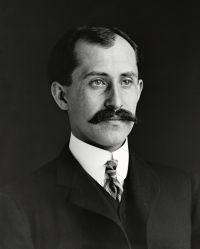
Portrait of Claude Grahame-White Claude Grahame-White,  The Aeroplane

“ So a flying race, from the moment [Pg 218] the timekeeper waves his flag and the machines leap from the starting line, is a contest of sheer nerve and skill. To fly a winning course, upon a high-powered craft, requires, indeed, a judgment that is exceptional. Towards each of the mark-towers, hurtling through the air at perhaps 100 miles an hour or more, comes the airman with a roar and rush. Peering above his screen, in the fierce wind-blast, he seeks to gauge distance and speed ”
Source: Gutenberg

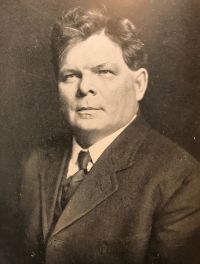
Portrait of Walt Mason Walt Mason,  Rippling Rhymes

“ The airship is a thing achieved; it has its rightful place, as well as any autocart that ever ran a race. The farmer, in the coming years, when eggs to town he brings, will flop along above the trees, upon his rusty wings. The doctor, when he has a call, from patients far or near, will quickly strap his pinions on, and hit the atmosphere. And airship racing then will be the sport to please the crowds; there'll be racecourses overhead, and grandstands in the clouds. The umpire, on his patent wings, will hover here and there; the fans, with rented parachutes, will prance along the air ”
Source: Gutenberg

Get perspective with Kwize: daily news enlightened by great literature