Aircraft landing

Definition and stakes

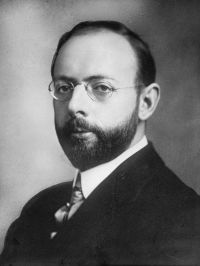
Portrait of Willis J. Abbot Willis J. Abbot,  Aircraft and Submarines

“ To shut off the engine at precisely the right moment, (p. 114) to choose an angle of descent that will secure the greatest speed and at the same moment bring you to your landing place, to change at the most favourable time from this angle to one that will bring you to the ground at the most gentle of obtuse angles, and to let your machine, weighing perhaps a ton, drop as lightly as a bird and run along the earth for several hundred feet before coming to a full stop, are all features of making a landing which the aviator has to master. ”

Source: Gutenberg

Evan John David,  Aircraft: its development in war and peace and its commercial future (1919)

“ But the pupil was not permitted to land a machine until near the end of his course; for next to getting out of a tail spin, a dive, or a side slip, landing was the hardest task in flying. Statistics show that more aviators have been killed in making landings than in any other way. Many of the accidents, of course, were [42] caused by the nature of the ground, for when the engine of the aeroplane stops, the aviator has to volplane or glide down wherever he can. ”
Source: Gutenberg

Evan John David,  Aircraft: its development in war and peace and its commercial future (1919)

“ On a clear night, however, with flambeaux, search-light flares, etc., a pilot has little trouble in landing, for [152] the straightaway can be as illuminated as it is in broad daylight. Nevertheless, when the aircraft is high in the sky, owing to the vast distances of infinite space, the speed at which an aeroplane moves, and the drift out of its regular course, due to the wind, it is often difficult for the flier to keep his bearings. ”
Source: Gutenberg

Get perspective with Kwize: daily news enlightened by great literature