Ayuntamiento

Definition and stakes

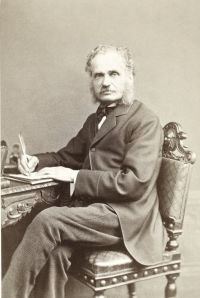
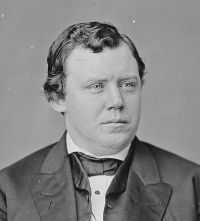
Portrait of Hubert Howe Bancroft Hubert Howe Bancroft,  History of Mexico (1888)

“ In some states, every municipality has an ayuntamiento, or local board, composed of from two to twelve regidores, at the rate of about one to 1,000 inhabitants, with an alcalde or president, and one or two síndicos, [25] all elected usually every year. In other states, small villages have merely a municipal council with less legislative power. Ayuntamientos are also restricted to municipalities of not less than say 3,000 inhabitants, and in the smaller places rule lieutenants appointed by the government, and subprefects controlling partidos. ”
Source: Wikisource

Captain F. Brinkley,  Japan: Its History, Arts, and Literature (1902)

“ The machinery of local administration is completed by councils of which the governor of a prefecture, the mayor of a town, [3] or the head-man of a county or district, is ex-officio president, and the councillors are partly elective, partly nominated by the Central Government. The councils may be said to stand in an executive position towards the local legislatures, namely, the assemblies, for the former give effect to the measures voted by the latter, take their place in case of emergency and consider questions submitted by them. ”
Source: Wikisource

The New International Encyclopædia (1905)

“ In some of these respects, as in the exercise of the police power, the care of the public health, the administration of charity, and the administration of local justice, the municipality is actually the agent of the State, and discharges duties of interest to the State at large; in others, as in the furnishing of water or light, the State permits the community as a whole to act as a local organization for the satisfaction of purely local needs of interest to the community only. ”
Source: Wikisource

Get perspective with Kwize: daily news enlightened by great literature