Bank check

Definition and stakes

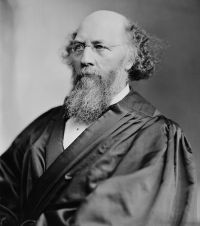
Portrait of Samuel Freeman Miller Samuel Freeman Miller,  Espy v. Bank of Cincinnati — Opinion of the Court

“ Bank checks are not bills of exchange, and though the rules applicable to each are in many respects the same, they differ in important particulars. [9] Among these particulars is that a check is drawn against funds on deposit with the banker, and the indorsement that it is good implies that when the indorsement is made there was funds there to pay it. A bill of exchange is not drawn on such deposits necessarily, and its acceptance raises no implication that the drawer has such funds to meet it. It is a new promise by the acceptor to pay, funds or no funds. ”
Source: Wikisource

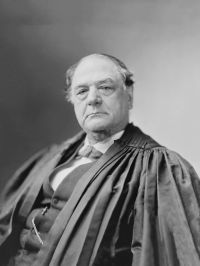
William Johnson,  Mechanics' Bank of Alexandria v…

“ The truth is, that a check is properly neither a bond, bill, or note, with regard to the bank drawn upon, but an acquittance. And the contract arising out of a payment upon it, is a contract for money advanced, and must be so declared upon. It is true that checks are generally made payable to bearer, and this was made payable to order; but it is in evidence that it was drawn as a check, and paid as a check, and the declaration contains only the common money counts. ”
Source: Wikisource

Humphrey Robinson,  A Simple Explanation of Modern Banking Customs

“ The banks always respect the man who has his check certified, if tendered after the clearing hour.
For these same reasons you can see why a bank can not take a check on a bank in some other town in payment of a collection. It then would be several days before the bank would know whether the check was good or not. Also the bank would be out that amount of money for the length of time it takes to collect that check; for every bank must remit to the sender on the very day it puts its "Paid" stamp on a collection and delivers it to the payer.
”
Source: Gutenberg

Get perspective with Kwize: daily news enlightened by great literature