Bark (botany)

Definition and stakes

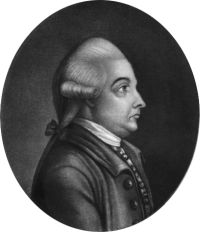
Jane Newell Moore,  Outlines of Lessons in Botany, Part I; from Seed to Leaf

“ While this grows, it increases by a living layer of cork-cambium on its inner face, but it usually dies after a few years. In some trees it goes on growing for many years. It forms the layers of bark in the Paper Birch and the cork of commerce is taken from the Cork Oak of Spain. The green bark is of cellular tissue, with some green coloring matter like that of the leaves; it is at first the outer layer, but soon becomes covered with cork. It does not usually grow after the first year. Scraping the bark of an old tree, we find the bark homogeneous. ”
Source: Gutenberg

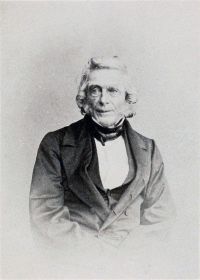
Portrait of Gertrude Jekyll Gertrude Jekyll,  Wood and Garden: Notes and thoughts…

“ They seem to leap and spring into the air, often leaning and curving upward from the very root, sometimes in forms that would be almost grotesque were it not for the never-failing rightness of free-swinging poise and perfect balance. The tints of the stem give a precious lesson in colour. The white of the bark is here silvery-white and there milk-white, and sometimes shows the faintest tinge of rosy flush. Where the bark has not yet peeled, the stem is clouded and banded with delicate grey, and with the silver-green of lichen. ”
Source: Gutenberg

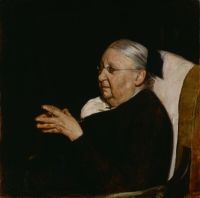
Portrait of Mrs. Loudon Mrs. Loudon,  Botany for Ladies

“ At first the substance within the bark is little more than pith, but as the returning sap deposits every year a layer of wood just within the bark, which presses against the previous layers so as to contract them, they press in turn against the pith, which becomes smaller and smaller every year, till at last, in old trees, it is scarcely perceptible. ”
Source: Gutenberg

Get perspective with Kwize: daily news enlightened by great literature