Biceps muscle

Definition and stakes

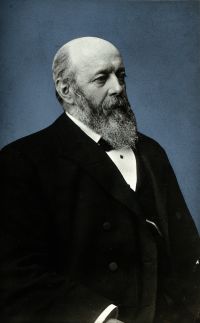
Portrait of John Gray McKendrick John Gray McKendrick,  Life in Motion (1892)

“ Extend the arm and it again becomes soft. These movements are made by the action of special organs we call muscles; and the particular muscle I ask you to notice in the arm is called the biceps. Every boy knows where his biceps muscle is, and when he is training for throwing the cricket ball, or for rowing, he feels his stiff and firm biceps with a certain amount of commendable pride. A young lady has a biceps also;
Fig. 6.—Muscles of frog's leg. g, c, the gastrocnemius muscle often used in physiological experiments.
”
Source: Wikisource

William Blaikie,  How to Get Strong and How to Stay So

“ The biceps muscles, or those forming the front of the upper arms, are getting the work this time, and by applying to that of one arm in action the hand of the other, it is at once found that this muscle is growing quite hard.
If no dumb-bell or other convenient weight is at hand, place one hand in the other, and bear down hard with the upper hand, holding the chest stubbornly out. Lift away with the lower hand, and, when it reaches the shoulder, lower it slowly to the side, and then raise again, and so continue.
”
Source: Gutenberg

Sir M. Foster,  Physiology

“ This loss of power is the beginning of death, and indeed if the cord were not unloosed the arm would quite die—would mortify, as it is said. When only those blood-vessels which go to the biceps are tied, the biceps alone begins to die, all the rest of the arm remaining alive, and the first sign of death in the biceps is the loss of the power to contract when called upon to do so.
In order that you may bend your arm, then, you must not only have a biceps muscle with its nerves, its tendons, and all its arrangements of bones{37} and joints, but the muscle must be supplied with blood.
”
Source: Gutenberg

Get perspective with Kwize: daily news enlightened by great literature