1911 Encyclopædia Britannica (1911)
“ Good bombazine is made with a silk warp and a worsted weft. It is twilled or corded and used for dress-material. Black bombazine has been used largely for mourning, but the material has gone out of fashion. ”
1911 Encyclopædia Britannica (1911)
“ Good bombazine is made with a silk warp and a worsted weft. It is twilled or corded and used for dress-material. Black bombazine has been used largely for mourning, but the material has gone out of fashion. ”
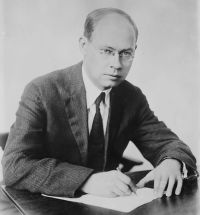 Arthur B. Reeve,
The Dream Doctor
Arthur B. Reeve,
The Dream Doctor
“ Kennedy took a few of the black grains and placed them on a metal ash-tray. He lighted a match. There was a puff and a little cloud of smoke."Ah," he exclaimed, "black gunpowder. Our absintheur was a bomb-maker, an expert perhaps. Let me see. I imagine he was making an explosive bomb, ingeniously contrived of five glass tubes. The centre one, I venture, contained sulphuric acid and chlorate of potash separated by a close-packed wad of cotton wool. Then the two tubes on each side probably contained the powder, and perhaps the outside tubes were filled with spirits of turpentine. ”
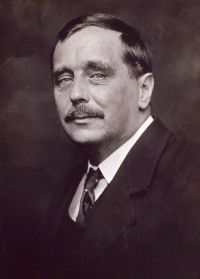 Herbert George Wells,
The World Set Free
(1914)
Herbert George Wells,
The World Set Free
(1914)
“ Never before in the history of warfare had there been a continuing explosive; indeed, up to the middle of the twentieth century the only explosives known were combustibles whose explosiveness was due entirely to their instantaneousness; and these atomic bombs which science burst upon the world that night were strange even to the men who used them. Those used by the Allies were lumps of pure Carolinum, painted on the outside with unoxidised cydonator inducive enclosed hermetically in a case of membranium. ”
George M. Mowbray, Tri-nitro-glycerine, as Applied in the Hoosac Tunnel…
“ Better to face the difficulty, construct efficient electric apparatus, convey the electricity along wires of perfect insulation to a safe priming, and by complete and violent explosion of the Nitro-Glycerin, or powder, make such effective blasting as not to throw away the labor of drilling, candles, power, and blasting materials. I believe this the true economy. These details may seem wearisome, but the casualties of blasting can best be diminished by avoiding missed holes, a result only attainable by using materials absolutely reliable ”
 Murray Leinster,
Critical difference
(1956)
Murray Leinster,
Critical difference
(1956)
“ The miniature grid could lift and hold a bomb steady in its field-focus at seven hundred and fifty thousand feet. But if a bomb was accelerated all the way out to that point, and the field was then snapped off—Why, it wasn't held anywhere. It kept on going with its attained velocity. And it burst when its fuse decided that it should, whereupon immediately a mass of sodium and potassium vapor, mixed with the fumes of high explosive, flung itself madly in all directions, out between the stars. Absolute vacuum tore the compressed gasified metals apart. ”
 Alfred Nobel,
U.S. Patent 50617 Reissue 4815…
Alfred Nobel,
U.S. Patent 50617 Reissue 4815…
“ There is a class of explosives long known, but not, at the date of Nobel's invention, applied to technical purposes, is consequence of practical difficulties in procuring their explosion. Such substances are nitro-glycerine, the nitrates of ethyl and of methyl, and nitro-man-ite. These substances are liquids at ordinary temperatures, and by that characteristic are distinguishable from solid explosives, such as gunpowder, gun-cotton, &c.; and they have also the property that fire may be applied to them without their exploding. ”
George M. Mowbray, Tri-nitro-glycerine, as Applied in the Hoosac Tunnel…
“ But if once a blast is shewn, and they have to hoist out the rock, their obstinacy succumbs, and in three months, men, who knew it was poison, and so dangerous it was wicked to ask them to drill holes to receive it, have positively refused to descend a shaft if powder was attempted to be used merely in a comparative experiment, alleging, that the powder was unhealthy and not fit to be used at the bottom of a shaft, where the air was confined. ”
 Hudson Maxim,
Dynamite Stories, and Some Interesting Facts About Explosives
Hudson Maxim,
Dynamite Stories, and Some Interesting Facts About Explosives
“ Now it happens that there is so much erraticism about high explosive mixtures with chlorate of potash as a base that the pathway of invention of such compounds has been strewn with the wreckage of the hopes and anatomy of their inventors.The inventor had enlisted the financial support of a promoter, and the promoter was endeavoring to enlist financial support for himself, and to that end had invited several men of means, with two rival newspaper [56] editors of the place, to witness a demonstration of the explosive at the inventor’s laboratory, which was a two-story, light frame structure. ”
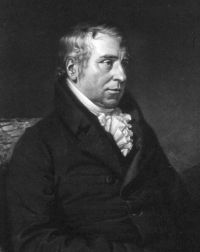 John Haslam,
Illustrations of Madness
(1810)
John Haslam,
Illustrations of Madness
(1810)
“ Bomb-bursting is one of the most dreadful inflictions performed by the infernal agency of the air-loom. The fluid which resides in the brain and nerves, the vapor floating in the blood-vessels, and the gaz which occupies the stomach and intestines, become highly rarified and rendered inflammable, occasioning a very painful distension over the whole body. Whilst the assailed person is thus labouring, a powerful charge of the electrical battery (which they employ for this purpose ) is let off, which produces a terrible explosion, and lacerates the whole system. ”
Enos Herbert Glynne Roberts, The Story of the "9th King's" in France
“ A primitive form of respirator was given out in consequence of the use by the Germans of chlorine at the Second Battle of Ypres. Instruction was given in the use of bombs, of which the men had hitherto no knowledge. In those days the bomb first in use was the jam-tin bomb. The men were taught how to cut fuses, fix them into the detonator, attach the lighter and wire the whole together preparatory for use against the enemy. Jam-tin bombs were soon discarded for the Bethune bomb, and there was no regular bomb until much later, when the use of the Mills bomb became universal. ”
Robert Routledge, Discoveries and Inventions of the Nineteenth Century
“ But by the researches of Nobel, Professor Abel, and others, it has been discovered—and this is, perhaps, the most remarkable discovery in connection with explosives—that gun-cotton, nitro-glycerine, and other explosive bodies, are capable of producing explosions in a manner quite different from that which attends their ignition by heat. The violence of this kind of explosion is far greater than that due to ordinary ignition, for the action takes place with far greater rapidity throughout the mass, and is, indeed, practically instantaneous. ”
Arthur B. Reeve,
The Romance of Elaine
“ Down below, although he did not know it, in the bare dining-room which had been arranged into a sort of chemical laboratory, Del Mar's men were engaged in manufacturing gas bombs much like those used in the war in Europe. Before them was a formidable array of bottles and retorts. The containers for the bombs were large and very brittle globes of hard rubber. As the men made the gas and forced it under tremendous pressure into tubes, they protected themselves by wearing goggles for the eyes and large masks of cloth and saturated cotton over their mouths and noses. ”
Various, The Strand Magazine, Vol. 17, February 1899…
“ The odd little creatures known as Bombardier Beetles are still quainter in their habits: they carry the last-mentioned mode of defence to an even greater pitch of perfection. For, like miniature artillery-men, they actually fire off a regular volley of explosive gas in the faces of their pursuers. The gas is secreted as a liquid; but it is very volatile, and it vaporizes at once on contact with the air, so as to form a small, white cloud of pungent smoke, resembling in its effects nitric acid. ”
Hudson Maxim,
Dynamite Stories, and Some Interesting Facts About Explosives
“ In the combustion of all explosive materials, great heat is generated, and the force of the explosion is dependent upon the volume of gases and the high temperature to which they are raised.The smokeless powder used in the United States is made by dissolving a special kind of guncotton or nitrocellulose in ether and alcohol, just sufficient of the solvent being used to gelatinate the nitrocellulose, which is then stuffed through a forming die into rods. ”
Amos A. Fries, Chemical warfare (1921)
“ These containers may be special cylinders for cloud gas attacks, special bombs for Livens’ projectors and mortars, or artillery shell, and even aviation bombs. Some of the liquids which have a very low boiling point volatilize quickly upon exposure to air, and hence require only enough explosive to open the shell and allow the liquid to escape. Practically all solids have to be pulverized by a large amount of high explosive, or driven off as smoke by some heating mixture. ”
P. Gerald Sanford, Nitro-Explosives: A Practical Treatise
“ Any explosive whose detonation is very rapid is a high explosive, but the term has chiefly been applied to the nitro-explosives.The effectiveness of an explosive depends upon the volume and temperature of the gases formed, and upon the rapidity of the explosion. In the high explosives the chemical transformation is very rapid, hence they exert a crushing of shattering effect. Gunpowder, on the other hand, is a low explosive, and produces a propelling or heaving effect. ”
Amos A. Fries, Chemical warfare (1921)
“ The program of the Chemical Warfare Service included three types of bombs:Mark II Bomb. The incendiary Mark II drop bomb is designed to be dropped from an aeroplane and is intended for use against buildings, etc., when penetrating effect followed by an intensive incendiary action is sought. [Pg 341] The bomb case consists of two parts: a body and a nose. The body is a tapering zinc shell which carries the firing mechanism and stabilizing tail fin at the small end and at the large end a threaded ring which screws into the nose. ”
Harold E. Babbitt, Sewerage and Sewage Treatment
“ The detonation of an explosive is caused by the shock or heat of the explosion of a more sensitive substance which has been exploded by a powder fuse or electric spark. The common method of detonating explosive charges is by the firing of a blasting 299cap. These caps are copper cylinders, closed at one end, about 11⁄2 inches long and 1⁄4 to 3⁄8 of an inch in diameter, or larger. They contain a mixture of about 85 per cent fulminate of mercury and 15 per cent potassium chlorate held in place by a wad of shellac, collodion, or paper. ”
 Violetta Thurstan,
Field Hospital and Flying Column
Violetta Thurstan,
Field Hospital and Flying Column
“ The shells aimed at them looked so innocent, like little white puff-balls bursting up in the blue sky. We hoped they would be brought down, but they were too high for that. The bombs were only a little diversion of theirs by the way—they were really trying to locate the Russian battery, as they were evidently [142] making signals to their own headquarters. Danger always adds a spice to every entertainment, and as the wounded were all out and we had nobody but ourselves to think about, we could enjoy our thrilling departure from Lodz under heavy fire to the uttermost. ”
William Henry Lowe Watson, A Company of Tanks
“ It was a magnificent display of deadly fireworks, and the enemy, as usual, continued to shell the blaze. There is no spot on earth quite so unpleasant as the edge of an exploding dump. Boxes of bombs were hurtling through the air and exploding as they fell. Very lights were streaming away in all directions. "Stink" bombs and gas bombs gave out poisonous fumes. Every minute or two a shell dropping close added to the uproar and destruction. With great coolness and skill the crews, led and inspired by Haigh, brought their tanks past the dump without a casualty. ”
 William Le Queux,
The Bomb-Makers
William Le Queux,
The Bomb-Makers
“ At a glance Ella saw that the square steel bomb, fashioned like an official despatch-box, was filled with this highly dangerous explosive, and that the thin glass tube which, when broken, would explode it, had already been placed in position. Such a bomb, on exploding in a confined space, must work the most terrible havoc.In those few seconds the girl verified the suspicion which Kennedy had entertained. Some desperate outrage was to be committed. That was quite certain. ”
J. Hamilton Fyfe, Triumphs of Invention and Discovery in Art and Science
“ The principles upon which this contrivance rests, are the modification of the explosive tendencies of fire-damp (the inflammable gas in mines) when mixed with carbonic acid and nitrogen; and the obstacle presented to the passage of an explosion, if it should occur, through a hole less than the seventh of an inch in diameter; and accordingly, while the small oil lamp in burning itself mixes the surrounding gas with carbonic acid and nitrogen, the cylinder of wire-gauze which surrounds it prevents the escape of any explosion. ”
Thomas Wilhelm, A Military Dictionary and Gazetteer
“ Detonation, or explosion of the first order, is distinguished from ordinary explosion, or explosion of the second order, by the different way in which the explosion is propagated. Ordinary explosion proceeds by inflammation, being nothing more than a rapid combustion. Detonation is propagated by vibration. A detonating agent is a substance used to produce the initial vibration, or “impulse of explosion.” The exploder, or cap, used for this purpose is usually primed with fulminate of mercury, a substance having a wide range in bringing about detonation in the high explosives. ”
George M. Mowbray, Tri-nitro-glycerine, as Applied in the Hoosac Tunnel…
“ With Nitro-Glycerin the holes need not be drilled at so acute an angle to the face of the rock, and need no tamping, that is, the drilled hole is left entirely open, and no time is occupied therefore in ramming materials over the explosive, and no risk is incurred in cutting the fuse or electric wire, as with powder, dualin or dynamite, all of which must be tamped. ”
Charles Beadle, The Singing Monkey — Chapter 12 (1920)
“ I got an idea when they began using bombs at the beginning of the war and I experimented. “You see,” he added with an incongruous touch of pride, “I'm a professor of physics too; and I perfected this bomb—compound of ether and cyanogen, you know. Well, at first it didn't work. Often they would not explode. “They had to be a contact bomb because the ground is so soft—it's swampy where the orang-outan lives—and then I hit on the idea of blowing an egg and inserting the compound.” “But what about Datto?” ”
George M. Mowbray, Tri-nitro-glycerine, as Applied in the Hoosac Tunnel…
“ Concerning the employment of Nitro-Glycerin and machine drilling at West Shaft, it is hardly necessary to remark that many difficulties are to be encountered in the training of men to a new service and in successfully employing a new description of fuse and explosive. Some remarks upon our experience in blasting with this compound, will be found in a subsequent portion of this report. Continuous use of machine drills was commenced at the West Shaft in the latter part of June, and of Nitro-Glycerin as an explosive in the month of August. ”
Amos A. Fries, Chemical warfare (1921)
“ It is believed that great improvements can be made in the shape of the bomb and in the powder charge, which will result in much longer range and high efficiency, while in no way increasing the weight of the bomb or decreasing the rate of fire. These last two weapons were used during the World War, and will be very extensively used in the future for firing high explosive, phosphorus, thermit and similar materials that non-technical troops might handle. ”
Amos A. Fries, Chemical warfare (1921)
“ If sufficient high explosive be used to pulverize solids, they may be used in the same way, and to a large extent certain highly persistent liquid gases may have their persistency greatly reduced by using a large amount of high explosive, which divides the liquid into a fine spray. The “Persistent” group constitutes those gases that are very slowly volatilized upon exposure to the atmosphere. The principal ones of these now used or proposed are mustard gas and bromobenzylcyanide. ”
 Charles John Cutcliffe Wright Hyne,
Honor of Thieves: A Novel
Charles John Cutcliffe Wright Hyne,
Honor of Thieves: A Novel
“ You see, one couldn’t quite get an expert to measure out the precise necessary dose, and I’ve had to guess at it. I daren’t undercharge my bomb. If our explosion was a fizzle, and the crew didn’t get scared and run, why then they’d [120] take her up to New Orleans whether we liked it or not; and she’d be examined. Then that intake valve couldn’t be missed, and it couldn’t be explained away. Man, as you know, the thing’s as big as a sluice-gate!”“All the bilge pumps in the Gulf of Mexico couldn’t make headway against that valve, once it was fairly opened. ”
Daniel A. Poling, Huts in Hell
“ Gas-shells are mixed in with shrapnel and high explosives, and when thus employed are often very deadly. Fired alone, they are distinguishable because of their peculiar explosive sound; but, when they are sent over in a general bombardment, the only way to be sure of escaping them is to use the mask continuously. ”
