Bourgeois democracy

Definition and stakes

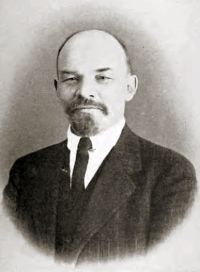
Portrait of Vladimir Lenin Vladimir Lenin The Proletarian Revolution and the Renegade Kautsky (1920)

The working people are barred from participation in bourgeois parliaments (they never decide important questions under bourgeois democracy, which are decided by the stock exchange and the banks) by thousands of obstacles, and the workers know and feel, see and realise perfectly well that the bourgeois parliaments are institutions alien to them, instruments for the oppression of the workers by the bourgeoisie, institutions of a hostile class, of the exploiting minority.
Source: Wikisource

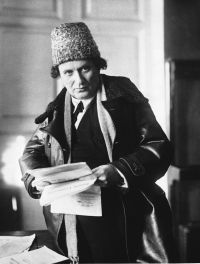
Portrait of Grigory Zinoviev Grigory Zinoviev Theses Presented to the Second World Congress of the Communist International (1920)

The more lasting, complete and solid has the rule of the bourgeois democracy been in any country, the more has it been possible for the bourgeoisie to appoint as labour leaders men who have been educated by it, imbued with its views and prejudices and very frequently directly or indirectly bribed by it.
Source: Wikisource

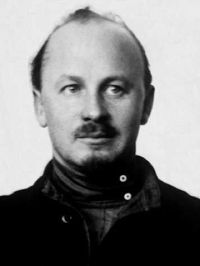
Portrait of Leon Trotsky Leon Trotsky Our Revolution: Essays on Working-Class and International Revolution…

The bourgeoisie consciously, in the person of its various factions, assumes the leadership of the nation, it lures the masses into struggle, it coins slogans, it dictates revolutionary tactics. Democracy unites the nation in one political ideology. The people—small artisans, petty merchants, peasants, and workingmen—elect bourgeois as their representatives
Source: Gutenberg

Get perspective with Kwize: daily news enlightened by great literature