Cachexia

Definition and stakes

W. H. Harbaugh,  Special Report on Diseases of the Horse

“ There is a cachexia, however, which resembles greatly that of any chronic, organic trouble, but is not diagnostic, although it has in it certain appearances and conditions which often render the animal suspicious to the eye of the expert veterinarian, while, without the presence of local lesions he would be unable to state on what he has based his opinion. ”
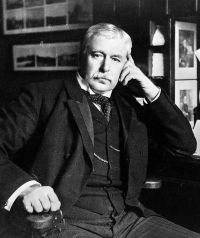
Source: Gutenberg

A system of practical medicine…

“ With what cause soever the cachexia may be associated, the symptomatology of amyloid liver is secondary to, or ingrafted on, the conditions produced by the cachexia. The liver is enlarged in all well-marked cases from a finger's breadth to a hand's breadth or more below the inferior margin of the ribs; it is also firm to the touch, well defined, elastic, and its margin rounded, but yet well defined. There is usually no tenderness nor pain, and, without any uneasy sensations to indicate the change taking place, the organ is found to have slowly enlarged, sometimes to an extraordinary extent. ”
Source: Gutenberg

Jno. A. W. Dollar,  Diseases of cattle, sheep, goats and swine (1920)

“ Osseous cachexia is a disease of adults. Nevertheless, there is a relationship between these two morbid conditions, for they frequently co-exist in one family. Moreover, brood mares and cows suffering from osseous cachexia give birth to foals and calves, which, if left with their mothers, almost inevitably become rachitic.
The general characteristic common to both rachitis and osseous cachexia consisting in diminution in the normal proportion of mineral salts entering into the constitution of the bone, numerous theories have been advanced to explain this irregularity in nutrition.
”
Source: Gutenberg

Get perspective with Kwize: daily news enlightened by great literature