Central capsule

Definition and stakes

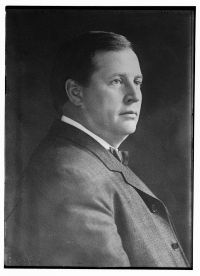
Portrait of Ernst Haeckel Ernst Haeckel,  Report on the Radiolaria (1887)

“ The form of the central capsule is constantly spheroidal, slightly depressed in the direction of the main axis, and therefore comparable to the spheroidal form of our globe. The depression is generally very slight, so that the proportion of the minor vertical main axis to the major horizontal or equatorial axis is about 4 : 5 or 5 : 6, often even 8 : 9 or less; but sometimes the proportion becomes 3 : 4, or even 2 : 3, so that the capsule becomes nearly lenticular; very rarely its form becomes almost perfectly spherical (Pl. 101, fig. 1) . ”
Source: Wikisource

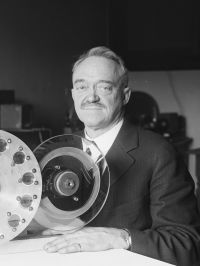
Portrait of C. Francis Jenkins C. Francis Jenkins,  Vision by radio, radio photographs… (1925)

“ The electron stream from the outside cylinder to the capsule naturally takes the long path, and as the longest path is down into the capsule, the result is that the small central opening of the capsule glows with great intensity while the other parts of the lamp remain dark. This lamp, Professor Moore advises, has a light and dark frequency of a million per second. ”
Source: Gutenberg

Portrait of Ernst Haeckel Ernst Haeckel,  Report on the Radiolaria (1887)

“ Porocapsa murrayana, n. sp., × 300 800 The central capsule is filled up by spherical vacuoles and enclosed by the porous shell; in the centre radii of small granules (nuclei ?) occur. Fig. 8. Cannocapsa stethoscopium, n. sp., × 300 801 The shell alone. Fig. 9. Astrocapsa coronata, n. sp., × 400 799 Middle part of one spine with the four aspinal holes. Fig. 9a. Transverse section of a radial spine, with the four surrounding aspinal holes and the neighbouring part of the shell, × 400 Fig. 10. ”
Source: Wikisource

Get perspective with Kwize: daily news enlightened by great literature