Conederation

Definition and stakes

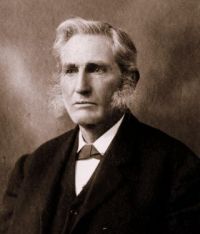
Portrait of Lester Frank Ward Lester Frank Ward,  The American Journal of Sociology (1896)

“ In arranging the species of a great natural order they are always divided into first large and then progressively smaller and smaller groups. The order is divided into coordinate families, each family into coördinate genera, and each genus into species which are also coordinate. Usually there are found to be more subdivisions than these and we have in botany at least, suborders, subfamilies, tribes, subtribes, and subgenera. Even species have their varieties, and in some sciences, particularly in ornithology, these are called subspecies and have a special significance. ”
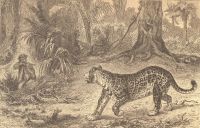
Source: Wikisource

Sir R. Phillips,  A Morning's Walk from London to Kew

“ Some districts or clans may require a longer period for the co-mixture, and different circumstances may cut off some families, and expand others; but, in general, the lines of families would cross each other, and become interwoven like the lines of lattice-work. A single inter-mixture, however remote, would unite all the subsequent branches in common ancestry, rendering the cotemporaries of every nation members of one expanded family, after the lapse of an ascertainable number of generations! ”
Source: Gutenberg

Portrait of Thomas Belt Thomas Belt,  The Naturalist in Nicaragua

“ So long as they interbreed together, the possible divergence is kept within narrow limits, but whenever a variety is produced, the individuals of which have a partiality for interbreeding, and some amount of sterility when crossed with the parent form, the tie that bound it to the central stock is loosened, and the foundation is laid for the formation of a new species. ”
Source: Gutenberg

Get perspective with Kwize: daily news enlightened by great literature