Copper sulfate

Definition and stakes

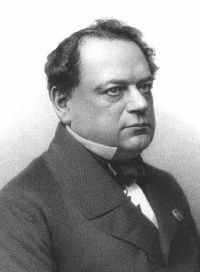
Portrait of Harvey Washington Wiley Harvey Washington Wiley,  Foods and Their Adulteration

“ It is quite certain that the copper product forming the dye or the excess of the copper which is used remains in a state of very unstable composition which is easily broken up under the action of the acids and enzymes in the digestive organs.
It is greatly to the credit of the canners of the United States that the use of sulfate of copper has never come into use in this country.
”

Source: Gutenberg

New York Journal of Pharmacy, Volume 1…

“ The impurities which commercial copperas most frequently contains are more or less sulphate of sesquioxide, together with a little sesquichloride of iron, and more rarely, traces of the sulphate of copperas, manganese, alumina and lime. A small addition of oxide of silver to the solution will precipitate all chlorine present, and subsequent digestion for a few minutes with carbonate of baryta will remove every trace of sulphate of sesquioxide of iron, and of alumina. Copper may, of course, be removed by immersion of metallic iron. ”
Source: Gutenberg

Donald M. Levy,  Modern Copper Smelting

“ In practice the roasting is never carried to such a degree that all the sulphur is eliminated, since it is essential to retain some sulphur in order to collect the copper in the form of matte, and also because the time, and the cost of the fuel required to roast all of it off, would be prohibitive. Consequently, the products from the roasting of chalcopyrite consist principally of oxides of iron and copper, together with a certain amount of copper sulphate, very little iron sulphate, and some undecomposed sulphides. ”
Source: Gutenberg

Get perspective with Kwize: daily news enlightened by great literature