 Louisa May Alcott,
Little Women
(1868)
Louisa May Alcott,
Little Women
(1868)
“ "I keep turning over new leaves, and spoiling them, as I used to spoil my copybooks, and I make so many beginnings there never will be an end," he said dolefully. ”
Louisa May Alcott,
Little Women
(1868)
“ "I keep turning over new leaves, and spoiling them, as I used to spoil my copybooks, and I make so many beginnings there never will be an end," he said dolefully. ”
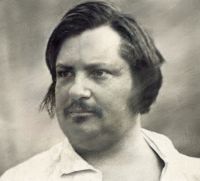 Honoré de Balzac,
Letters to Madame Hanska, born Countess Rzewuska…
Honoré de Balzac,
Letters to Madame Hanska, born Countess Rzewuska…
“ As for me, what care bestowed upon it!—but what annoyances! The publisher wanted to summons me to deliver the manuscript more rapidly! I have only worked at it eight months; yet to all the world this delay—put it in comparison with the work—will seem diabolical. You shall have an ordinary copy, in which I want you to read the composition. Do not buy it; wait, I entreat you, for the handy volume I intend for you, besides the grand copy. You know how much I care that you shall read me in a copy that I have chosen. It is a gospel; it is a book to be read at all moments. ”
John Jackson, The Theory and Practice of Handwriting (1894)
“ Gradually however as people woke up to a realisation of the state of affairs specially with reference to the masses and their ignorance of "Reading, Writing and Counting," more attention was directed to these subjects and the headline copy book was one of the innovations which merged into life. These copy-books have grown and increased to an alarming extent during the past forty years. We say alarming, for the wisdom of having such a variety of antagonistic styles is much to be questioned. ”
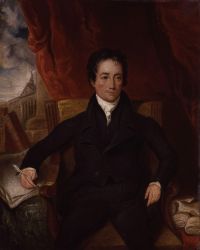 Charles Lamb,
The Works of Charles and Mary Lamb…
Charles Lamb,
The Works of Charles and Mary Lamb…
“ A presentation copy, reader—if haply you are yet innocent of such favours—is a copy of a book which does not sell, sent you by the author, with his foolish autograph at the beginning of it; for which, if a stranger, he only demands your friendship; if a brother author, he expects from you a book of yours which does sell, in return. We can speak to experience, having by us a tolerable assortment of these gift-horses. Not to ride a metaphor to death—we are willing to acknowledge, that in some gifts there is sense. ”
Mitchell S. Buck, Book Repair and Restoration: A Manual of Practical Suggestions for Bibliophiles
“ To be properly considered with the general subject of buying, are the special copies of volumes known as “association books.” These are unique copies, connected in some direct way with the author or with some prominent personage. Because of the sentimental interest attached, these usually command high prices. Included under this heading are presentation copies with inscriptions by the author, the author’s own copy of his book, generally with autograph corrections, and books with autograph annotations by some contemporary or later, but equally famous, person or author. ”
Richard Garnett, Essays in librarianship and bibliography (1899)
“ Up to this date, then, even when the book has a title-page, the printer or publisher can only be ascertained from the colophon, and before 1490 you must generally go to the colophon even for the description of the book. The reason is, no doubt, the extent to which the printer was influenced by the example of his predecessor, the copyist. It was more natural for the scribe to record the completion of his labours at the end of his manuscript than to announce their commencement on the first leaf. ”
P. B. M. Allan, The Book-Hunter at Home
“ Whenever it is possible refer to a bibliography to see that your copy is all that it should be. Nothing is more annoying than to discover, perhaps years afterwards, that your copy of a rare book, which you fondly imagined to be a fine one in every respect, lacks a page or so, or a leaf of index or errata, or a plate. It is a good plan to make a point of keeping books upon your table until they have been properly collated and catalogued, when—and not before—they may be placed upon the shelves. ”
 John Hill Burton,
The Book-Hunter
John Hill Burton,
The Book-Hunter
“ This high development of the desirable book is the result of an arrangement to print so many copies of a volume on paper of larger size than that of the bulk of the impression. The tall copy is the result of careful cutting by the binder, or of no cutting at all. In this primitive shape a book has separate charms for a distinct class of collectors who esteem rough edges, and are willing, for the sake of this excellence, to endure the martyrdom of consulting books in that condition. ”
Frederick W. Hamilton, Books Before Typography
“ Sometimes the entire work on a manuscript would be done by a single man. At other times there was a division of labor. One brother, for example, would pick out the vellum, see to the condition of the skins, arrange the quires, and rule them with compass and stylus. Another, or a group of others, would write the plain text. In the case of a large book, a certain number of quires might be given to each one of a group of copyists. ”
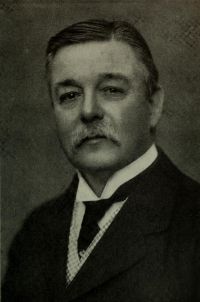 Chester Sanders Lord,
The Young Man and Journalism
Chester Sanders Lord,
The Young Man and Journalism
“ The copy reader is unlikely to be sought for promotion. He does not mingle with the outside world as does the reporter. He sees no office visitors as do the editors.38 His work attracts little favorable attention. If he improves a manuscript the author, not the copy reader, gets the credit. But if you intend to follow the newspaper business, by all means take a turn at copy reading, for it gives valuable experience and information and the practice greatly improves your diction. ”
 Gerard Manley Hopkins,
Poems of Gerard Manley Hopkins
(1918)
Gerard Manley Hopkins,
Poems of Gerard Manley Hopkins
(1918)
“ B is a MS. book, into which, in '83, I copied from A certain poems of which the author had kept no copy. He was remiss in making fair copies of his work, and his autograph of The Deutschland having been (seemingly) lost, I copied that poem and others from A at his request. After that date he entered more poems in this book as he completed them, and he also made both corrections of copy and emendations of the poems which had been copied into it by me. Thus, if a poem occur in both A and B, then B is the later and, except for overlooked errors of copyist, the better authority. ”
Perry Wayland Sinks, The Reign of the Manuscript
“ This deep concern which a copyist felt for his work—for he had a solicitude that his copy might endure both time and use and long remain as a monument to himself—lent an artistic taste and, often, a religious devotion to the creditable transcription of a book, especially to the copying of the Bible or a part of the Bible. ”
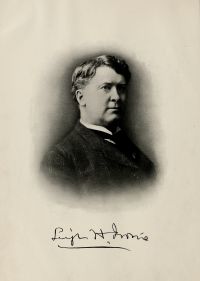 Leigh H. Irvine,
The Magazine Style-Code
Leigh H. Irvine,
The Magazine Style-Code
“ Making Copy is an Art. The world’s universities do not teach how to prepare copy for printers. Often college men are not only poor writers of English, but they are as careless of the niceties of typography as are printers in most houses, editors of some publications, ministers, school-teachers, reporters, and public officers. In most manuscripts inconsistencies abound. Numbers, for example, should be spelled out, or written in arabic or in roman numerals, yet the three methods are sometimes seen on one page of copy. ”
A. N. Palmer, The Palmer Method of Business Writing (1901)
“ There are also bound books, with copies at the top of the pages that were really written with some show of muscular movement and afterward photo-engraved, but the copy-book principles are involved in the publication of such books—principles which preclude the teaching of good writing through their use. The mental attitude of pupils who see before them the immaculate page upon which they must make reproductions, as nearly facsimile as possible of the copies at the top, is wholly unfavorable to the process. ”
 William Carleton,
The Hedge School; The Midnight Mass…
William Carleton,
The Hedge School; The Midnight Mass…
“ Some are more industriously employed in writing their copies, which they perform seated on the ground, with their paper on a copy-board—a piece of planed deal, the size of the copy, an appendage now nearly exploded—their cheek-bones laid within half an inch of the left side of the copy, and the eye set to guide the motion of the hand across, and to regulate the straightness of the lines and the forms of the letters. ”
Various, Notes and Queries, Number 167, January 8…
“ Of course you can ink or paint the copy according to pleasure.""Why, of course I can," probably exclaims the now un-gentle reader; "of course I can, when I have the ability to do it,—a consummation which I devoutly wish for, and which I am quite as far from as when I was weak-minded enough to send my twelve postage-stamps to Mr. A. B. C.; and yet that individual encloses me a card along with his nasty oiled paper and 'instructions,' which card he has the assurance to head 'scientific!' and says, 'the exquisite and beautiful art of drawing landscapes, &c. ”
William Carew Hazlitt, The Book-Collector
“ A copy of a book, it does not signify how valuable intrinsically it may be, is worth nothing in the eyes of Monsieur and Monsieur d'Angleterre son ami, unless it is in a particular vesture, with a particular ex libris, and of a particular measurement in millesimes. MM. les amateurs reject not merely calf, but that vellum wrapper and that stitched paper envelope so dear to us English—so dear that when one of us has given hundreds of pounds for a book thus clothed, rather than commit it to a binder, we employ him to make us a case for the gem. ”
“ Definition.—Copy is any manuscript prepared for printing, and is written according to the individual style rules of each newspaper. The first thing for a reporter to do on beginning work in an office is to ask for the style-book, the manual for the guidance of reporters, copy-readers, and compositors. The chances are nine to one that the paper will not have such a book, since only the larger dailies print their rules of style, and that the reporter must study the columns of the paper and the changes made in his own stories for the individual office rules. ”
William Carew Hazlitt, The Book-Collector
“ English and American millionaires acquire specimens of early typography, poetry, binding, or what not, because they hear that it is the thing to do. One gentleman will give £100 more for a copy, because he is credibly informed that it is three-eighths of an inch taller than any other known; and a second will take something from the vendor on the assurance that no library of any pretensions is complete without it. This sort of child's-play is not Book-Collecting. ”
Willard Grosvenor Bleyer, Newspaper Writing and Editing
“ The copy-reader must transform the weak, rambling sentence into a firm, coherent statement with an emphatic beginning. For the trite, colorless word or phrase, he must substitute the fresh, picturesque one. The too figurative flights of exuberant fancy in one young reporter’s copy must be toned down, and the bald, prosaic narrative or description in another’s given life and interest. In short, the copy-reader’s work is constructive as well as critical; it is as important for him to rewrite and rearrange as to cut out and boil down. ”
William Andrews, Literary Byways
“ When once fairly on the way with a novel [Pg 28] he worked with rapidity. He wrote with a large pen, with very black ink, on large sheets of drab-coloured paper. Each sheet was numbered as written, and thrown on the floor, which, after a few hours’ writing, was completely covered. A maid servant gathered up the manuscript, which, after being put in order, was sent to a copyist, who made, in a round hand, a clear copy. Mr. Reade then went carefully over it, making improvements by omissions and additions. The revised sheets were once more copied for the printer. ”
P. B. M. Allan, The Book-Hunter at Home
“ But advice is easier to give than to follow. If our purse be a slender one, it is next to impossible to confine our purchases to perfect copies in choice condition. And so it is unavoidable that a certain number of our volumes should be in a more or less dilapidated state. A book that we have long sought for crops up; it is a perfect copy, more or less clean inside, but in a sad state of decay as regards the binding. On this account it is offered to us at one-half the price which a sound copy would fetch, perhaps even less. ”
McGraw-Hill Publishing Company, A Few Suggestions to McGraw-Hill Authors
“ The author fails to return his proofs and manuscript copy promptly. The prompt reading and return of proofs is of the greatest importance. (3) The copy for the index does not follow closely upon the return of the final batch of page proofs. The printer, the engraver, the paper manufacturer, the binder or the publisher may also interfere with prompt publication; but if the author's end of the work is handled systematically and promptly, we are generally able to control the manufacturing details. ”
A. N. Palmer, The Palmer Method of Business Writing (1901)
“ Another recent copy-book system is the pad with the copy at the top, and sometimes at the top and center of each page, there being blank lines below for practice purposes. These modified copy-books are probably doing just as much harm to the cause of practical writing as the former kind. Unless the mental attitude is right, physical conditions will be wrong.Sincerely, 6 FIRST SPECIMENS Beginning pupils should write three sets of first specimens on paper about 8×101⁄2 inches. ”
 James Baldwin,
School Reading By Grades: Fifth Year
James Baldwin,
School Reading By Grades: Fifth Year
“ There were no bookstores such as we have now, and books were very few. But in the great schools and large monasteries there were men called scriptores, or copyists, whose business it was to make written copies of such works as were in demand. There were other men called illuminators who ornamented the books with beautiful initials and chapter headings, and sometimes encircled the pages with borders made with ink of different colors.At last some copyist who had several copies to make of the same book thought of a new plan. He carved a copy of each page on a block of wood. ”
John Jackson, The Theory and Practice of Handwriting (1894)
“ No rational mind can imagine that the faulty copy drawn in chalk on a Blackboard can or will be accepted as an adequate substitute for the carefully engraved copy in the Headline Book. Scores, yea hundreds of these Blackboard copies, written by every rank of teacher, have come under our observation, and we have no hesitation in saying that in the large proportion of them no Inspector would pass them as fair. One or two in every score might possibly approach to the regularity and accuracy required in a writing Copy, but this proportion is more fanciful than real. ”
Richard Garnett, Essays in librarianship and bibliography
“ At last, however, the copy goes to press, the proof is promptly returned and corrected (we are content with a single revise) , and the three or four bulky volumes of manuscript are condensed into a single handy and portable volume of type, printed in double columns and on ordinary paper for subscribers, but for reading-room use in single column on a strong vellum paper, adapted to bear rough handling, the opposite column being left blank for insertions, and the book supplied with guards to allow of interleaving. ”
James Duff Brown, A handbook of library appliances (1892)
“ Other copying or manifolding machines for manuscript are the Cyclostyle, Mimeograph, and Trypograph. The two former are [37] perhaps most useful in libraries; the Mimeograph being best for manifolding along with the typewriter. The ordinary screw letter copying press is a necessary adjunct of every librarian’s office, but in libraries with small incomes an “Anchor” copying press, costing about 12s. 6d., will be found to serve all ordinary purposes.FILES, BOXES, BOOK-HOLDERS, STAMPS, &c. ”
The Oera Linda Book, from a Manuscript of the Thirteenth Century
“ Whoever doubts this let him begin by showing where, when, by whom, and with what object such a forgery could be committed, and let him show in modern times the fellow of this paper, this writing, and this language.Moreover, that the manuscript of 1256 is not original, but is a copy, is proved by the numerous faults in the writing, as well as by some explanations of words which already in the time of the copyist had become obsolete and little known, as, for instance, in page 82 (114) , “to thêra flête jefta bedrum;” page 151 (204) , “bargum jefta tonnum fon tha besta bjar.” ”
George H. Ellwanger, The story of my house (1890)
“ We all know of the man who paid a fabulous sum for a copy of a very rare work, only to consign it to the flames on receiving it, in order that his own copy might have no duplicate. This is an exceptional form of the bibliolythist, or book-burner. ”
 Charles Webster Leadbeater,
The Inner Life: volume II — Fourth Section…
Charles Webster Leadbeater,
The Inner Life: volume II — Fourth Section…
“ In the case of a printed book there is no original copyist, so that at the beginning of its career it usually carries nothing but disjointed fragments of the thought of the binder and bookseller. Few readers at the present day seem to study so thoughtfully and thoroughly as did the men of old, and for that reason the thought-forms connected with a modern book are rarely so precise and clear-cut as those which surround the manuscripts of the past. ”
