Cosmological argument

Definition and stakes

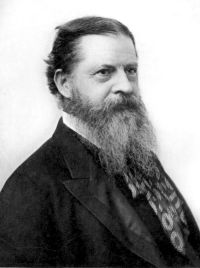
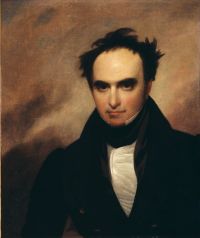
Portrait of Ernst Haeckel Ernst Haeckel,  The Riddle of the Universe at the close of the nineteenth century

“ Above all, it has put clearly before our eyes the lofty aim of monistic cosmology, and has pointed out the path which alone will lead us towards it—the way of the exact empirical investigation of facts, and of the critical genetic study of their causes. The great abstract law of mechanical causality, of which our cosmological law—the law of substance—is but another and a concrete expression, now rules the entire universe, as it does the mind of man; it is the steady, immovable pole-star, whose clear light falls on our path through the dark labyrinth of the countless separate phenomena. ”
Source: Gutenberg

Geo. W. Warder,  The Universe a Vast Electric Organism

“ In fact any other assumption is contrary to all cosmological reasoning and all analogy to be found in universal nature. Nature nowhere bestows vast substance and power without commensurate results of life and growth, and it is reversing all the laws of reason, analogy and cosmic experience to hold to the contrary. We must give up this egotistic assumption that our little world is the only living world in this vast universe, or that it is only one of a few living worlds. ”
Source: Gutenberg

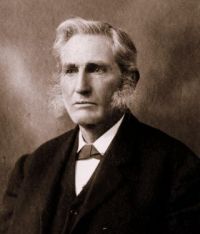
Portrait of Lester Frank Ward Lester Frank Ward,  Popular Science Monthly (1877)

“ In the one as in the other, the organization of matter is the result. Just as the doctrine of the ultimate dissolution of the bodies of space rests on a priori deductions alone, unsupported by empirical observation, so must the final disorganization of the life of our globe be inferred from cosmological principles, which transcend the present limits of astronomy and physics. So far as we are capable of penetrating the mysteries of space or of life, we find that evolution is the law of the universe ”
Source: Wikisource

Get perspective with Kwize: daily news enlightened by great literature