Crystal sphere

Definition and stakes

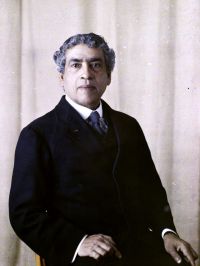
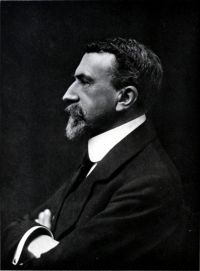
Portrait of A. E. H. Tutton A. E. H. Tutton,  Crystals (1911)

“ The crystal represented in Fig. 47 is a combination of the cube a, octahedron o, and rhombic dodecahedron d. If such a thing as we have imagined were possible, we should find that the needles would emerge at the surface of the sphere in points which would lie on great circles, that is, on circles which represent the intersection of the sphere by planes passing through the centre. Moreover, the points would be distributed along these circles at regularly recurring angular positions, corresponding to the symmetry of the crystal. ”

Source: Gutenberg

Leonard James Spencer,  1911 Encyclopædia Britannica (1911)

“ This is strikingly shown when a sphere cut from a crystal, say of calcite or quartz, is immersed in acid; after some time the resulting form is bounded by surfaces approximating to crystal faces, and has the same symmetry as that of the crystal from which the sphere was cut. When a crystal bounded by faces is immersed in a solvent the edges and corners become rounded and “prerosion faces” developed in their place; the faces become marked all over with minute pits or shallow depressions, and as these are extended by further solution they give place to small elevations on the corroded face. ”
Source: Wikisource

Leonard James Spencer,  1911 Encyclopædia Britannica (1911)

“ With change of temperature cubic crystals expand equally in all directions, and the angles between the faces are the same at all temperatures. In uniaxial crystals there are two principal coefficients of expansion; the one measured in the direction of the principal axis may be either greater or less than that measured in directions perpendicular to this axis. A sphere cut from a uniaxial crystal at one temperature will be a spheroid at another temperature. ”
Source: Wikisource

Get perspective with Kwize: daily news enlightened by great literature