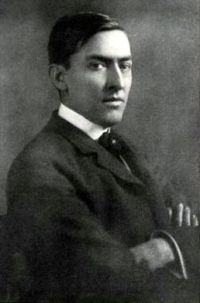
“ It would seem that the country was especially laid out and punctuated with "sights" for the convenience of the modern traveller, for the visitor who goes up the Nile and stops off at the right spots can do a clean job of sight seeing without doubling on his tracks. Until a few years age the tourist going up the Nile had to take a dahabeah. This sounds like the name of a disease, but it is really a big, roomy, flat-bottomed sailboat. The dahabeah moves only when the wind is in the right direction, and to go from Cairo to Assouan requires the greater part of a lifetime. ”
Dahabeah
Definition and stakes
The theme of “dahabeah” has been addressed by authors such as George Ade, A. M. Williamson, L. Frank Baum and Blanche McManus. It is often associated with terms like Arabs, Nile, Egypt, Abyssinia and Arabia.
Quotes about “dahabeah”
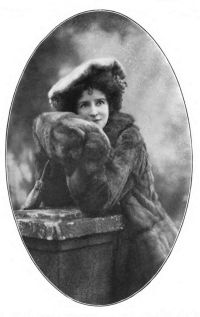 A. M. Williamson,
It Happened in Egypt
A. M. Williamson,
It Happened in Egypt
“ And if this poor thing can't get any one else to drag, he shall drag us up the Nile, if he's as intelligent in his ways as he is in that one eye, which is so like a hard-boiled egg. You see, Lord Ernest, we're going to have a boat of our own. A steam dahabeah is what we want, so we won't be at the mercy of the wind. And we can have all the dragomen we choose, can't we? ”
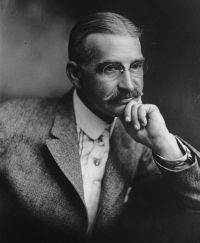 L. Frank Baum,
The Last Egyptian: A Romance of the Nile
L. Frank Baum,
The Last Egyptian: A Romance of the Nile
“ By and by he would attend to the dragoman’s reward. Just now it was imperative to prevent his intended victims from succeeding in their attempt to escape.There was no demand for immediate action. The dahabeah was, as he knew, a slow steamer, and would be forced to breast the Nile current sluggishly. His enemies doubtless depended for their safety from pursuit upon Kāra’s supposed ignorance of their whereabouts. He admitted that someone had plotted shrewdly against him. On the Nile a party in a small boat is almost as isolated as if at sea. ”
Blanche McManus, Nabul, Our Little Egyptian Cousin
“ When they got to the dahabeah everybody was bustling about, putting the boat in order for the voyage. Nabul's father was standing on the little upper deck giving orders to some of the crew who were looking to the ropes and sails, while others were scrubbing the deck. Here and there were piled up all sorts of things, gaily painted wooden boxes, which are the [77] kind of trunks Egyptians use, baskets of eatables, live chickens, and big water-jars. ”
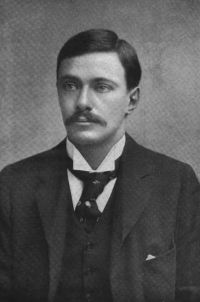 E. F. Benson,
Our Family Affairs, 1867-1896
E. F. Benson,
Our Family Affairs, 1867-1896
“ Luxor would be full of southerly-going dahabeahs and English tourists during this month of January, and I can see Maggie waving her long fine-fingered hands in impotent despair, as I brought her an invitation from some friend that she and I would dine on one of these dahabeahs to-night or next night or the night after. “How am I to get on with my work,” exclaimed this outraged invalid, “with all these interruptions? Won’t it do, if we ask them to tea at the temple?” That certainly usually “did” quite well, for while Maggie was making tea, the cry of “Antica!” ”
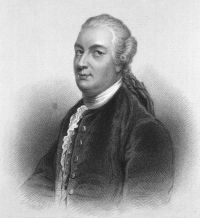 James Bruce,
Travels to Discover the Source of the Nile…
James Bruce,
Travels to Discover the Source of the Nile…
“ The inhabitants of Dahalac seemed to be a simple, fearful, and inoffensive people. It is the only part of Africa, or Arabia, (call it which you please) where you see no one carry arms of any kind; neither gun, knife, nor sword, is to be seen in the hands of any one. Whereas, at Loheia, and on all the coast of Arabia, and more particularly at Yambo, every person goes armed ”
 Pierre Loti,
Egypt (La Mort de Philae)
Pierre Loti,
Egypt (La Mort de Philae)
“ Poor Nile of the prodigies! One feels sometimes still its departing charm, stray corners of it remain intact. There are days of transcendent clearness, incomparable evenings, when one may still forget the ugliness and the smoke. But the classic expedition by dahabiya, the ascent of the river from Cairo to Nubia, will soon have ceased to be worth making. ”
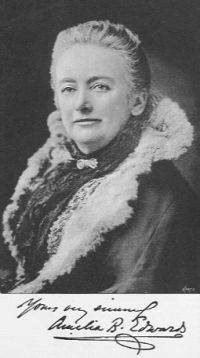 Amelia B. Edwards,
A thousand miles up the Nile
(1888)
Amelia B. Edwards,
A thousand miles up the Nile
(1888)
“ Our adventures by the way are few and far between; and we now rarely meet a dahabeeyah. Birds are more plentiful than when we were in this part of the river a few weeks{338} ago. We see immense flights of black and white cranes congregated at night on the sand-banks; and any number of quail may be had for the shooting. It is matter for rejoicing when the idle man goes out with his gun and brings home a full bag; for our last sheep was killed before we started for Wady Halfeh, and our last poultry ceased cackling at Abou Simbel. ”
“ Then those of Hadifah were led out; among them was a mare, named Ghabra, and a stallion called Marik. "Now look at these," said Hadifah. "They are not worth the hay they eat," replied Carwash. Hadifah, filled with indignation at these words: "What, not even Ghabra?" "Not even Ghabra, or all the horses in the world," repeated Carwash. "Would you like to make a bet for us with King Cais?" "Certainly," answered Carwash—"I will wager that Dahir will beat all the horses of the tribe of Fazarah, even if he carries a hundred weight of stone on his back." ”
Amelia B. Edwards,
A thousand miles up the Nile
(1888)
“ Powerless against the wind, the dahabeeyah lies idle day after day in the sun. Sometimes, when we chance to be near a village, the natives squat on the bank and stare at us for hours together. The moment any one appears on deck they burst into a chorus of “Backshîsh!” There is but one way to get rid of them, and that is to sketch them. The effect is instantaneous. With a good-sized block and a pencil, a whole village may be put to flight at a moment’s notice. If, on the other hand, one wishes for a model, the difficulty is insuperable. ”
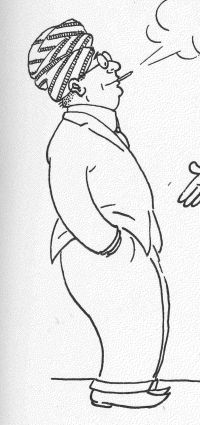 Achmed Abdullah,
Once It Happened in the Black Tents
(1923)
Achmed Abdullah,
Once It Happened in the Black Tents
(1923)
“ The Ouled Sieyda had always been a small tribe, jealous of their Shareefian blood and unwilling to sully it by intermarriage with the rude Bedouins who were all about them. There had been—“el ouad, destiny!”—commented Habeebah, few men-children born to them, and they had gradually decreased in numbers of fighting-men, becoming a prey to the razzias of the Bedouins. Then one morning two years ago the Ouled el-Kleybat, a raucous-tongued, hard-riding breed, had swept out of the desert toward the Bordj M’Kuttaba, the chief oasis of the Ouled Sieyda. ”
James Bruce,
Travels to Discover the Source of the Nile
(1790)
“ These are the Troglodytes on the eastern part of Abyssinia, towards the Red Sea, south of Walkayt, Sire, Tigré, and Baharnagash, till they are there cut off by the mountains of the Habab. These, the most powerful of all their tribes, are comprehended under the general name of Dobenah; the tribe Baasa, which we have already spoken of as occupying the banks of the Tacazzé, are the only partners they have in the peninsula formed by that river and the Mareb, Their country and manner of life have been already abundantly described. ”
James Bruce,
Travels to Discover the Source of the Nile…
“ The mountains which the Agaazi inhabit, are called Habab, from which it comes, that they themselves have got that name. Habab, in their language, and in Arabic likewise, signifies a serpent, and this I suppose explains that historical fable in the book of Axum, which says, a serpent conquered the province of Tigré, and reigned there.It may be asked, Is there no other people that inhabit Abyssinia, but these two nations, the Cushites and the Shepherds? Are there no other nations, whiter or fairer than them, living to the southward of the Agaazi? ”
“ Kinsmen, you may rest assured that there is going to be a breach between the tribe of Abs and that of Fazarah, as a result of this race between Dahir and Ghabra. The two tribes, you must know, will be mutually estranged, for King Cais has been there in person; now he is a prince and the son of a prince. He has made every effort to cancel the bet, but Hadifah would by no means consent. All this is the beginning of a broil, which may be followed by a war, possibly lasting fifty years, and many a one will fall in the struggle. ”
“ Ghabra passed ahead of Dahir and distanced him. "Now you are lost, my brother of the tribe of Abs," cried the Fazarean groom to the Absian, "try and console yourself for this defeat." "You lie," retorted the Absian, "and in a few moments you will see how completely you are mistaken. Wait till we have passed this uneven ground. Mares always travel faster on rough roads than on smooth country." And so it happened, for when they arrived in the plain, Dahir shot forward like a giant, leaving a trail of dust behind him. ”
James Bruce,
Select Specimens of Natural History Collected in Travels to Discover the Source of the Nile…
“ In Abyssinia, Nubia, and part of Arabia, he is, both in writing and conversation, called Deeb, or Deep, either ending with a b or p; and here the confusion begins, for though Dubbah is properly a hyæna, Dabbu is a species of monkey; and though Deeb is likewise a hyæna, the same word signifies a jackal; and a jackal being by naturalists called a wolf, Deeb is understood to be a wolf also. In Algiers this difference is preserved strictly; Dubbah is the hyæna; Deeb is the jackal, which run in flocks in the night, crying like hounds. ”
 Bayard Taylor,
A journey to Central Africa
(1869)
Bayard Taylor,
A journey to Central Africa
(1869)
“ It is inhabited by two tribes—the Kababish and the Howoweet, who differ strongly from the Arabs east of the Nile, in their appearance and habits. The latter, by their superior intelligence and their remarkable personal beauty, still attest their descent from the tribes of Hedjaz and Yemen. The tribes in the western desert are more allied to the Tibboos, and other tenants of the Great Zahara. The caravans on this road are exposed to the danger of attacks from the negroes of Dar-Fūr, who frequently waylay small parties, murder the individuals and carry off the camels and goods. ”
James Bruce,
Travels to Discover the Source of the Nile…
“ Dahalac is by far the largest island in the Red Sea, as none, that we had hitherto seen, exceeded five miles in length. It is low and even, the soil fixed gravel and white 350 sand, mixed with shells and other marine productions. It is destitute of all sorts of herbage, at least in summer, unless a small quantity of bent grass, just sufficient to feed the few antelopes and goats that are on the island. There is a very beautiful species of this last animal found here, small, short-haired, with thin black sharp horns, having rings upon them, and they are very swift of foot. ”
William Ross King, Campaigning in Kaffirland; Or, Scenes and Adventures in the Kaffir War of 1851-52
“ A party of headmen and older warriors, seated cross-legged in their tents, ceremoniously smoked the dagha-pipe, a kind of hookah, made of a bullock's horn, its downward point filled with water, and a reed stem let into the side, surmounted by a rough bowl of stone, which is filled with the dahga, a species of hemp, very nearly, if not the same, as the Indian bang. Each individual in the circle receives it in turn, opens his jaws to their full extent, and placing his lips to the wide open mouth of the horn, takes a few pulls and passes it on. ”
Robert Alexander Wahab, Griffithes Wheeler Thatcher and Michael Jan de Goeje, 1911 Encyclopedia Britannica (1911)
“ In the southern half, on the other hand, except in Nejran and Jauf, no European traveller has penetrated 100 m. in a direct line from the coast. The vast extent of the Dahna, or great southern desert, covering perhaps 250,000 sq. m., accounts for about a third of this area, but some of the most favoured districts in Arabia—Asir and northern Yemen—remain unexplored, and the hydrography of the Dawasir basin offers some interesting problems, while a great field remains for the archaeologist in the seat of the old Sabaean kingdom from Jauf to the Hadramut valley. ”
Amelia B. Edwards,
A thousand miles up the Nile
(1888)
“ The whole Nile, in fact, seems to be thundering in wild waves down that terrible channel.It seems, at first sight, impossible that any dahabeeyah should venture that way and not be dashed to pieces. Neither does there seem room for boats and oars to pass. The sheik, however, gives the word—his second echoes it—the men at the helm obey. They put the dahabeeyah straight at that monster mill-race. For one breathless second we seem to tremble on the edge of the fall. Then the Philæ plunges in headlong!We see the whole boat slope down bodily under our feet. ”
Amelia B. Edwards,
A thousand miles up the Nile
(1888)
“ And now, being fortunate in respect of the wind, which for the most part blows steadily from the north between sunrise and sunset, we make good progress, and for the next ten days live pretty much on board our dahabeeyah. The main features of the landscape go on repeating themselves with but little variation from day to day. The mountains wear their habitual livery of black and gold. The river, now widening, now narrowing, flows between banks blossoming with lentils and lupins. ”
 H. Rider Haggard,
Moon of Israel: A Tale of the Exodus
H. Rider Haggard,
Moon of Israel: A Tale of the Exodus
“ Our God will protect us from Pharaoh. Drag him forth and kill him beyond the wall!” Again they began to move, when a man, in whom I recognized Jabez, the uncle of Merapi, called aloud: “Cease! If this Prince of Egypt has done insult to Jahveh by will and not by chance, it is certain that he will avenge himself upon him. Shall men take the judgment of God into their own hands? Stand back and wait awhile. If Jahveh is affronted, the Egyptian will fall dead. If he does not fall dead, let him pass hence unharmed, for such is Jahveh’s will. ”
Louisa Annette Edla Drummond-Hay Brooks, A memoir of Sir John Drummond Hay… (1896)
“ The Hajib stated that the Sultan had sent for the chiefs of the tribes and asked for an explanation of their extraordinary conduct. They assured His Majesty that no insult was offered to or intended for the Bashador, but that some of the younger men of the tribes, excited by feasting and with gunpowder, had taunted and tried to annoy the escort, who had retorted; the Shloh had hoped to make the cavalry fly, as they were accustomed to do on meeting them in battle, and thus prove that the Arabs were unworthy to be guards to the British Mission. ”
James Bruce,
Travels to Discover the Source of the Nile…
“ This northern province of the Baharnagash is called the Habab, or the land of the Agaazi, or Shepherds; they speak one language, which they call Geez, or the language of the Agaazi. From the earliest times, they have had letters and writing among them; and no other has ever been introduced into Abyssinia, to this day, as we have already observed.Since the expulsion of the Turks from Dobarwa and the continent of Abyssinia, Masuah has been governed by a Naybe, himself one of the Shepherds, but Mahometan. ”
Charles Johnston, Travels in Southern Abyssinia, Volume I… (1844)
“ I saw in Tajourah two old men weaving, who had learned the art in Abyssinia; also an Arab blacksmith. It is usual for all the young men to be able to make their own sandals. One of their principal occupations in-doors is to make wooden spoons, sometimes carved in a most elegant manner, and fedeenahs, or rests for the head during the night, and which are the constant companion of the Dankalli when journeying. ”
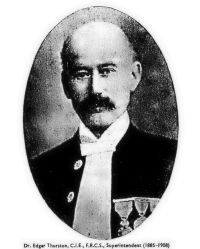 Edgar Thurston,
Castes and Tribes of Southern India…
Edgar Thurston,
Castes and Tribes of Southern India…
“ Gadaba.—The Gadabas are a tribe of agriculturists, coolies, and hunters in the Vizagapatam district. Hunting is said to be gradually decreasing, as many of the forests are now preserved, and shooting without a [243] license is forbidden. Men sometimes occupy themselves in felling trees, catching birds and hares, and tracking and beating game for sportsmen. The Gadabas are also employed as bearers in the hills, and carry palanquins. ”
 Richard Francis Burton,
Personal Narrative of a Pilgrimage to Al Madinah and Meccah
Richard Francis Burton,
Personal Narrative of a Pilgrimage to Al Madinah and Meccah
“ When I entered the Wakalah, he constituted himself my cicerone, and especially guarded me against the cheating of trades-men. By his advice I laid aside the Darwaysh's gown, the large blue pantaloons, and the short shirt; in fact all connection with Persia and the Persians. "If you persist in being an 'Ajami," said the Haji, "you will get yourself into trouble; in Egypt you will be cursed; in Arabia you will be beaten because you are a heretic; you will pay the treble of what other travellers do, and if you fall sick you may die by the roadside." ”
Lord Frederic Hamilton, Here, There and Everywhere
“ The European, being unused to this attitude, will soon feel violent cramps shooting through his limbs, added to which there is a disconcerting feeling of instability in spite of the tightly grasped cords. Nothing, on the other hand, can be more comfortable than a well-appointed howdah, where one is quite alone except for the mahout perched on the elephant's neck. The Maharajah's howdahs were all of cane-work, with a softly padded seat and a leather-strap back, which yielded to the motion of the great beast. ”
“ And you, Arab chieftains, if you sincerely desire the race to take place, conduct yourselves with justice and impartiality; otherwise, by the eyes of my dear Ibla, I will make the horses run the race in blood." "Antar is right," the horsemen shouted on all sides.Hadifah chose, as the rider of Ghabra, a groom of the tribe of Dibyan. This man had passed all his days and many of his nights in rearing and tending horses. Cais, on the other hand, chose as rider of Dahir a groom of the tribe of Abs, much better trained and experienced in his profession than was the Dibyanian. ”
