Domestic economy

Definition and stakes

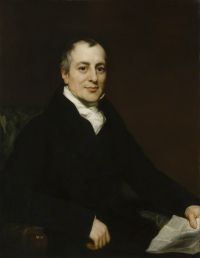
Portrait of John Stuart Mill John Stuart Mill Principles of Political Economy (1871)

But these two influencing circumstances are in reality reducible to one: for the capital which a country has to spare from the production of domestic commodities for its own use, is in proportion to its own demand for foreign commodities: whatever proportion of its collective income it expends in purchases from abroad, that same proportion of its capital is left without a home market for its productions.
Source: Wikisource

Portrait of Harriet Martineau Harriet Martineau Illustrations of political economy… (1834)

We propose to show what Labour can effect, and how it is to be encouraged and economized and rewarded: to treat of Capital, its nature and operation, and the proportions of its increase; and to exhibit the union of these two mighty agents of Production. Under the second head, Distribution, occur the great questions of Rent, Profits, Wages, and Population, the various modes of Interchange at home and abroad, including the consideration of all Monopolies, domestic and foreign. Under the third head, Consumption, are considered the modes of Demand and Supply, and of Taxation.
Source: Gutenberg

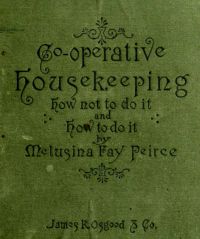
Portrait of Melusina Fay Peirce Melusina Fay Peirce Co-operative Housekeeping, Romance in Domestic Economy (1870)

To accomplish these imperative results in the quickest and easiest way has alone been my object in trying to stimulate them to throw themselves, as it were, upon their own resources; that is, combine together on the capital furnished them by men for their domestic expenditures, on such a system as to bring a part, at least, of the retail trade into their hands, and so gain the independent and responsible handling of money, with all its incalculable stimulus to invention, enterprise, and independence of thought.
Source: Wikisource

Get perspective with Kwize: daily news enlightened by great literature