“ A player feels the wisdom of this rule when he has been watching his partner play several strokes in succession, and is suddenly called on to take a fast volley himself. He does not know where nor when it is coming nearly as well as if he had played the ball before it.This shows us another principle of double play. Keep hammering at one man, if he is at a disadvantage, as thus you can probably gain something with each stroke. If, however, he is on equal terms with you, after he has played several strokes hit hard at his partner, who is often unprepared. ”
Double play
Definition and stakes
The theme of “double play” has been addressed by authors such as Karl Groos, J. B. Elwell, Jessie Hubbell Bancroft, Mrs. Lambert Chambers and John Petch Hewby. It is often associated with terms like game, card, player, ball and board.
Quotes about “double play”
“ The great difficulty of the double game is to divide the play properly between the two partners. The question is not of letting each one play the same number of balls, but simply of allowing each to take those which he can play to the greatest advantage. ”
J. B. Elwell, Advanced Bridge; The Higher Principles of the Game Analysed and Explained
“ It is bad play to double when you need only an odd trick to win the game. If you double you lessen your chance of winning the trick, and by opening the way to a redouble perhaps give the adversaries the game. ”
Adelia B. Beard, New Ideas for Work and Play: What a Girl Can Make and Do
“ The double game will afford great amusement if but two rackets are used, as the player must lay her racket down each time for her partner to use.The player who first strikes the ball across the net is called the server and the other player is called the opponent. The idea of the game is to serve the ball so as to strike the table on the opposite side of the net. The ball is then in play. If it drops into the net, or does not strike the table, it counts in favor of the opponent. ”
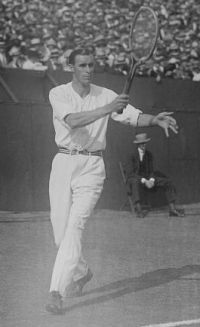 William T. Tilden,
The Art of Lawn Tennis
“ In the case of one strong player and one weaker player, the team is as good as the strong player can make it by protecting and defending the weaker. This pair should develop its team work on the individual brilliancy of the stronger man.The first essential of doubles play is to PUT the ball in play. A double fault is bad in singles, but it is inexcusable in doubles. The return of service should be certain. After that it should be low and to the server coming in. Do not strive for clean aces in doubles until you have the opening. Remember that to pass two men is a difficult task. ”
John Petch Hewby, Whist; or, Bumblepuppy? Thirteen Lectures Addressed to Children
“ Return his suit, yours will be led sometime; whatever you won the trick with, he is in a better position to defend himself as third player than if he had to lead it again himself.In returning your partner’s lead, if you had originally three, you return the higher of the two remaining cards; in returning through your adversary’s lead, if you hold the third best and another, play the small one, for your partner may hold the second best single and they would fall together. ”
 James Dwight,
The Laws of Euchre
“ If any one, prior to his partner's playing, should call attention to the trick either by saying that it is or is not his, or by naming his card or by drawing it without being asked to do so, or call on his partner to take or not to take the trick, the adversaries may require that opponent's partner to play his highest or lowest of the suit led, or to win or lose the trick. ”
 Charles James Lever,
The Dodd Family Abroad, Vol. I
“ Smart play it is, sometimes seventy, ay, a hundred Naps, on a game; and such players too!—fellows that sit for ten minutes with a card on their knee, studying your face, watching every line and lineament of your features, and reading you, by Jove,—reading you like a book. All the false air of ease and indifference, all the brag assurance you may get up to conceal a "bad hand," isn't worth sixpence. They laugh at your puerile efforts, and tell you "you are voled" before you've played a card. ”
W. H. Maxwell, The Field Book: or, Sports and pastimes of the United Kingdom
“ No one, before his partner plays, should intimate, that he has or has not won the trick; even the attempt to take up a trick, though won before the last partner has played, is deemed very improper. No intimations of any kind during the play of the cards between partners are to be admitted. The mistake of one party is the game of the adversary. ”
 Edward Burnett Tylor,
Popular Science Monthly
(1879)
“ The passion of ball-play begins not with this friendly, graceful delivery of the ball into the next hand, but when two hostile players or parties are striving each to take or send it away from the other. Thus, on the one hand, there comes into existence the group of games represented by the Greek harpaston, or seizing-game, where the two sides struggled to carry off the ball. ”
 Hans Egede,
A Description of Greenland
“ He that does it twenty times successively, and without failing, gains the match, or party, and he that misses gets a black stroke on his forehead for every time he misses. Another boy’s play is a game of chance, like cards or dice ”
C. Stansfeld Hicks, The Boy's Own Book of Indoor Games and Recreations
“ To show you the nature of a Problem, and the way to record its solution, I will append a diagram. White to play and win in eight moves.The difficulty here is the first move. That discovered, all the others follow as a matter of course. This is the solution:— by which you will see that Black’s moves are all forced, and White wins the game.Draughts is played in three ways: the Winning (and most usual) game, the Losing, and the Polish game. The last, not much practised in this country, is played on a larger board, and the men take backwards or forwards. ”
 William Hone,
The Every-day Book and Table Book…
“ They are trials of skill between two parties, consisting of a considerable number of men, forty to sixty aside, and often between two parishes. These exercises have their name from “hurling” a wooden ball, about three inches diameter, covered with a plate of silver, which is sometimes gilt, and has commonly a motto—“Fair play is good play.” The success depends on catching the ball dexterously when thrown up, or dealt, and carrying it off expeditiously, in spite of all opposition from the adverse party ”
Isaac Taylor Headland, The Chinese Boy and Girl (1901)
“ If he succeeds he wins, if he fails the other wins. If he puts it north as ordered, he may kick again to hit the other ball, in which case he wins again. If he hits the ball and goes north, as ordered, at one kick, he wins double. Each boy tries to leave the balls in as difficult a position as possible for his successor; and here comes in a peculiarity which leaves this game unique among the games of the world. ”
 Norman Douglas,
London street games
(1916)
“ ROUND THE JAM-POT, are really duty-games, of which I must tell you later on.And if you have no caps, which you sometimes haven’t, you must just find something else to play with. [Pg 12] Buttons, for instance—everybody knows the old game of BUTTONS (or BANG-OUT, or BANGINGS) where you pitch them against a wall and have to measure the intervals between them with the span of your fingers and always end up with a row about cheating distances. You can make a fine gamble out of BUTTONS if you play the same game with halfpennies; you can win quite a lot, when there are no coppers about.... ”
 Basil Hall Chamberlain,
Things Japanese
(1905)
“ The winners ride out of the enclosure in single file, while the losers dismount and follow on foot, leading their horses, a picturesque conclusion to a noble and manly game. Should neither side score its banded ball within a given time (half-an-hour usually) from the commencement of play, the game is drawn. ”
Henry Jones, Encyclopædia Britannica, Ninth Edition (1878)
“ Avoid carrying many men upon the trois or deuce point in your own tables, as these men are out of play, and the board is left open for your adversary. Whenever you have taken up two of your adversary s men, and have two or more points made in your inner table, spread your other men to take the best chance of making another point in your tables, and of hitting the man your adversary enters. As soon as he enters, compare his game with yours, and, if equal or better, take up his man, except when playing for a hit only, and your playing the throw gives you a better chance for the hit. ”
Caroline L. Smith, Popular Pastimes for Field and Fireside…
“ The chief who has the first choice takes the ball corresponding in color with the top of the post, and the other chief the next ball according to the order of the colors on the posts, while the remaining balls are given to the other players in the order in which they are chosen. (See remark under Rule II.) Eight persons can play, but a game of four or six is the most interesting. If four or more play, each player uses but one ball; but if only two play, the game is improved by each player taking two balls and playing them alternately as usual. ”
Adelia B. Beard, New Ideas for Work and Play: What a Girl Can Make and Do
“ The game is thus in part played in couples, that is, the two placed together pay especial attention to each other and are, for the time being, each the particular opponent of the other, trying to foil all efforts of the other to gain any advantages in the game, at the same time endeavoring to assist the players on her own side. ”
“ There are some in which chance is predominant—as poker, for example, or the new game of bluff, so popular in America, where so much depends on the dealing, and the play is not so much a calculation as an attempt to exhaust one’s opponent.... The stronger games, however, such as whist, Boston, l’hombre, solitaire, piquet, Skat, euchre, etc., depend on the sustained influence of both chance and calculation. ”
Various, Harper's Young People, November 15…
“ Watch the players carefully, and notice the quick decision required to place the ball beyond the reach of both their antagonists. In a single-handed game there is only one man's vigilance to outwit. In the double game there are two, and one of two partners, if they are both good players, should always be within reach of the ball wherever it may be placed. Thus you see that a young player who has learned to place his returns well in a double game will find that part of his work much easier when he has only one antagonist on the other side of the net. ”
 M. E. W. Sherwood,
Home Amusements
“ What has been said of double-handed games applies equally well to the three-handed and four-handed games, except that in the three-handed game the single player shall serve in every alternate game; in the four-handed game the pair who have the right to serve in the first game may decide which partner shall do so, and the opposing pair may decide similarly for the second game. ”
 Benjamin Ward Richardson,
Popular Science Monthly
(1875)
“ I know that professed or habitual card-players declare that, however much may be played for, the losses and winnings of games are equalized by turn, and that after a year's play the player has, practically, neither won nor lost. ”
James Dwight,
The Laws of Euchre
“ Should a player announce that he will play alone, and his partner play upon the first lead, the player loses his right to play the hand alone, and must play it with his partner, unless his adversaries elect that he play it alone. ”
J. B. Elwell, Advanced Bridge; The Higher Principles of the Game Analysed and Explained
“ They scoff at partners who play as such, and argue weakly for disconcerted play in which one puts down a card, his partner another, and for all the information that either conveys to the other a pinch of snuff would be generous recompense. ”
“ The successful one rushes to an appointed goal, while the others try to hinder him.”272 The game in which one boy rides on another’s back to throw the ball is illustrated in an Egyptian wall picture, and Bastion saw it also in Burmah. In this, imitation becomes prominent, as does the element of rivalry, where the boys vie with one another in clapping, kneeling, and going through various motions before catching the ball. In most games where the ball is struck the contest develops after it is caught. In playing trapball, the ball is placed on a springboard and sent aloft. ”
Ernest Young, Peeps at Many Lands: Siam — Chapter 6 Amusements (1908)
“ Any number of people can play, from two upwards. The players stand in a ring facing each other. One of them sends the ball into the air, and the person nearest to it, when it descends, must send it up again. ”
Clark Wissler, The Social Life of the Blackfoot Indians
“ Each hiding man, or leader, faces the guesser of the opposing side and the play begins. The leaders put their hands behind them and then show their hands when the guess is made. The side guessing correctly takes one counter and also their opponents’ pair of hiding sticks. This opens the game. There are now two leaders for the playing side. They confront the guessers of their opponents. The player’s side now sings and drums upon the tipi poles, provided for that purpose, apparently to divert the attention of the guessers. For every failure of a guesser, the playing side takes a counting stick. ”
 Jessie Hubbell Bancroft,
Games for the Playground, Home…
“ Players will try to deceive their opponents as to the point where the ball is to cross the curtain, and the more rapid the play is the more alert the players will have to be. The great sport of the game consists in the unexpectedness with which the ball may appear at any given point. ”
J. B. Elwell, Advanced Bridge; The Higher Principles of the Game Analysed and Explained
“ Ordinarily be satisfied to win at all on the opponent’s make. By doubling you not only place the strength and thus enable the dealer to finesse successfully, but your double is a warning to the dealer to be cautious in leading trumps, and therefore, lessens your chances of winning tricks. ”
Sarah Josepha Buell Hale, Mrs. Hale's Receipts for the Million
“ When parties play even, they draw lots for the first move of the first game. The first move is afterward taken alternately throughout the sitting, except when a game is drawn, when he who had the first move in that game still claims it, a drawn game being of no account. ”
Robert Kemp Philp, Enquire Within Upon Everything
“ Attend to the game, and play as though your hand consisted of twenty-six instead of thirteen cards. In the second round of a suit, win the trick when you can, and lead out for your partner's high cards as soon as possible. Touch only the card you intend to play. Retain a high trump as long as you can, to bring back your strong suit. With a weak hand, always try to secure the seventh or odd trick to save the game. Attend to the score, and play as if the whole fortune of the game depended on yourself. ”
Jessie Hubbell Bancroft,
Games for the Playground, Home…
“ While the main form of play for the ball is to roll it, it is permissible to bound the ball from one player to another, and also permissible to knock over a club with a ball that bounds instead of rolling. ”
Lucia Chase Bell, All the World Over: Interesting Stories of Travel… (1892)
“ The players of each side play alternately—a white and a color—and the luck constantly changes; for as, at the close of the game, all balls of one side count which are nearer to the black than any ball of the other side, a lucky roll may change the whole result by coming in closer, or by knocking away either black, white, or colored balls.Great skill can be used, as, if the ball is too swift, it goes beyond all the balls unless it hits and scatters them; if too light, it fails to come in near the black. ”
Claude Harris Miller, Outdoor Sports and Games
“ In any case there is no question that nine boys who are accustomed to play together and who understand each other’s methods of play and signals will have a better chance of winning a close game than nine other players who may have a shade the better of it in individual work but who do not play together. ”
W. H. Peel, Round Games with Cards
“ The play proceeds from left to right, and each player, in turn, has to follow suit if he can; as it is his desire to secure the trick for himself he will play as high as possible [21] if he has the power to head the trick. ”
“ While there are various objects employed in such play—as, for instance, in the Greek πενταλιθίζειν there were five pebbles, bits of china, or what we call jack-stones, thrown up with one hand and caught on its back, and in the beautiful game of magic rings, and trials of skill with sticks, knives, watches, etc.269—still the ball is the most perfect and suitable plaything, partly because it is easy to grasp from any direction and partly on account of its lightness and elasticity. It is equally well adapted to solitary or social play. ”
J. B. Elwell, Advanced Bridge; The Higher Principles of the Game Analysed and Explained
“ The score is a most important factor, and even, at times, justifies a double with only a fair hand. For instance, suppose the odd trick wins the game for your adversaries, and does not win it for you; if you double and secure the odd trick, the additional count may enable you to win the game on that deal or the next. ”
Related terms
Authors who wrote about “double play”
Karl GroosJ. B. ElwellJessie Hubbell BancroftMrs. Lambert ChambersJohn Petch HewbyWilliam T. Tilden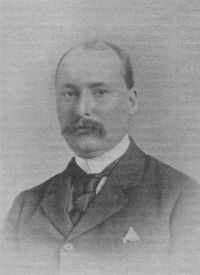 Milton C. WorkJames Dwight
 John Locke
 Charles Dickens
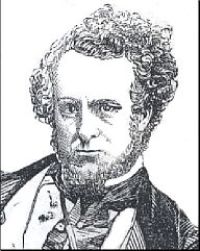 Howard Staunton
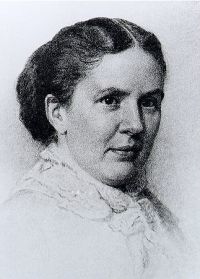 Alice C. FletcherHans EgedeNorman DouglasRobert Kemp PhilpCharles James LeverW. H. MaxwellEdward Burnett TylorC. Stansfeld HicksBasil Hall Chamberlain
Jessie Hubbell BancroftMrs. Lambert ChambersJohn Petch HewbyWilliam T. TildenMilton C. WorkJames DwightJohn LockeCharles DickensHoward StauntonAlice C. FletcherHans EgedeNorman DouglasRobert Kemp PhilpCharles James LeverW. H. MaxwellEdward Burnett TylorC. Stansfeld HicksBasil Hall Chamberlain