
“ Morning service was, so to speak, the state service of the day. The heads of families attended, and the families themselves in force. The afternoon service was for servants and such, and nursemaids and governesses could take their charges to keep them occupied and out of the way; Sunday-schools were not invented, apparently, though we all had to say our collect and catechism to somebody at home. There was no service in the evening. The churches had no apparatus for lighting except with daylight. ”
Quotes about “evening service”
Henry William Harper, Letters from New Zealand, 1857-1911… (1914)
“ Then comes dinner, provided in part by the owner of the station, and in part by supplies brought by settlers who happen to have such luxuries as pigs and poultry, and, save the parson, it is late afternoon ere the company disperses. But he has a long ride before him for an afternoon, and then for an evening service. In the evening I usually expect only the residents of the station, with an occasional stranger who is travelling and finds the usual hospitality common to all in a new country. ”
 Lucy Maynard Salmon,
Domestic service
(1897)
“ The employer as a rule commands absolutely the time of the employee; for example, in Germany the employee spends her time in knitting for the family, in working out of doors, or in similar ways. The hours everywhere seemed to me much longer than those required in America, largely owing to the lateness of the evening meal, which is universally dinner in France, Italy, and England. ”
Anton Pavlovich Chekhov, The Darling and Other Stories
“ There was a fragrance of lime-flowers and of hay. This fragrance and the murmur of the unseen whispers worked upon Laptev. He was all at once overwhelmed with a passionate longing to throw his arms round his companion, to shower kisses on her face, her hands, her shoulders, to burst into sobs, to fall at her feet and to tell her how long he had been waiting for her. A faint scarcely perceptible scent of incense hung about her; and that scent reminded him of the time when he, too, believed in God and used to go to evening service, and when he used to dream so much of pure romantic love. ”
 Robert William Service,
Ballads of a Bohemian
(1921)
“ But what I love most is the stealing in of night, when the sky takes on that strange elusive purple; when eyes turn to the evening star and marvel at its brightness; when the Eiffel Tower becomes a strange, shadowy stairway yearning in impotent effort to the careless moon. ”
Robert William Service,
Ballads of a Bohemian
(1921)
“ All day the sun has shone into my little attic, a bitter sunshine that brightened yet did not warm. And so as I toiled and toiled doggedly enough, many were the looks I cast at the three faggots I had saved to cook my evening meal. Now, however, my supper is over, my pipe alight, and as I stretch my legs before the embers I have at last a glow of comfort, a glimpse of peace. ”
Robert William Service,
Ballads of a Bohemian
(1921)
“ Ah yes, how glorious is life! I thank Him for each day of it.” “How good God is to me,” he said; “Though health and wealth are gone, it’s true; Things might be worse, I might be dead, And here I’m living, laughing too. Serene beneath the evening sky I wait, and every man’s my friend; God’s most contented man am I... He keeps me smiling to the End.” To-day the basin of the Luxembourg is bright with little boats. Hundreds of happy children romp around it. Little ones everywhere; yet there is no other city with so many childless homes. ”
Robert William Service,
Ballads of a Bohemian
(1921)
“ We play the part... but say, old chap, oh, isn’t it a bore? We work like slaves, we eat too much, we put on evening dress; We’ve everything a man can want, I think... but happiness. Come, let us sneak away, old chum; forget that we are rich, And earn an honest appetite, and scratch an honest itch. Let’s be two jolly garreteers, up seven flights of stairs, And wear old clothes and just pretend we aren’t millionaires; And wonder how we’ll pay the rent, and scribble ream on ream, And sup on sausages and tea, and laugh and loaf and dream. ”
J. M. Judy, Questionable Amusements and Worthy Substitutes
“ By this time half-past ten or eleven o'clock, some who are old, or who have pressing duties on the next day may want to retire. If the serving committee have been skillful in adjusting the time spent at each table to the number of tables, etc., by eleven o'clock the serving shall have been completed. Now, the young in spirit, whether old or young, expect, and should have an hour at the newest, liveliest, and most recreative games. No part of the evening entertainment should be allowed to drag. To insure this a frequent change of social games is needed. ”
 Matilda Betham-Edwards,
In the Heart of the Vosges and Other Sketches by a "Devious Traveller"
“ Services are going on all day long and late into the night. Hardly do these devotees give themselves time for meals, which are a scramble at best, every hotel and boarding-house much overcrowded. The table d'hôte dinner, or one or two dishes, are hastily swallowed, and the praying, chanting, marching and prostrating begin afresh. ”
Charlotte Biggs, A Residence in France During the Years 1792…
“ People then adjourn to their supper engagements, which are more common than those for dinner, and are, for the most part, in different places, and considered as a separate thing from the earlier amusements of the evening. They keep better hours than the English, most families being in bed by half past ten. ”
Helen Campbell, Prisoners of Poverty: Women Wage-Workers…
“ They’re waitresses, and have Thursday afternoon out and part of every other Sunday. But they’re never sure of one minute that’s their own when they’re in the house. Our day is ten hours long, but when it’s done it’s done, and we can do what we like with the evenings. ”
John Jervis, The traveller's oracle; or, maxims for locomotion… (1827)
“ Persons dwelling four or five Miles from Town, and those who invite Friends from the Country to dine with them, should Dine, and have all such Parties at least an Hour or two earlier than the fashionable town time, so that their Guests may get home at their usual hour of retiring to Rest.For people who live half a Dozen Miles from the Standard in Cornhill, to invite you, or you to invite them, to a Dinner Party later than Four o’clock, or an Evening Party later than Seven, is one of the most ridiculous affectations imaginable! ”
John Thomas Codman, Brook Farm: Historic and Personal Memoirs
“ Imagine, also, all hands seated at the supper tables, with the rattle of knives, forks, mugs and plates, and the full buzz of conversation; waiters crowding up and down, supplying the fast vanishing food, and everything cheerful, when a rapping on one of the tables arrests the attention of all. One of the gentlemen, arising, announces, "There will be a dance in this hall this evening, at eight o'clock, to which all are invited." ”
New York evening journal, What's in the New York Evening Journal
“ For the past quarter of a century the New York Evening Journal has attracted the largest readership of any evening newspaper in the United States on the sound principle of greatest service to the greatest number of men and women in every substantial walk of life. ”
 Valentine Williams,
The Man with the Clubfoot — Chapter 6
(1918)
“ Day or night it never closes: the waiters succeed each other in shifts: day and night the great hall resounds to the cry of orders, the patter of the waiters' feet, the click of dominoes on the marble tables. ”
Robert Service, The Zoologist (1902)
“ As the evening wears on they rise higher over the tree-tops and along the woodlands, and for the remainder of the night they frequent these loftier heights, only coming down lower when the night is specially bright, or becomes breezy. ”
Don Manoel Gonzales, London in 1731
“ In the evening of every other day the post comes in, when the perusing their letters may employ part of their time, as the answering them does on other days of the week; and they frequently meet at the tavern in the evening, either to transact their affairs, or to take a cheerful glass after the business of the day is over. ”
 Harry Furniss,
The Confessions of a Caricaturist…
“ Then visit from local manager or secretary—friends—strangers, a walk round the town to get "copy," tea, a good hour's drawing (no matter how tired I can work on tea) , dress, off to evening's work on stage; autographs to be written and people to meet; back to change, supper at some club, speeches; back 3 a.m., bed, sleep—no, only occasionally. Hotel servants turn on electric light, begin sweeping the passage—sw—w—w—whish, sw—w—w—whish! they chat and laugh just outside one's door; they gradually sweep down the long, long passage. Doze—sleep. Bang, bang! "Five o'clock, sir." ”
Sir W. H. Sleeman, Rambles and Recollections of an Indian Official
“ Unmarried officers generally dine in the evening, because it is a more convenient hour for the mess; and married civil functionaries do the same, because it is more convenient for their office work. If you invite those who dine at that hour to spend the evening with you, you must invite them to dinner, even in the hot weather ”
Harriet E. Paine, Girls and Women
“ The cheerful, interesting conversation at table, and in the odds and ends of time through the day, would be sufficient stimulus to all but the most exacting guests; while, as a matter of fact, there are always a few hours in the evening when everybody seems to be at leisure, and these form the social centre of the day. ”
Charles Melville Pepper, Panama to Patagonia
“ Though he is at his office, the business man would rather have you come around after breakfast, since it spoils his mid-day meal to take up the work of the day before then. Some humorous experiences of my own, some polite postponements, satisfied me of the fixedness of this custom. In the afternoon there is real activity, concentration which in a few hours makes up for apparent slackness. ”
 Christine Terhune Herrick,
What to Eat, How to Serve it
“ With these must not be forgotten the band of night workers who, in one capacity or another, have part in making the morning papers, and who, turning day into night, find it as essential to take a midnight as others do a midday repast. ”
 Edward Bellamy,
The Duke of Stockbridge — CHAPTER THIRTEENTHA PRAISE MEETING
(1900)
“ In these modern days, restaurants, barrooms, and saloons, and similar places of resort, are chiefly thronged on Saturday evening, when the labors of the week being ended, the worker, in whatever field, finds himself at once in need of convivial relaxation, and disposed thereto by the exhilaration of a prospective holiday. ”
Joseph Jocelyn Anderson, Recollections of a Peninsular Veteran
“ The evening continued one of the most social and merriest of my life, and dinner after dinner followed at each of our messes, and many quiet ones also were enjoyed in succession at the married officers’ quarters, and always on a large scale at the brigadier’s once a fortnight, where that good man and Mrs. Logan made every one happy and at home by their kind and courteous manner and genuine hospitality. ”
 George R. Sims,
The Mysteries of Modern London
“ The refreshment houses of the night-workers are open, and between four and five o'clock many of them are packed with breakfasting guests. Down by the dock gates a great crowd of men has gathered long before the grey dawn throws their anxious and often careworn faces into relief. ”
W. H. Wilkins, Caroline the Illustrious, vol. 1… (1901)
“ In the fashionable world dinner was taken in the middle of the day, or from two to four o’clock, and supper was the pleasanter and more informal meal. Card parties and supper parties generally went together. There were lighter hospitalities also; and among the less wealthy many pleasant little gatherings were held in the evening around coffee and oranges. Ladies of quality passed most of their afternoons going from house to house drinking tea, which at the high prices then asked was a luxury. ”
T. De Witt Talmage, Around the Tea-Table
“ A week-night meeting widens the pulpit till all the people can stand on it. Such a service tests one's piety. No credit for going to church on Sabbath. Places of amusement are all closed, and there is no money to be made. But week-nights every kind of temptation and opportunity spreads before a man, and if he goes to the praying circle he must give up these things. The man who goes to the weekly service regularly through moonlight and pitch darkness, through good walking and slush ankle-deep, will in the book of judgment find it set down to his credit. ”
 Andrew Kennedy Hutchison Boyd,
The Recreations of a Country Parson
“ Those families who have their choice dine at two o'clock—an excellent dinner hour when the day is not a working one: the families whose male members are in town, sometimes postpone the most important engagement of the day till their return at six or half-past six o'clock. As for the occupations of the day, there are boating and yachting, wandering along the beach, lying on the heather looking at Arran through the sun-mist, lounging into the reading-room, dipping into any portion of The Times except the leading articles, turning over the magazines, and generally enjoying the blessing of rest. ”
“ As the dinner is early, being always between twelve and five, the remainder of the evening is employed in various pursuits. A drive in the Prater or to some place of public resort, a visit to the theatre, or a succession of the calls just described, employ the evening ”
W. H. Sparks, The Memories of Fifty Years
“ The character of the hospitality he is enjoying permits him to breakfast from seven till ten, alone, or in company with the family if he chooses. Horses, dogs, and guns for the gentlemen—billiards, the carriage, music, or promenading, with cards, chess, backgammon, or dominos for the ladies, to pass away the day until dinner. At this meal the household and guests unite, and the rich viands, wines, and coffee make a feast for the body and sharpen the wit to a feast of the soul. ”
 Ida Pfeiffer,
The last travels of Ida Pfeiffer…
“ As I have observed, the usual dinner-hour is between seven and eight o’clock, and thus the whole evening is lost. In other hot countries, when it is customary for people to live in country houses outside the town, the gentlemen generally come home from their business at five o’clock, and dine at six, so that at seven people are ready to receive visitors and friends. ”
Graf von Wolf Ernst Hugo Emil Baudissin, Life in a German Crack Regiment
“ Wherever there is the attraction of a dinner, a supper, an entertainment of any kind, where the food is good and the drinks plentiful, there the officers are to be found, and it is solely for the sake of the excellent fare that they visit these people with whom they would not dream of sitting down to dinner if they were not rich. ”
Reginald Harvey Arnold, Simplex Munditiis, Gentlemen
“ A gentleman should make it a rule to be punctual to the time set for his arrival, be it morning, afternoon, or evening. When expected in the morning for breakfast, and the place of visit is out of town, if he arrives at his destination earlier than to his knowledge the family are accustomed to rise, then he should occupy himself in some way till it is time to put in an appearance, that he may be received by the host or hostess at a reasonable hour. ”
Charles Fish Howell, Around the clock in Europe (1912)
“ The most approved form of evening entertainment is a round of calls among friends scattered over the broad lawns of the hotels, when one may divert himself with summer orchestras or itinerant bands of Italian singers in crimson sashes, or revel in a rare profusion of beautiful flowers ”
 Lillian Eichler Watson,
Book of Etiquette, Volume II
“ In planning entertainments for the morning, the hostess must remember that breakfast will be preferred late, and that the women guests, especially, may prefer to forego breakfast entirely and keep to their rooms until just before luncheon. Thus it is always best to start any entertainment in the afternoon. Long drives through the country, tennis, hockey, golf, card parties—all these are appropriate for the afternoon. ”
 Julia Ward Howe,
Reminiscences, 1819-1899
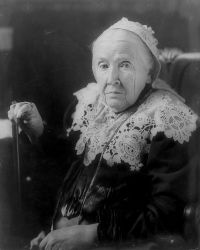
“ I am old and must work for my living," a speech which usually broke up our morning coterie. Dinner was served at four o'clock, a light lunch abbreviating the fast for those at home. At half past seven we sat down to tea, a meal of which toast, preserves, and cake formed the staple. In the evening we usually sat together with books and needlework, often with an interlude of music. An occasional lecture, concert, or evening party varied this routine. ”
Papers and Proceedings of the Thirty-Fourth Annual Meeting of the American Library Association
“ The gauge by which we examine the running of the human machinery entrusted to us should be read with sympathy, and we should set a pace that we can hold the entire day or the working period of a normal life. Speaking for our own institution, we adhere to the 42-hour weekly schedule with provision for a weekly half-holiday. Evening work should certainly never exceed the number three in any one week and personally I'm leaning toward the more desirable two evenings a week. Where a special evening force is employed the recommendation of course, does not apply. ”
