Extrasensory perception

Definition and stakes

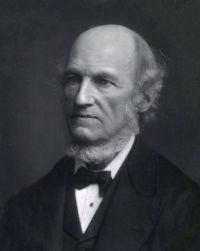
Portrait of Aristotle Aristotle,  On Dreams (Aristotle) (350 BCE)

“ This explains why the affection continues in the sensory organs, both in their deeper and in their more superficial parts, not merely while they are actually engaged in perceiving, but even after they have ceased to do so. That they do this, indeed, is obvious in cases where we continue for some time engaged in a particular form of perception, for then, when we shift the scene of our perceptive activity, the previous affection remains; for instance, when we have turned our gaze from sunlight into darkness. ”

Source: Wikisource

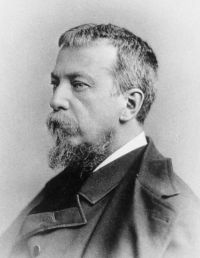
Portrait of Vernon Lee Vernon Lee,  The Beautiful: An Introduction to Psychological Aesthetics

“ But a moment's reflection will show that this cannot be the case, since the sensations are furnished us simply without our performing any act of perception, thrust on us from outside, and, unless our sensory apparatus and its correlated brain centre were out of order, received by us passively, nilly willy, the Man on the Hill being invaded by the sense of that blue, that lilac and that russet exactly as he might have been invaded by the smell of the hay in the fields below. ”
Source: Gutenberg

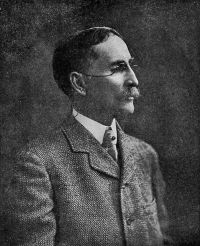
Portrait of Vernon Lee Vernon Lee,  The Beautiful: An Introduction to Psychological Aesthetics

“ Moreover, because these mental and bodily activities, being our own, can be rehearsed in what we call our memory without the repetition of the sensory stimulations which originally started them, and even in the presence of different ones.
In terms of mental science, colour and sound, like temperature, texture, taste and smell, are sensations; while shape is, in the most complete sense, a perception. This distinction between sensation and perception is a technicality of psychology
”
Source: Gutenberg

Get perspective with Kwize: daily news enlightened by great literature