“ The most natural feelings are those we are least willing to confess, and among them is fatuity. ”
Fatuity
Definition and stakes
The theme of “fatuity” has been addressed by authors such as Honoré de Balzac, Edith Nesbit, Henry David Thoreau and Edith B. Ordway. It is often associated with terms like wealth, folly, human, vice and moral.
Quotes about “fatuity”
 Edith Nesbit,
The Story of the Treasure Seekers
(1899)
Edith Nesbit,
The Story of the Treasure Seekers
(1899)
“ It is his own fault. I will leave him to meditate on the incredible fatuity—the hare-brained recklessness—which have brought him to this pass. It will be a lesson to him. I, meantime, will give myself unreservedly to the pleasures of your conversation. ”
 Henry David Thoreau,
Life Without Principle
(1863)
Henry David Thoreau,
Life Without Principle
(1863)
“ The finest manners in the world are awkwardness and fatuity, when contrasted with a finer intelligence. ”
Edith B. Ordway, Synonyms and antonyms (1913)
“ Ant. Freshness, vigor, indefatigability, activity.Fatigue, v. Harass, weary, tire, jade, exhaust, fag.Ant. Inspirit, refresh, enliven, animate.Fatuity. Foolishness, imbecility, idiocy; folly, madness, absurdity, infatuation.Ant. Wisdom, sense, soundness, sobriety, discernment.Fault. Defect, blemish, imperfection, flaw, weakness, failing, frailty; misdeed, misdemeanor, offense, trespass, wrong, transgression, delinquency, indiscretion; slip, error, lapse; failure, omission, want, drawback.Ant. Perfection, sufficiency, correctness, completeness. ”
A Century of Parody and Imitation
“ To embody the flying colours of folly, to arrest evanescence, to give to bubbles the globular consistency as well as form, to exhibit on the stage the piebald denizen of the stable, and the half-reasoning parent of combs, to display the brisk locomotion of Columbine, or the tortuous attitudinizing of Punch;—these are the occupations of others, whose ambition, limited to the applause of unintellectual fatuity, is too innocuous for the application of satire, and too humble for the incitement of jealousy. ”
active 11th century Somadeva Bhatta, The Kathá Sarit Ságara; or, Ocean of the Streams of Story
“ Then one of my fellow-students, seeing that in my misery I had flung my body into moonlight as into a fire, and was longing for death, said to me, “Why are you in this evil case? You do not appear to have any disease; but, if you have mental affliction caused by longing for wealth or by love, I will tell you the truth about those objects; listen to me. The wealth, which through over-covetousness men desire to gain by cheating their neighbours, or by robbing them, does not remain. ”
Charlotte M. Mason, Parents and children (1897)
“ Now, every fault of disposition and temper, though it may have begun in error of the spirit in ourselves or in some ancestor, by the time it becomes a fault of character is a failing of the flesh, and is to be dealt with as such—that is, by appropriate treatment. ”
 E. V. Lucas,
Old lamps for new
(1911)
E. V. Lucas,
Old lamps for new
(1911)
“ Your ordinary fatalist who thinks that, everything being ordained and fixed, no effort of his own can matter, is bad enough; but the fatalist who is also an optimist and secure in the knowledge of his own prosperity is worse. ”
 Anatole France,
Thaïs
(1909)
Anatole France,
Thaïs
(1909)
“ Seizing his fair prey, he pressed her to his heart. "Impious men," he cried in a voice of thunder, "strive not to tear the dove from the eagle of the Lord. But rather copy this woman, and like her, turn your filth into gold. Imitate her example, and renounce the false wealth which you think you hold, and which holds you. Hasten! the day is at hand, and divine patience begins to grow weary. ”
 Lewis Carroll,
Sylvie and Bruno
(1889)
Lewis Carroll,
Sylvie and Bruno
(1889)
“ This Postscript puzzled my sorely. "He is far too sensible a man," I thought, "to have become a Fatalist. And yet what else can he mean by it?" And, as I folded up the letter and put it away, I inadvertently repeated the words aloud. "Do you believe in Fate?" ”
Matthew Henry, Commentary on the Whole Bible… (1700s)
“ This is also vanity. 20 Therefore I went about to cause my heart to despair of all the labour which I took under the sun. 21 For there is a man whose labour is in wisdom, and in knowledge, and in equity; yet to a man that hath not laboured therein shall he leave it for his portion. This also is vanity and a great evil. 22 For what hath man of all his labour, and of the vexation of his heart, wherein he hath laboured under the sun? 23 For all his days are sorrows, and his travail grief; yea, his heart taketh not rest in the night. ”
Roger L'Estrange, Fables of Æsop and Other Eminent Mythologists… (1692)
“ And this Volubility of Human Affaires, what is it, bur either the Sport, or the Judgment of Providence, in the Punishment of Arrogance and Oppression! We are given finally to Understand, that as the Levity of Fortune leaves us Nothing to Trust to, or to Presume upon, so at the same Time there's Nothing to Despair of. ”
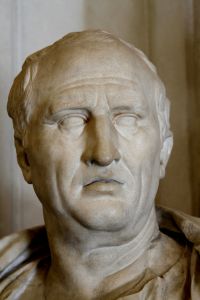 Marcus Tullius Cicero,
The Orations of Marcus Tullius Cicero…
Marcus Tullius Cicero,
The Orations of Marcus Tullius Cicero…
“ And it will be desirable to produce that effect by common topics, such as those by which the power of fortune over all men is shown, and the weakness of men too is displayed, and if such an argument is argued with dignity and with impressive language, then the minds of men are greatly softened, and prepared to feel pity, while they consider their own weakness in the contemplation of the misfortunes of another. ”
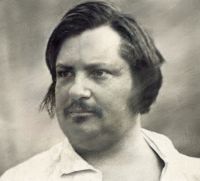 Honoré de Balzac,
Father Goriot
(1835)
Honoré de Balzac,
Father Goriot
(1835)
“ If I set myself to obtain wealth or power, does it mean that I must make up my mind to lie, and fawn, and cringe, and swagger, and flatter, and dissemble? To consent to be the servant of others who have likewise fawned, and lied, and flattered? ”
 George Edward Moore,
Principia Ethica — Chapter VI
(1903)
George Edward Moore,
Principia Ethica — Chapter VI
(1903)
“ In order to illustrate the nature of evils of this class, I may take two instances—cruelty and lasciviousness. That these are great intrinsic evils, we may, I think, easily assure ourselves, by imagining the state of a man, whose mind is solely occupied by either of these passions, in their worst form. ”
 Charles Kingsley,
Sanitary and Social Lectures and Essays
Charles Kingsley,
Sanitary and Social Lectures and Essays
“ Consider to whom you go—to poor souls whose life, compared with yours, is one long malaise of body, and soul, and spirit—and do as you would be done by; instead of reproving and fault-finding, encourage. ”
 John Stuart Mill,
Autobiography (Mill) — Chapter V. 1826-1832
(1874)
John Stuart Mill,
Autobiography (Mill) — Chapter V. 1826-1832
(1874)
“ From that time I drew in my own mind, a clear distinction between the doctrine of circumstances, and Fatalism; discarding altogether the misleading word Necessity. The theory, which I now for the first time rightly apprehended, ceased altogether to be discouraging, and besides the relief to my spirits, I no longer suffered under the burden, so heavy to one who aims at being a reformer in opinions, of thinking one doctrine true, and the contrary doctrine morally beneficial. ”
 John Fletcher,
Studies on Slavery, in Easy Lessons
John Fletcher,
Studies on Slavery, in Easy Lessons
“ The uncertainty and vanity of human pursuits have for ever been a subject of remark.And, if we examine the motives of human conduct and see the fallacious objects of human hope, we always perceive the constant attendance of pain, misery, and woe. ”
H. Noel Williams, Queens of the French Stage
“ In this condition, by the irony of Fate, it fell to him to represent the folly of a man in perfect health who, imagining himself the victim of all manner of fell diseases, is ready to submit to any and every remedy that may be suggested to him,—that is to say, the exact counterpart of his own state. ”
Tiruvalluvar, Tirukural — Chapter 38 (1886)
“ The fate that loss ordains makes wise men's wisdom foolishness; The fate that gain bestows with ampler powers will wisdom bless. An adverse fate produces folly, and a prosperous fate produces enlarged knowledge. ”
William Gray Elmslie, Professor W. G. Elmslie, D.D.: Memoir and Sermons
“ Bound down by the greed of gain! So that the nobler powers of mind and body, and soul, are degraded and cramped in them—men and women slaves of superstition, slaves of prodigies and foolish fancies wrought into their very nature. ”
Richard Baxter, A Christian Directory, Part 2: Christian Economics
“ III. There is many a deep corruption in the heart, which affliction openeth and discovereth, which deceitfulness hid in the time of prosperity; and the detecting of these is no small benefit to the soul. When you come to part with wealth and honour, you shall better know how much you loved them, than you could before. Mark therefore what corruptions appear in your affliction, and how the heart discloseth its deceits, that you may know what to repent of, and reform. ”
Andrew Lee, Sermons on Various Important Subjects
“ The fatalist, and those who conceive every human volition and action to be the effect of divine agency, have no rational motive, to do, or suffer for religion. "Let us eat and drink, for tomorrow we die." However we may amuse ourselves with idle speculations, this life is approbation season.—Our use or abuse of the talents we possess will determine us to happiness, or misery, honor or infamy. ”
Matthew Henry, Commentary on the Whole Bible… (1700s)
“ We all have our infirmities; but the weak are more subject to them than others—the weak in knowledge or grace, the bruised reed and the smoking flax. We must consider these; not trample upon them, but encourage them, and bear with their infirmities. If through weakness they judge and censure us, and speak evil of us, we must bear with them, pity them, and not have our affections alienated from them. ”
John Stuart Mill,
Autobiography (Mill) — Chapter V. 1826-1832
(1874)
“ For though my dejection, honestly looked at, could not be called other than egotistical, produced by the ruin, as I thought, of my fabric of happiness, yet the destiny of mankind in general was ever in my thoughts, and could not be separated from my own. I felt that the flaw in my life, must be a flaw in life itself ”
Marcus Tullius Cicero,
Cicero's Tusculan Disputations
“ Now as to what they say, that some are not at all appeased by our consolations; and, moreover, as to what they add, that the comforters themselves acknowledge they are miserable when fortune varies the attack and falls on them—in both these cases the solution is easy: for the fault here is not in nature, but in our own folly; and much may be said against folly. ”
 Samuel Taylor Coleridge,
The Literary Remains of Samuel Taylor Coleridge…
Samuel Taylor Coleridge,
The Literary Remains of Samuel Taylor Coleridge…
“ If thou hast genius and poverty to thy lot, dwell on the foolish, perplexing, imprudent, dangerous, and even immoral, conduct of promise-breach in small things, of want of punctuality, of procrastination in all its shapes and disguises. Force men to reverence the dignity of thy moral strength in and for itself, seeking no excuses or palliations from fortune, or sickness, or a too full mind that, in opulence of conception, overrated its powers of application. ”
 Nathaniel Hawthorne,
The Marble Faun
(1860)
Nathaniel Hawthorne,
The Marble Faun
(1860)
“ Perhaps it is the very lack of moral severity, of any high and heroic ingredient in the character of the Faun, that makes it so delightful an object to the human eye and to the frailty of the human heart. ”
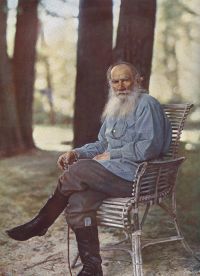 Leo Tolstoy,
My Religion
(1885, 2nd edition, 1889)
Leo Tolstoy,
My Religion
(1885, 2nd edition, 1889)
“ Everything that once seemed to me right and important, such as honors, glory, civilization, wealth, the complications and refinements of existence, luxury, rich food, fine clothing, etiquette, have become for me wrong and despicable. ”
 Sir Oliver Lodge,
Raymond; or, Life and Death
Sir Oliver Lodge,
Raymond; or, Life and Death
“ Blame not us that the lower spirits manifest for those who bid them welcome. Blame man's insensate folly, which will choose the low and grovelling rather than the pure and elevated. Blame his foolish laws, which daily hurry into a life for which they are unprepared, thousands of spirits, hampered and dragged down by a life of folly and sin, which has been fostered by custom and fashion. ”
Baron Edward Bulwer Lytton Lytton, Falkland, Complete
“ My own vanity too would be unwilling to enter upon incidents which had their origin either in folly or in error. It is true that those follies and errors have ceased, but their effects remain. With years our faults diminish, but our vices increase. ”
 Jean-Henri Fabre,
The Life of the Fly; With Which are Interspersed Some Chapters of Autobiography
Jean-Henri Fabre,
The Life of the Fly; With Which are Interspersed Some Chapters of Autobiography
“ If these questionings come from us with greater persistence, with a more imperious authority, if they divert us from the quest of lucre, life's only object in the eyes of most men, does it become us to complain? ”
John Foster, An Essay on the Evils of Popular Ignorance
“ An emotion of conscience, a self-reflection, an occurring question of duty, a monitory sensation of defective health, would sometimes point to the serious and solemn ones. The mind might thus go a considerable way, to recreate or profit itself, and, on coming back again, find all safe in the processes of the field or the loom. The man would thus come from these processes with more than the bare earnings to set against the fatigue. ”
Matthew Henry, Matthew Henry's Commentary on the Whole Bible… (1700s)
“ They prejudice their bodily health by intemperance and endanger their lives by indulging their appetites. This their way is their folly, and they need the rod of correction to drive out the foolishness that is bound up in their hearts. ”
Roger L'Estrange, Fables of Æsop and Other Eminent Mythologists… (1692)
“ But the Rich Man Envies the Poor mans Health, without considering his Want; and the Poor Man Envies the Others Treasure without considering his Diseases. What's an Ill Name in the World to a Good Conscience within Ones self? And how much less Miserable upon the Wheel, is One man that is Innocent, than Another under the Same Torture that's Guilty. ”
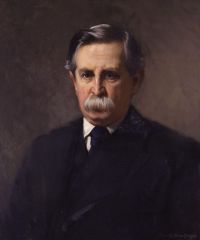 Henry Austin Dobson,
Fielding
(1907)
Henry Austin Dobson,
Fielding
(1907)
“ Nor, however threadbare they may look to-day, can the final conclusions be reasonably objected to:—“First, That every Person who indulges his Ill-nature or Vanity, at the Expense of others; and in introducing Uneasiness, Vexation, and Confusion into Society, however exalted or high-titled he may be, is thoroughly ill-bred;” ”

“ But people seem—on account of that horrid philosophical and moralising twist—to cast about for an excuse whenever they are doing what is, after all, neither wicked nor silly—to wit, making the best of such days and such powers as a merciful Providence or an indifferent trio of Fates has allowed them. ”
Charles Kingsley,
Discipline and Other Sermons
“ Perhaps he looks on them, not with wrath and indignation, but with pity and sorrow, when he sees man’s weakness, folly, and sin, bringing to naught his gracious purposes, and falling short of his glorious will. ”
 Friedrich von Schlegel,
The philosophy of life, and philosophy of language…
Friedrich von Schlegel,
The philosophy of life, and philosophy of language…
“ Or, perhaps, this misconception of fancy in general may have its origin in that abortion or corruption of it which operates so powerfully in the evil passions, which is undoubtedly in the highest degree deceptive and delusive. In and by itself, and taken in its widest signification, this faculty of fancy is, generally speaking, the living productive thought—the faculty of internal fertility—and which also with its outward organs, both of an earthly and a higher sense, apprehends the whole external world. ”
 Susanna Moodie,
Roughing it in the Bush — Chapter XI: The Charivari
Susanna Moodie,
Roughing it in the Bush — Chapter XI: The Charivari
“ Hatred and envy lie rankling at their heart, although hidden by outward obsequiousness. Necessity compels their obedience; they fawn, and cringe, and flatter the wealth on which they depend for bread. ”
 Isabella L. Bird,
Korea and her neighbors
(1897)
Isabella L. Bird,
Korea and her neighbors
(1897)
“ These facts make Us blush and sweat for shame. But these troubles have been brought about through Our partiality and self-will, giving rise to rascality and blunders leading to calamities. All have been Our own fault from the first to the last. ”
J. Cameron Lees, Life and Conduct
“ Fire his conscience, and he blushes; check his circulation, and he thinks tardily or not at all; impair his secretions, and the moral sense is dulled, discolored, or depraved, his aspirations flag, his hope and love both reel; impair them still more, and he becomes a brute. ”
Brainerd Kellogg, Higher Lessons in English: A work on English grammar and composition
“ The negligence of laziness breeds more falsehoods than the cunning of the sharper. 3. As poverty waits upon the steps of indolence, so upon such poverty brood equivocations, subterfuges, lying denials. 4. Falsehood becomes the instrument of every plan. 5. Negligence of truth, next occasional falsehood, then wanton mendacity—these three strides traverse the whole road of lies. ”
David Hartley, Observations on Man (6th edition…
“ Secondly, The insignificancy of riches in warding off death and diseases, also shame and contempt in many cases, and in obtaining the pleasures of religion, and the moral sense, and even those of sympathy, ambition, imagination, and sensation, first lessen their value in the eyes of those who make just observations upon things in their progress through life, and afterwards fix a positive nothingness and worthlessness upon them. ”
 Ralph Waldo Emerson,
Essays: Second Series — New England Reformers
(1844)
Ralph Waldo Emerson,
Essays: Second Series — New England Reformers
(1844)
“ I explain so, — by this manlike love of truth, — those excesses and errors into which souls of great vigor, but not equal insight, often fall. They feel the poverty at the bottom of all the seeming affluence of the world. ”
Marcus Tullius Cicero,
Cicero's Tusculan Disputations
(1888)
“ And, indeed, when I reflect on those troubles with which I have been so severely exercised by fortune, I begin to distrust this opinion; and sometimes even to dread the weakness and frailty of human nature, for I am afraid lest, when nature had given us infirm bodies, and had joined to them incurable diseases and intolerable pains, she perhaps also gave us minds participating in these bodily pains, and harassed also with troubles and uneasinesses, peculiarly their own. ”
