“ THE INTERNATIONAL TEA PARTY.Between the two tea drinkings, however, a Fête Champêtre was held at Belmont, near the Centennial grounds. We wrote to France, Mrs. Gillespie’s native land, to find out what a fête champêtre meant. THIERS ONMOONSHINE.Our respected friend Thiers replied. “You go out,” he wrote, “to some nice quiet spot. In the evening you hang a few lanterns on the trees, and leaving the other folks to dance, you yourself wander off with some ‘nearer and dearer one yet than all others,’ to explore the surrounding country, its shadowed nooks and moonlit glens.” ”
Fête champêtre
Definition and stakes
Quotes about “fête champêtre”
A Popular Handbook to the National Gallery…
“ The Hamilton Palace picture is a soulless and second-rate production, dating a good many years later than the Louvre idyll, wholly different from it in handling, and remarkable only for its beautiful golden tone. The Louvre 'Fête Champêtre'—a late example of the divine master—is one of the loveliest and most characteristic pieces produced in the early prime of Venetian painting. Should the 'Venus and Adonis' be set down to Giorgione, the misrepresentation in the National Gallery of a unique figure in art would be complete. ”
Henri de Crignelle, Le Morvan, [A District of France…
“ These festivals offer to each either profit or amusement; the peasants find in them a refreshing and salutary rest from toil, the tradesman fails not to fill his pockets with their hard earnings, the clown shows off his summersets, the young men are touched with the tender passion, and the young girls, with their white teeth and sparkling eyes, await with feigned indifference the proposals of their admirers. The village fête forms a bright epoch in rustic life, and the gay hours passed at them are the happiest, the most joyous, and the most enchanting of the year. ”

Maturin M. Ballou,
Due North; or, Glimpses of Scandinavia and Russia
“ It is the summer gayety of the Champs Elysées thrice multiplied by a community which does not number one tenth of the aggregated population of the great French capital. Not one but every day in the week forms a link in the continuous chain of revelling hours, until on the Sabbath the gayety culminates in a grand fête day of pleasure-outings for men, women, and children. ”
Mayne Reid,
The White Gauntlet
“ On every road and path tending in the direction of his residence, and from a distance of many miles, groups of rustics in their gayest holiday dresses, have been seen from an early hour in the morning, proceeding towards the scene of the fête—old and young, fair and dark, comely and common-looking, all equally joyous and gleeful. ”
Henri de Crignelle, Le Morvan, [A District of France…
“ These joyous fêtes, a kind of fraternal and social invitation, which are given and accepted by the rural population when spring and verdure made their appearance, are held all over France, and rejoice every heart. In our day, though much shorn of its ancient revelry, and neglected, la fête du village is still kept up, for it [Pg 298] is, so to speak, indigenous,—a part of our social habits, and like everything which carries within it a generous sentiment, is loved and cherished by the people. ”
Frederick Treves,
The Riviera of the Corniche Road
“ The humble village fête has become a means of making money and an opportunity for clamour, licence and display. Reverence of any kind or for anything is not a notable attribute of the modern mind; while with the advance of a pushing democracy gentle manners inevitably fade away.It is pitiable that the Carnival has to do with flowers and that it is through them that it seeks to give expression to its loud and flamboyant taste. ”
E. K. Chambers, The Mediaeval Stage, Volume 1… (1903)
“ What has happened is what happens in other forms of festival play. The instinct of play, in this case finding vent in a dramatic representation of the succession of summer to [Pg 185] winter, has taken hold of and adapted to its own purposes elements in the celebrations which, once significant, have gradually come to be mere traditional survivals. Such are the ceremonial burial in the ground, the ceremonial burning, the ceremonial plunging into water, of the representative of the fertilization spirit. ”
Edward Stuart Talbot, The Education of the Conscience (1883)
“ For a Festival-day gathers up into itself for joy and gladness the life of the place where it is kept: and you wish, somewhere in the day at least, to touch upon, and glance at, the things which lie beneath all the holiday and hospitality; which give a reason to our Festival, because they give a reason for being glad that our school should be, and flourish. And you rightly look to Chapel for this: for nothing in human life is truly explained or justified until it is explained or justified by something which can bear to be brought into God's sight, or to be spoken in the Name of God. ”
S. Baring-Gould, Old Country Life
“ The days of these old singers is over. What festive gatherings there are now are altered in character. The harvest home is no more. We have instead harvest festivals, tea and cake at sixpence a head in the school-room, and a choral service and a sermon in the church. Village weddings are now quiet enough, no feasting, no dancing. There are no more shearing feasts; what remain are shorn of all their festive character. Instead, we have cottage garden produce shows. The old village "revels" linger on in the most emaciated and expiring semblance of the old feast. ”
P. H. Ditchfield, Vanishing England
“ The word "fair" is derived from the Latin word feria, which means a festival, the parish feast day. On the festival of the patron saint of a village church crowds of neighbours from adjoining villages would flock to the place, the inhabitants of which used to keep open house, and entertain all their relations and friends who came from a distance. They used to make booths and tents with boughs of trees near the church, and celebrated the festival with much thanksgiving and prayer. ”
Jean-Henri Fabre,
More Beetles
(1922)
“ CHAPTER I THE CETONIÆ My hermitage boasts a long, wide lilac-walk. When May is here and the two rows of bushes, bending beneath their load of clustering blooms, form pointed arches overhead, this walk becomes a chapel, in which the loveliest festival of the year is celebrated beneath the kisses of the morning sun: a peaceful festival, with no flags flapping at the windows, no expenditure of gun-powder, no drunken squabbles ”
Modern Eloquence: Vol II, After-Dinner Speeches E-O
“ Through my lips must flow the gracious welcome of this auspicious day, which brings us all together in this family temple under the benignant smile of our household divinities, around the ancient altar fragrant with the incense of our grateful memories.This festival is always a joyous occasion. It resembles a scattered family without making any distinction except that which age establishes, an aristocracy of silver hairs which all inherit in their turn, and none is too eager to anticipate. In the great world outside there are and must be differences of lot and position ”
E. K. Chambers, The Mediaeval Stage, Volume 1… (1903)
“ The vegetation spirit would again be abroad, no longer, as in spring or summer, in the form of flowers and fresh green boughs, but in that of the last sheaf or ‘kern-baby’ saved from harvest, or in that of such evergreens or rarer blossoms as might chance to brave the snows. The particular ‘intention’ of the festival would be to secure the bounty of the divine powers for the coming year, and a natural superstition would find omens for the whole period in the events of the initial day. The feast, however, would be domestic, as well as seasonal. ”
Charles Dickens,
Pictures from Italy
(1846)
“ This part of the ceremony is prettier and more singular a little way in the country, where you can trace the illuminated cottages all the way up a steep hill side; and where you pass festoons of tapers, wasting away in the starlight night, before some lonely little house upon the road. On these days, they always dress the church of the saint in whose honour the Festa is holden, very gaily. Gold-embroidered festoons of different colours, hang from the arches; the altar furniture is set forth; and, sometimes, even the lofty pillars are swathed from top to bottom in tight-fitting draperies. ”
Charlotte M. Yonge,
The Heir of Redclyffe
“ Mary told her plans,—Church service at four, followed by a tea-drinking in the fields; tea in the garden for the company, and play for the school children and all who liked to join them. Every one likes such festivals, which have the recommendation of permitting all to do as they please, bringing friends together in perfect ease and freedom, with an object that raises them above the rank of mere gatherings for the pleasure of rich neighbours. ”
Various, Graham's Magazine, Vol. XL, No…
“ On the Sunday, a great multitude of the good people of the town, dressed out in their brightest attire, were continually flocking in and out of the church. On festival days you would see garlands of flowers, and banners, and rich vestments, and beautifully dressed altars under arbors of green leaves, and a little body of soldiers, with gay uniforms, glittering muskets, and cocked-hats, would appear to keep the ground as a procession passed. ”
“ Since we are not to commemorate the resurrection in the church, the parish is eager to celebrate the Easter festival in some other manner.The Saturday preceding Easter is over; the cross on the church tower shimmers in the evening glow more brightly than usual. This night is to be transformed into day. A new life is beginning. The people emerge from their homes in gala attire, and the glare of innumerable bonfires is seen on the hills. Are any of the dwellers of the forest aware that at this season the old Germans also lighted festal fires to the Goddess of Spring? ”
Edward Simmons,
From Seven to Seventy: Memories of a Painter and a Yankee
“ At each home they eat and drink, and on the seventh day an exhausted pair of lovers return home, dirty and forlorn, with their clothes—and their nerves—in tatters.Every change of season has its corresponding duties to nature, and each one is made the occasion of a festival by the simple folk in all lands. Let the foreigner who wanders into peasant France in the autumn beware of letting himself loose among the grape gatherers. ”
Anna C. Johnson, The Iroquois; or, the bright side of Indian character (1855)
“ All the ceremonies upon these festival days were not strictly religious, but consisted of various sports and pastimes for amusement. On one day all the people went about making calls, in little parties. One of each group carried a wooden shovel, and immediately after entering the house, began to stir the ashes, and then to scatter a little upon the hearth, invoking the blessing of the Great Spirit upon the household. Another amusement was to form little parties to go about and collect materials for a feast. Each family was expected to contribute something. ”
Washington Irving,
Old Christmas
“ It is inspiring to read even the dry details which some antiquarians have given of the quaint humours, the burlesque pageants, the complete abandonment to mirth and good-fellowship with which this festival was celebrated. It seemed to throw open every door, and unlock every heart. It brought the peasant and the peer together, and blended all ranks in one warm generous flow of joy and kindness. The old halls of castles and manor-houses resounded with the harp and the Christmas carol, and their ample boards groaned under the weight of hospitality. ”
Sir Richard Henry Bonnycastle, Spanish America, Vol. 2 (of 2)
“ On solemn festivals, or on the entrance of a new viceroy, the riches and pomp displayed in this city are astonishing, the churches being loaded with massive plate, consisting of tables, candlesticks, statues of saints of solid silver, the holy vestments and chalices covered with gold, diamonds, pearls and precious stones, and even on the common days of office, the decorations of the churches is richer than can be seen at the most splendid catholic festival in Europe. ”
George Eyre-Todd, Sketch-Book of the North
“ About every village cross, too, as the last moments of the year approach, the young men of the neighbourhood have ever been wont to gather to greet the incoming day with shouts of rejoicing and with the curious traditional custom of “first-footing.” Even in the cities, where contact with230 the world tends greatly to obliterate such folk-customs, it is curious to see the ancient festival year after year assert itself, its observance the better assured, probably, because it brings back to those who attend it the scenes and memories of earlier, and, perhaps, happier days. ”
Jane Ellen Harrison,
Ancient Art and Ritual
“ Seasonal festivals with one and the same intent—the promotion of fertility in plants, animals and man—may occur at almost any time of the year. At midsummer, as we have seen, we may have rain-charms; in autumn we shall have harvest festivals; in late autumn 57and early winter among pastoral peoples we shall have festivals, like that of Martinmas, for the blessing and purification of flocks and herds when they come in from their summer pasture. In midwinter there will be a Christmas festival to promote and protect the sun’s heat at the winter solstice. ”
Percy MacKaye,
The evergreen tree
(1917)
“ And there, as the focus-point of our festival and symbol of it—the tree of light: light of our own childhood and of the world’s.I do not know whether this simple masque will prove worthy to help in creating such a festival for our new Christmas time—I can only wish and hope that it may. ”
Thomas K. Hervey, The Book of Christmas
“ The very presence of a lengthened festivity—for festivity can never be solitary—would, apart from its sacred causes, promote these wholesome effects. The extended space of time over which this festival is spread, the protracted holiday which it creates, points it out for the gathering together of distant friends whom the passing nature of an occasional and single celebration would fail to collect from their scattered places of the world. ”
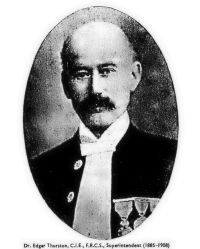
Edgar Thurston,
Castes and Tribes of Southern India
(1909)
“ On the day of the village festival, every male gets a mundu (cloth) or two, and every female a kacha (cloth) or two,in addition to toddy and arrack (spirituous liquor) , and the other articles mentioned above. They dress themselves in their cloths, and are treated to a sumptuous dinner. With shouts of joy, they attend, and take part in the village festival. ”
| editor, Oregon Historical Quarterly (1913)
“ The folk festival in illuminating the past, in doing over before our eyes the things that inspire, would give us our bearings and the spirit with which to meet the issues of the present and future. Each dweller within our borders, having experienced such a festival occasion, would return to his little round of duty enlightened and sustained, with a clearer vision of the growing whole of which he is an integral factor. ”
Robert Hunt, Popular Romances of the West of England…
“ The parish feast takes place on the nearest Sunday to the 28th of April.It happened in very early times, when winters extended further into the spring than they now do, that one of the old inhabitants resolved to be jovial notwithstanding the inclemency of the season; so he invited all his neighbours, and to warm his house he placed on the burning faggots the stump of a tree. It began to blaze, and, inspired by the warmth and light, they began to sing and drink; when, lo, with a whiz and a whir, out flew a bird from a hollow in the stump, crying, Cuckoo! ”
Eugène Sue,
The Mysteries of Paris, illustrated with etchings…
“ There are Sundays and fête-days to be thought of.""Yes; and how should we pass those?""Why, you would put on your holiday dress, with [Pg 113] one of those pretty little caps à la paysanne, which all admit you look so very nicely in, and accompany your aunt in her large old-fashioned chaise, driven by James the farm servant, to hear mass in the village church; after which, during summer, your kind relative would take you to the different fêtes given in the adjoining parishes. ”
Archibald Marshall, A Spring Walk in Provence
“ The first thing that strikes one in the dark interior—what windows there are are mere slits in the thick wall—are the rows of rough deal seating that run round three sides of the church in a sort of narrow gallery. These are for the crowds that come on May 24th, and during the following week for the great annual festival, when the coffin containing the bones of the blessed saints is let down from the chapel above the apse, and the church is packed full of pilgrims. ”