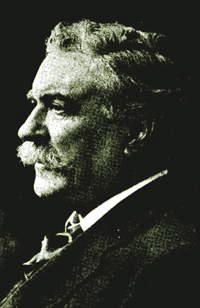
The genitive case, a grammatical construction that indicates a relationship between nouns—such as possession, origin, or composition—serves as a fundamental element in many languages. While Modern English uses possessive forms like “-'s” or prepositional phrases, other languages, such as German, Finnish, and Latin, rely on inflectional markers to express such relationships. Scholars like James Moore Wayne and John M.
Garvan examined the legal and social consequences of possessive bonds, especially in matters of inheritance and legitimacy, highlighting how genitive structures support ideas of ownership and family ties. Likewise, Sigmund Engel focused on the social significance of parental authority, emphasizing the genitive’s function in shaping relational duties. These diverse perspectives demonstrate the genitive’s lasting role in both language and human connections, linking grammar with cultural meaning.
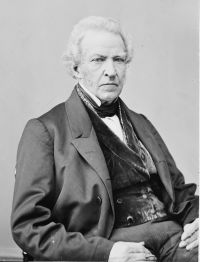 James Moore Wayne,
Gaines v. Hennen — Opinion of the Court
James Moore Wayne,
Gaines v. Hennen — Opinion of the Court