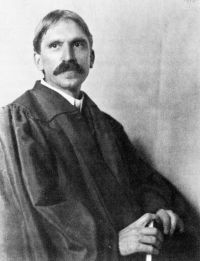
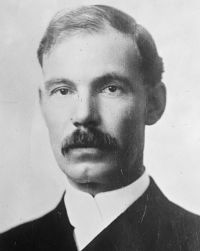
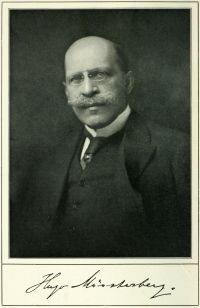
 Hugo Münsterberg,
Psychology and Industrial Efficiency
Hugo Münsterberg,
Psychology and Industrial Efficiency
“ Only the subtle psychological individual analysis can overcome the superficial prejudices of group psychology. ”
Hugo Münsterberg,
Psychology and Industrial Efficiency
“ Only the subtle psychological individual analysis can overcome the superficial prejudices of group psychology. ”
 Sigmund Freud,
Group Psychology and The Analysis of The Ego
(1921)
Sigmund Freud,
Group Psychology and The Analysis of The Ego
(1921)
“ Group Psychology is therefore concerned with the individual man as a member of a race, of a nation, of a caste, of a profession, of an institution, or as a component part of a crowd of people who have been organised into a group at some particular time for some definite purpose. ”
 William McDougall,
The Group Mind: A Sketch of the Principles of Collective Psychology
William McDougall,
The Group Mind: A Sketch of the Principles of Collective Psychology
“ Coming now to close quarters with the doctrine, we may ask those who, like Schaeffle and Espinas, regard the ‘collective consciousness’ as a bond which unites the members of a society and makes of them one living individual,—Is this ‘collective consciousness’ merely epiphenomenal in character? Or are we to regard it as reacting upon the consciousnesses or minds of the individuals of the group, and, through such reaction, playing a part in determining the behaviour of the group, or rather of the individuals of which the group is composed? ”
William McDougall,
The Group Mind: A Sketch of the Principles of Collective Psychology
“ Any psychology that recognises these facts and attempts to display the reciprocal influences of the individual and the society in which he plays his part may be called Social Psychology. Collective or Group Psychology is, then, a part of this larger field. It has to study the mental life of societies of all kinds; and such understanding of the group life as it can achieve has then to be used by Social Psychology in rendering more concrete and complete our understanding of the individual life. ”
William McDougall,
The Group Mind: A Sketch of the Principles of Collective Psychology
“ If we pass by these serious difficulties, others arise as soon as we inquire what kinds of human groups have such ‘collective consciousness.’ Does the simple fortuitously gathered crowd possess it? Or is it confined to highly organised groups such as the leading modern nations? If every psychological crowd possesses it and owes its peculiarities of behaviour to it, does it come into being at the moment the individuals have their attention attracted to a common object and begin to be stirred by a common emotion? ”
Sigmund Freud,
Group Psychology and The Analysis of The Ego
“ It would appear as though we were on the right road towards an explanation of the principal phenomenon of Group Psychology—the individual's lack of freedom in a group. If each individual is bound in two directions by such an intense emotional tie, we shall find no difficulty in attributing to that circumstance the alteration and limitation which have been observed in his personality. ”
Sigmund Freud,
Group Psychology and The Analysis of The Ego
“ But all these questions, which may, moreover, have been dealt with in part in the literature of Group Psychology, will not succeed in diverting our interest from the fundamental psychological problems that confront us in the structure of a group. And our attention will first be attracted by a consideration which promises to bring us in the most direct way to a proof that libidinal ties are what characterize a group.Let us keep before our eyes the nature of the emotional relations which hold between men in general. ”
William McDougall,
The Group Mind: A Sketch of the Principles of Collective Psychology
“ Group Psychology itself consists properly of two parts, that which is concerned to discover the most general principles of group life, and that which applies these principles to the study of particular kinds and examples of group life. ”
Sigmund Freud,
Group Psychology and The Analysis of The Ego
(1921)
“ It might be said that the intense emotional ties which we observe in groups are quite sufficient to explain one of their characteristics —the lack of independence and initiative in their members, the similarity in the reactions of all of them, their reduction, so to speak, to the level of group individuals. But if we look at it as a whole, a group shows us more than this. ”
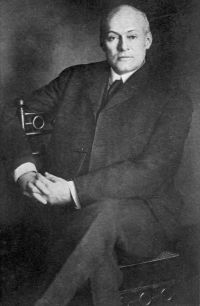 Arthur E. Bostwick,
A Librarian's Open Shelf: Essays on Various Subjects
Arthur E. Bostwick,
A Librarian's Open Shelf: Essays on Various Subjects
“ If, then, we are to accomplish anything by taking advantage of the very peculiar crowd or group psychology—owing to which a collected body of men may feel as a group and act as a group, differently from the way in which any one of its components would feel or act—we must see that our group is properly selected and constituted. ”
William McDougall,
The Group Mind: A Sketch of the Principles of Collective Psychology
“ It is of the greatest importance that this tendency to seek and maintain a share in group consciousness, which, as we have seen, manifests itself everywhere even under the most adverse conditions, not merely yields comfort and satisfaction to individuals, but brings about results which are in almost every way extremely advantageous for the higher development of human life in general. ”
William McDougall,
The Group Mind: A Sketch of the Principles of Collective Psychology
“ Any group that owes its creation and its continued existence to the collective idea may be regarded from the psychological standpoint as of the highest type; while a fortuitously gathered crowd that owes its existence to accidents of time and place and has the barest minimum of group self-consciousness is of the lowest type. Every other form of association or of human group may be regarded as occupying a position in a scale between these extreme types ”
Sigmund Freud,
Group Psychology and The Analysis of The Ego
(1921)
“ Now in speaking of Social or Group Psychology it has become usual to leave these relations on one side and to isolate as the subject of inquiry the influencing of an individual by a large number of people simultaneously, people with whom he is connected by something, though otherwise they may in many respects be strangers to him. ”
William McDougall,
The Group Mind: A Sketch of the Principles of Collective Psychology
“ All eyes are turned upon the fire-engine or coach; the attention of all is directed to the same object; all experience in some degree the same emotion, and the state of mind of each person is in some degree [Pg 23] affected by the mental processes of all those about him. Those are the fundamental conditions of collective mental life. In its more developed forms, an awareness of the crowd or group as such in the mind of each member plays an important part ”
William McDougall,
The Group Mind: A Sketch of the Principles of Collective Psychology
“ It finds the ground already staked out and occupied by the representatives of another science, who are inclined to resent its intrusion as an encroachment on their rights. The science which claims to have occupied the field of Group Psychology is Sociology; and it is of some importance that the claims of these sciences should be reconciled, so that they may live and work harmoniously together. I have no desire to claim for Group Psychology the whole province of Sociology. ”
William McDougall,
The Group Mind: A Sketch of the Principles of Collective Psychology
“ To this I reply—my point is that the individual minds which enter into the structure of the group mind at any moment of its life do not construct it; rather, as they [Pg 11] come to reflective self-consciousness, they find themselves already members of the system, moulded by it, sharing in its activities, influenced by it at every moment in every thought and feeling and action in ways which they can neither fully understand nor escape from, struggle as they may to free themselves from its infinitely subtle and multitudinous forces. ”
William McDougall,
The Group Mind: A Sketch of the Principles of Collective Psychology
“ The most striking result of the formation of nations and the development of civilisation has been this replacement of the progress of the individual mind by the progress of the collective national mind. And the most interesting and important problem of group psychology is—What are the conditions of the progressive development of the collective mind? ”
William McDougall,
The Group Mind: A Sketch of the Principles of Collective Psychology
“ Over and above their individual experience, all the members of the group alike partake of what has been called the collective consciousness of the group as a whole. Unlike their private experience, this pervading consciousness is the same in all, consisting in those epidemic or infectious states of feeling above described, which, at times when the common functions are being exercised, invade the whole field of mentality, and submerge the individual areas. ”
M. P. Follett, The new state (1918)
“ This may be considered an arbitrary definition, but of course I do not care about the names, I only want to emphasize the fact that men meet under two different sets of laws. Social psychology may include both group psychology and crowd psychology, but of these two group psychology is much the more important. ”
William McDougall,
The Group Mind: A Sketch of the Principles of Collective Psychology
“ Further, the motives supplied by the group spirit may be stronger than, and may overpower, the purely individualistic egoistic motives, just because they harmonise with, and are supported by, any altruistic tendency or tendencies comprised in the make up of the individual; which altruistic tendencies will, where the group spirit is lacking, oppose and weaken the effects of purely egoistic motives. ”
William McDougall,
The Group Mind: A Sketch of the Principles of Collective Psychology
“ We may fairly define a mind as an organised system of mental or purposive forces; and, in the sense so defined, every highly organised human society may properly be said to possess a collective mind. For the collective actions which constitute the history of any such society are conditioned by an organisation which can only be described in terms of mind, and which yet is not comprised within the mind of any individual; the society is rather constituted by the system of relations obtaining between the individual minds which are its units of composition. ”
William McDougall,
The Group Mind: A Sketch of the Principles of Collective Psychology
“ Only when the general principles of group life have been applied to the understanding of particular societies, of nations and the manifold system of groups within the nation, will it be possible for Social Psychology to return upon the individual life and give of it an adequate account in all its concrete fulness. ”
William McDougall,
The Group Mind: A Sketch of the Principles of Collective Psychology
“ But another principle of multiple group consciousness is, perhaps, of still greater importance, namely that it allows the formation of a hierarchy of group sentiments for a system of groups in which each larger group includes the lesser; each group being made the object of the extended self-regarding sentiment in a way which includes the sentiment for the lesser group in the sentiment for the larger group in which it is comprised. ”
M. P. Follett, The new state (1918)
“ Perhaps the ideal group will combine the advantages of the mass and the group proper: will give us collective thought, the creative will and at the same time the inspiration for renewed effort and sustained self-discipline.91Crowd association has, however, received more study than group association because as a matter of fact there is at present so much more of the former than of the latter. But we need not only a psychology which looks at us as we are, but a psychology which points the way to that which we may become. What our advanced thinkers are now doing is to evolve this new psychology. ”
William McDougall,
The Group Mind: A Sketch of the Principles of Collective Psychology
“ So, when we hear of minor outrages committed by a crowd of undergraduates or suffragettes, a knowledge of group psychology will save us from the error of attributing to the individuals concerned the low grade of intelligence and decency that might seem to be implied by the deeds performed by them collectively. ”
M. P. Follett, The new state (1918)
“ For this we need, as I must continually repeat, the study of group psychology. “Life,” “man,” “society,” are coming to have little meaning for us: it is your life and my life with which we are concerned, not “man” but the men we see around us, not “society” but the many societies in which we pass our lives. ”
William McDougall,
The Group Mind: A Sketch of the Principles of Collective Psychology
“ A second condition, which co-operates with the foregoing to keep the intellectual processes of crowds at a low level, is the increased suggestibility of its members. Here is one of the most striking facts of collective mental life. A crowd impresses each of its members with a sense of its power, its unknown capacities, its unlimited and mysterious possibilities; and these, as I have shown in Chapter III of my Social Psychology, are the attributes that excite in us the instinct of subjection and so throw us into the receptive suggestible attitude towards the object that displays them. ”
William McDougall,
The Group Mind: A Sketch of the Principles of Collective Psychology
“ The strong development of this first group sentiment prepares the child’s mind for the development of other and wider group sentiments. For it increases his power of grasping intellectually the group of persons as a complex whole; and it strengthens by exercise those impulses or primary tendencies which must enter into the constitution of any group sentiment; and, thirdly, it prevents the excessive development of the purely individualistic attitude, of the habit of looking at every situation and weighing all values from the strictly individualistic and egoistic standpoint ”
William McDougall,
The Group Mind: A Sketch of the Principles of Collective Psychology
“ In so far as they are successful in this, their representatives are able men and men to whose minds the social consciousness, the consciousness of the whole people, of its needs and tendencies and aspirations, is more fully and clearly present than to the average mind. ”
William McDougall,
The Group Mind: A Sketch of the Principles of Collective Psychology
“ There must, then, be some degree of similarity of mental constitution, of interest and sentiment, among the persons who form a crowd, a certain degree of mental homogeneity of the group. And the higher the degree of this mental homogeneity of any gathering of men, the more readily do they form a psychological crowd and the more striking and intense are the manifestations of collective life. All gatherings of men that are not purely fortuitous are apt to have a considerable degree of mental homogeneity ”
Sigmund Freud,
Group Psychology and The Analysis of The Ego
“ Although Group Psychology is only in its infancy, it embraces an immense number of separate issues and offers to investigators countless problems which have hitherto not even been properly distinguished from one another. ”
William McDougall,
The Group Mind: A Sketch of the Principles of Collective Psychology
“ The essential conditions of collective mental action are, then, a common object of mental activity, a common mode of feeling in regard to it, and some degree of reciprocal influence between the members of the group. ”
William McDougall,
The Group Mind: A Sketch of the Principles of Collective Psychology
“ We have seen that, in the well-organised group, collective deliberation, judgment, and action are raised to a higher plane of effectiveness than is possible to the average member of the group. But apart from that, the group spirit continues with us, as with the savage (though in a less effective degree) to be the great socialising agency. In the majority of cases it is the principal, if not the sole, factor which raises a man’s conduct above the plane of pure egoism, leads him to think and care and work for others as well as for himself. ”
William McDougall,
The Group Mind: A Sketch of the Principles of Collective Psychology
“ Again, the group spirit plays an important part in raising the intellectual level of the group; for it leads each member deliberately to subordinate his own judgment and opinion to that of the whole; and, in any properly organised group, this collective opinion will be superior to that of the average individual, because in its formation the best minds, acting upon the fullest knowledge to the gathering of which all may contribute, will be of predominant influence. ”
William McDougall,
The Group Mind: A Sketch of the Principles of Collective Psychology
“ The natural conditions of group self-consciousness, which in primitive societies rendered its development inevitable and spontaneous in every man, have then been in the main destroyed. But man cannot stand alone; men cannot live happily as mere individuals; they desire and crave and seek membership in a group, in whose collective opinions and emotions and self-consciousness and activities they may share, with which they may identify themselves, thereby lessening the burden of individual responsibility, judgment, decision and effort. ”
William McDougall,
The Group Mind: A Sketch of the Principles of Collective Psychology
“ My contention is that the most highly organised groups display collective mental life in a way which justifies the conception of the group mind, and that we shall be helped to understand collective life in these most complex and difficult forms by studying it in the simpler less elaborated groups where the conception of a group mind is less clearly applicable. ”
William McDougall,
The Group Mind: A Sketch of the Principles of Collective Psychology
“ If, on the other hand, the ‘collective consciousness’ of groups and societies and peoples reacts upon individual minds and so plays a part in shaping the conduct of men and societies, then the conception is a hypothesis which can only be justified by showing that it affords explanations of social phenomena which in its absence remain inexplicable. ”