“ How, then, can we say what is the type to breed from, even if we confine our attention to one country? If, on the other hand, we look farther afield, and study the results of race-mixture or "miscegenation," we but encounter fresh puzzles. That the half-breed is an unsatisfactory person may be true; and yet, until the conditions of his upbringing are somehow discounted, the race problem remains exactly where it was. Or, again, it may be true that miscegenation increases human fertility, as some hold ”
Half-breed
Definition and stakes
The theme of “half-breed” has been addressed by authors such as Robert Jennings, Charles Darwin, Sir E. Ray Lankester, Thomas Henry Huxley and Louis Agassiz. It is often associated with terms like offspring, animal, fertility, breeding and biology.
Quotes about “half-breed”
Jean Louis Armand de Quatrefages de Bréau, Popular Science Monthly (1880)
“ The difference in paternity is revealed in the offspring, but in both cases the half-breeds are a large race and robust, have greater powers of endurance than the pure Indians, and are intellectually their superiors. ”
George Elliott Howard, A History of Matrimonial Institutions…
“ So, among half-breeds, the number of girls usually predominates; [426] while among in-and-in bred plants, animals, or men the reverse is the case. Hence it seems probable "that the degree of differentiation in the sexual elements of the parents exercises some influence upon the sex of the offspring, so that, when the differentiation is unusually great, the births are in favour of females; when it is unusually small, in favour of males." ”
comte de Arthur Gobineau, The Moral and Intellectual Diversity of Races
“ The observations of naturalists seem to have well established the fact that half-breeds can spring only from nearly related species, and that even in that case they are condemned to sterility. It has been further observed that, even among closely allied species, where fecundation is possible, copulation is repugnant, and obtained, generally, either by force or ruse, which would lead us to suppose that, in a state of nature, the number of hybrids is even more limited than that obtained by the intervention of man. ”
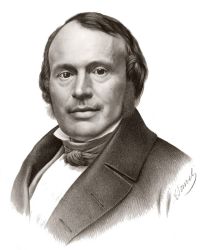 Louis Agassiz,
Louis Agassiz: His Life and Correspondence
“ From a physiological point of view, it is sound policy to put every possible obstacle to the crossing of the races, and the increase of half-breeds. It is unnatural, as shown by their very constitution, their sickly physique, and their impaired fecundity. ”
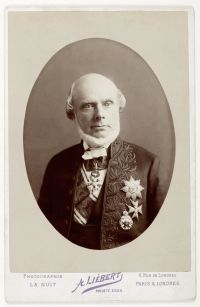 A. de Quatrefages,
The human species
(1879)
“ And yet M. d’Omalius, only counting the products of the crossing of the European White with the different coloured races, estimates the number of half-breeds at eighteen millions. The population of the globe being estimated as 1200 millions, the product of cross-unions is already represented by about 1/65th.We know, moreover, how irregular is the distribution of half-breeds. Immense tracts of country have not been affected. But where the peoples are in intimate contact, the proportion is much greater. In Mexico and South America half-breeds constitute at least one-fifth of the population. ”
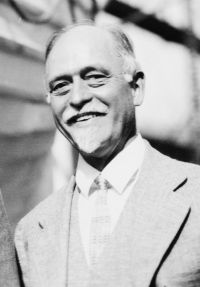 Irving Fisher,
How to Live: Rules for Healthful Living Based on Modern Science
“ But how then are we to distinguish between the one pure bred black, the thoroughbred, and the two blacks that are hybrids so that we can be sure which is which? The only way they can be distinguished is to wait to see what their offspring will be in the next succeeding generations.The one that is a thoroughbred will behave like a thoroughbred. For instance, if mated with white they will have nothing but black children. But if one that is hybrid black mate with one that is white, only half of the children will be white ”
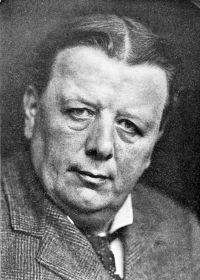 Sir E. Ray Lankester,
Secrets of Earth and Sea
“ Practically all our views on the subject of "races" and their inter-breeding are derived from our observation of the immense number and range of "races" and "breeds" produced by man—as farmer, fancier, and horticulturist. It has been generally received as a rule, that the various races produced in the farm or garden by breeding from a species, will inter-breed freely, and produce offspring which are fertile. ”
International Eugenics Congress, Abstracts of Papers Read at the First International Eugenics Congress
“ It is shown that while the continued selection, over a period of years, of highly fecund females failed to bring about any change in average fecundity of the strain used, this character must nevertheless be inherited since pedigree lines have been isolated which uniformly breed true to definite degrees of fecundity. ”
William E. Kellicott, The Social Direction of Evolution…
“ Some will be blue like the parents, some black like one grandparent, some white like the other grandparent. Not only this but we get certain definite proportions among these three classes of descendants. Of the total number of the immediate offspring of the hybrid blues, approximately one half will be blue like the parents, approximately one fourth black, and one fourth white like each of the grandparents. Now comes the most important fact of all. These blacks, bred together produce only blacks, the whites similarly produce only whites ”
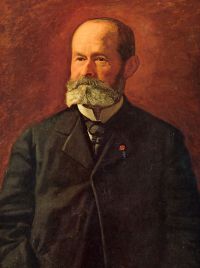 Daniel G. Brinton,
Races and Peoples: Lectures on the Science of Ethnography
“ If is well known to stock breeders that the closer animals are bred in-and-in, that is, the nearer the relationship of father and mother, the more prominently the traits of the parents appear in their children and become fixed in the breed. It is evident that in the earliest epoch of the human family, the closest inter-breeding must have prevailed without restriction, as it does in every species of the lower animals. ”
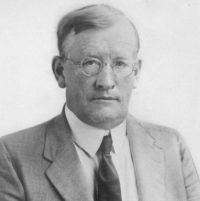 George McCready Price,
Q. E. D., or New Light on the Doctrine of Creation
“ When these are mated, no matter which color is the father or the mother, the next or hybrid generation are always a queer mixture of black and white called by fanciers blue. When these blues are interbred, one-quarter of their offspring will be white, which will prove to breed true ever afterwards, one-quarter will be black that will breed true, and fifty per cent. will be blue which will break up in the next generation in the very same way as before. In this case neither white nor black character is dominant, and accordingly we have a blending of both in the first hybrid generation. ”
Sir E. Ray Lankester,
Degeneration: A Chapter in Darwinism
“ Now we know of no facts which forbid us to suppose that could a breeder continue his operations indefinitely for any length of time—say for a few million years—he could convert the short-horned breed into a hornless breed; that he could go on and thicken the tail, could shorten the legs, get rid of the hind limbs altogether by a series of insensible gradations, and convert the race into forms like the Sirenia, or sea-cows. ”
 Thomas Henry Huxley,
Popular Science Monthly
(1876)
“ In the next place it is observed that, while individuals of the same morphological species breed freely with one another and give rise to perfectly fertile offspring, the unions of individuals of different morphological species are, as a rule, either unfertile or imperfectly fertile. Thus fertility, like parentage, has become a physiological character of species ”
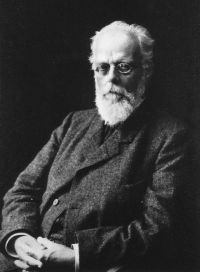 August Weismann,
Essays Upon Heredity and Kindred Biological Problems
“ Additional generations and many more families have been since observed, and an account of these observations will shortly be published in the same paper. The breed originally came from Bristol. In the observations recorded, the abnormality of the offspring is an indication of the hereditary strength of the female parents, while the degree of normality is a similar test of heredity through the male parents; for the female parents were always abnormal, the male parents always normal. ”
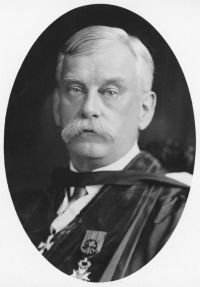 W. J. Holland,
The Butterfly Book
“ The black form of the female was regarded for a long while as a distinct species, until by the test of breeding it was ascertained that some eggs laid by yellow females produced black females, and that, conversely, eggs laid by black females often produced yellow females. ”
 Charles Darwin,
On The Origin of Species
(1859)
“ Nevertheless I believe that in all these experiments the fertility has been diminished by an independent cause, namely, from close interbreeding. I have collected so large a body of facts, showing that close interbreeding lessens fertility, and, on the other hand, that an occasional cross with a distinct individual or variety increases fertility, that I cannot doubt the correctness of this almost universal belief amongst breeders. Hybrids are seldom raised by experimentalists in great numbers ”
Charles Darwin,
The Variation of Animals and Plants under Domestication
“ The males and females, on the other hand, of the black-boned European breed, with silky feathers, do not differ from each other; so that in the one breed, black skin and bones and the same kind of plumage are common to both sexes, whilst in the other breed, these characters are confined to the female sex. ”
Charles Darwin,
On The Origin of Species
(1859)
“ Again, with respect to the fertility in successive generations of the more fertile hybrid animals, I hardly know of an instance in which two families of the same hybrid have been raised at the same time from different parents, so as to avoid the ill effects of close interbreeding. On the contrary, brothers and sisters have usually been crossed in each successive generation, in opposition to the constantly repeated admonition of every breeder. And in this case, it is not at all surprising that the inherent sterility in the hybrids should have gone on increasing. ”
Giles Jacob, Tractus de Hermaphrodites; Or, A Treatise of Hermaphrodites
“ Some Naturalists tell us, that where Nature design'd Seed in the Womb for a Male only, (as working up for the best, and aiming at the highest Perfection of its Workmanship) too much Cold and Moisture accidentally falling into the Work, before it is perfected in the Womb, at the same time there being too great a quantity of Seed and menstrous Blood, what was intended for Man in part degenerates, and renders the Infant of a double Sex or Nature, placing it in the middle of both Sexes, as seeming to participate of Male and Female. ”
George John Romanes, Darwin, and After Darwin, Volume 3 of 3
“ He also informs me that pure white beasts of either sex are so well known by experienced breeders to be comparatively infertile together, that they are never used for breeding purposes, so that "in some parts of the country, where a tendency to sterility had become so confirmed in the white race that they utterly died out," only the coloured breeds are now to be found. ”
Robert Jennings, Sheep, Swine, and Poultry
“ Breeding between animals possessing one-eighth of the same blood, would not be considered very close breeding; and it is not unusual, in rugged, well-formed families, to breed between those possessing one-fourth of the same blood. ”
William Harvey, The Works of William Harvey M.D
“ For as the pullet, engendered of an egg, is indebted to that egg for his body, vitality, and principal or generative part, so and in like manner does the egg receive all that is in it from the female, the female in her turn being dependent on the male for her fecundity which is conferred in coition.And here we have an opportunity of inquiring, whether the male be the first and principal cause of the generation of the offspring; or whether the male along with the female are the mediate and instrumental causes of nature itself, or of the first and supreme generator? ”
Michael F. Guyer, Being Well-Born: An Introduction to Eugenics
“ From the standpoint of heredity, however, the important consideration is to determine if these experimentally induced changes have been reflected on to the germ-cells so that they reappear in the offspring of the modified individuals.It has been found that in some cases where male and female are of different color, the color of the female can be changed to that of the male by altering the conditions of temperature. In certain cases types can be changed by cold so that they resemble varieties of the same species found farther north, and by heat, varieties found farther south. ”
Giles Jacob, Tractus de Hermaphrodites; Or, A Treatise of Hermaphrodites
“ The Seed is for the most part indifferent as to the two Sexes, and if it happens to meet with a Ball or Egg in the Horns of the Womb that is full of Spirits, and includes a hot, dry, and close Matter, it will impregnate so as to produce a Boy; but if the Seed meets with a Ball or Egg, not hot nor dry or fill'd with Spirits, tho' it will animate it, yet 'tis with less strength, so as a Girl will be produc'd. ”
George B. Louis Arner, Consanguineous Marriages in the American Population
“ The tendency of inbreeding in animals, it is well known, is to fix the type, the tendency of crossing, to variation. Inbreeding then, tends to become simple repetition with no natural variations in any direction, a stagnation which in itself would indicate a comparatively low vitality. Variation and consequent selection is necessary to progress. "Sex," according to Ward [96] "is a device for keeping up a difference of potential," and its object is not primarily reproduction, but variation. [97] It is organic differentiation, higher life, progress, evolution.... ”
Thomas Henry Huxley,
Lay Sermons, Addresses and Reviews
“ First crosses between forms known to be varieties, or sufficiently alike to be considered as varieties, and their mongrel offspring, are very generally, but not quite universally, fertile. Nor is this nearly general and perfect fertility surprising, when we remember how liable we are to argue in a circle with respect to varieties in a state of Nature; and when we remember that the greater number of varieties have been produced under domestication by the selection of mere external differences, and not of differences in the reproductive system. ”
active 1850-1869 David Quinn, Petition and memorial of David Quinn…
“ But in descending the stream of reproduction, an even more important peculiarity is displayed in transmission. All of his offspring partake, in exact proportions, of these general characteristics. They are all black eyed and black haired—rigidly [Pg 8] so fixed in nature. But no such uniformity follows the reproduction of the white man. On the contrary, his children are never exact copies of himself, nor, like beans, fac-similes of one another, but vary throughout—in the color of their hair and their eyes, and in the different shades and tinges of their complexions. ”
Thomas Henry Huxley,
Life and Letters of Thomas Henry Huxley…
“ But the sterility which must be obtained by the selective breeder in order to convert his morphological species into physiological species—such as we have in nature—must be quite irrespective of breeding in and in. ”
Various, The Monist, Vol. 1, 1890-1891
“ Suppose then the offspring of any parent to vary in many directions. By cross-breeding among themselves and with the parent stock, these are usually merged in a common type, their differences pooled, and the species remains fixed or else advances slowly by natural selection, along one line, as physical conditions change in geological time. But from time to time there arises a variation in the reproductive organs of some individuals, of such kind that these individuals are fertile among themselves, but sterile or less fertile with other varieties and with the parent stock. ”
 Auguste Forel,
The sexual question
“ Consanguinity.—Before concluding this chapter we must study the question of hybrids. It is important to know to what point fecundity and descent are influenced by the degree of relationship between the two procreators. Conjugation probably arises from the general necessity of organisms to reënforce their race by variety. Consanguinity perpetuated is harmful to the species, in the same way as parthenogenesis, or indefinite reproduction by fission or budding. It produces enfeeblement and degeneration of the race, and leads to extinction by causing sterility. ”
 Herbert Spencer,
The Principles of Biology, Volume 2…
(1899)
“ Still more entangled are we among qualifying considerations when we contrast species in their powers of multiplication. The total cost of Genesis admits of even less definite estimation than does the total cost of Individuation. I do not refer merely to the truth that the degree of fertility depends on four factors—the age of commencing reproduction, the number in each brood, the frequency of the broods, and the time during which broods continue to be repeated. ”
Charles Darwin,
The Descent of Man
(1875)
“ The edge of the crest also is then tipped with bright red or violet. The female is usually of a yellowish-brown colour with scattered brown dots, and the lower surface is often quite plain. [44] The young are obscurely tinted. The ova are fertilised during the act of deposition, and are not subsequently tended by either parent. We may therefore conclude that the males have acquired their strongly-marked colours and ornamental appendages through sexual selection; these being transmitted either to the male offspring alone, or to both sexes. ”
William John Fielding, Sex and the Love-Life (1927)
“ With the exception of reproduction by cell division, however, the universal tendency of nature in the lower orders is to effect reproduction in the vegetable kingdom by means of seed, and in most of those orders of animal life below the mammals, by means of the egg. Both of these methods, however, with the elaborate processes of which the seed or egg is the immediate agency—and has its analogy in mammalian reproduction, including the human-are definitely sexual. ”
Related terms
Authors who wrote about “half-breed”
Robert JenningsCharles DarwinSir E. Ray LankesterThomas Henry HuxleyLouis Agassizcomte de Arthur GobineauR. R. MarettGeorge Elliott HowardJean Louis Armand de Quatrefages de BréauIrving FisherA. de QuatrefagesDaniel G. BrintonGeorge McCready PriceWilliam E. KellicottInternational Eugenics CongressMosiah HallAugust WeismannMichael F. Guyer C. Lloyd Morgan
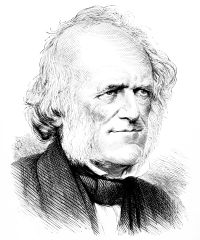 Charles Lyell
Charles DarwinSir E. Ray LankesterThomas Henry HuxleyLouis Agassizcomte de Arthur GobineauR. R. MarettGeorge Elliott HowardJean Louis Armand de Quatrefages de BréauIrving FisherA. de QuatrefagesDaniel G. BrintonGeorge McCready PriceWilliam E. KellicottInternational Eugenics CongressMosiah HallAugust WeismannMichael F. GuyerC. Lloyd MorganCharles Lyell