Halo (optics)

Definition and stakes

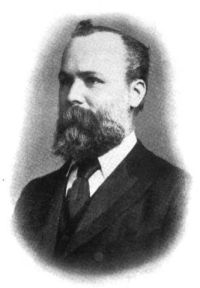
Portrait of Sir Oliver Lodge Sir Oliver Lodge,  Pioneers of Science

“ They are not like the rainbow, every part of which is due to light that has entered a raindrop, and been refracted and reflected with prismatic separation of colours; a halo is caused by particles so small as to be almost comparable with the size of waves of light, in a way which is explained in optics under the head "diffraction." It may be easily imitated by dusting an ordinary piece of window-glass over with lycopodium, placing a candle near it, and then looking at the candle-flame through the dusty glass from a fair distance. ”
Source: Gutenberg

Percy Greg,  Across the Zodiac: the Story of a Wrecked Record (1880)

“ The light sent through the window was too dim and too imperfectly diffused within my vessel to be serviceable, but for some time I put out the electric lamp in order that its diffused light should not impair my view of this exquisite spectacle. As thrown, after several reflections, upon the mirror destined afterwards to measure the image of the solar disc, the apparition of the halo was of course much less bright, and its outer boundary ill defined for accurate measurement. ”
Source: Wikisource

Various,  Popular Science Monthly (1907)

“ If the spot is so small as to be barely visible, the halo may still be seen, but the intensified zone then appears of the same intensity as the background.
If the spot is enlarged sufficiently, both positive and negative halos are seen along its margin, one outside and one inside, so that in a straight line separating light and dark areas, the positive halo may be seen in the dark area, and the negative halo in the light. If two small spots are placed so that their halos intersect, the halo of each may usually be seen complete.
”
Source: Wikisource

Get perspective with Kwize: daily news enlightened by great literature