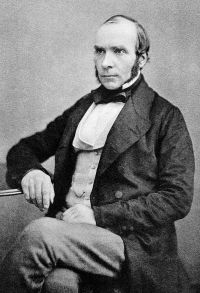
“ The more carefully heart disease, and particularly individual patients affected by various heart lesions, have been studied in recent years the more it has come to be appreciated that the most important element in the treatment of organic heart disease is the definite recognition of the difficulty of exact diagnosis of most cardiac conditions and the unfortunate tendency to make the prognosis worse than it really is. Many heart affections are quite compatible with long life. ”
Heart disease
Definition and stakes
Heart disease, which includes conditions affecting the heart and blood vessels, is a leading cause of death worldwide, with coronary artery disease, stroke, and high blood pressure playing significant roles. Factors that contribute to the condition range from lifestyle decisions and heredity to aging, with many aspects being preventable through proper nutrition, physical activity, and avoiding tobacco. Authors such as James J.
Walsh emphasize the challenges in diagnosis and the emotional toll on patients, while Bill Clinton underscores the importance of heart health as a public concern and the significance of changeable risk factors. Laura Bush focuses on raising awareness specific to women, illustrating how various viewpoints—from medical challenges to policy considerations—portray heart disease as both a health and societal issue.
Quotes about “heart disease”
Bill Clinton,
Proclamation 6768
“ Yet nothing now overshadows Americans' health as much as heart disease-the leading cause of death among men and women. Diseases of the heart and blood vessels kill nearly a million Americans each year, most from the effects of atherosclerosis, the narrowing and stiffening of blood vessels from the buildup of plaque that usually begins early in life. ”
Bill Clinton,
Proclamation 6864
“ There are few among us whose lives have not been touched by the devastating effects of heart disease. Cardiovascular disease, which includes heart disease and stroke, takes one million of our citizens each year, and heart disease remains the single leading cause of death in this country. ”
J. Mitchell Bruce, The Lettsomian Lectures on Diseases and Disorders of the Heart and Arteries in Middle and Advanced Life…
“ What method might be followed with advantage in making a complete diagnosis of heart disease in older subjects?A man of 60 consults us about his heart. He says that it has caused him a good deal of concern lately. More specifically he describes a sense of oppression behind the sternum as often as he exerts himself, and palpitation with consciousness of irregular [32] cardiac action when he goes to bed. We inquire for other familiar cardiac symptoms, such as pain, angina, fluttering, faintness, giddiness, and a sense of impending death. ”
“ The serious heart lesions are those which give no symptoms, or but very slight ones, and the sudden deaths in heart disease usually come from the development of insidious symptoms that do not betray themselves to the patient until the fatal termination is on them. The more the patient himself has been disturbed by his heart, the less likelihood is there of its giving out suddenly. The subjective symptoms are usually due to the fact that the heart is actively overcoming external interference, or resenting over-attention to it in its work. ”
Oliver T. Osborne, Disturbances of the Heart
“ No disease, perhaps, needs cheerfulness and pleasantness and lack of anxiety, or frets more than does cardiac weakness. A tuberculous patient may sit on a mountain top with snow blowing about him, and recover; a heart patient must have sunshine and comfort.The results of such sanatorium treatment of heart disease are often evident not only to the patient by an increase of general muscle strength, the ability to do ordinary things and perhaps even sustain muscular effort without dyspnea and cardiac discomfort, but also to the physician by the physical signs. ”
Charles West,
The Mother's Manual of Children's Diseases
“ Inflammation of the Heart.—The above remarks do not comprise all that is to be said about heart-affection in early life. Inflammation may attack the investing or the lining membrane of the heart at all ages, may produce in the child the same suffering as in the grown person, and may tend to destroy life in a similar manner. The causes, indeed, which produce heart disease, are far more frequent in the grown person than in the [Pg 149] child, and advancing age brings with it changes which, wholly apart from active inflammation, produce grave forms of disease unknown in early life. ”
Bill Clinton,
Proclamation 6971
“ Research has brought dramatic improvements to our knowledge of heart disease and how to combat it. We have learned much in recent years and now know that the processes leading to heart disease typically begin early in life and worsen over the years; symptoms often do not appear for decades. We also better understand the effects of genetics, gender, and lifestyle. High blood cholesterol, high blood pressure, smoking, diabetes, and obesity increase the risk of developing heart disease; physical activity can reduce the risk of suffering from cardiovascular disease, including stroke. ”
Bill Clinton,
Proclamation 6768
“ No one knows why heart disease begins. And, while it is known that heart disease develops differently in men and women, the reasons for those variations are still being studied. About 50 million Americans continue to suffer from hypertension, a major cause of stroke, and 1.25 million Americans have heart attacks every year. ”
Jimmy Carter, Proclamation 4816 (1981)
“ Diseases of the heart and blood vessels remain the number one killer in the United States, but we have made substantial and heartening progress toward reducing the devastating toll. Deaths from coronary heart disease have declined by 25 percent during the past decade. ”
J. Mitchell Bruce, The Lettsomian Lectures on Diseases and Disorders of the Heart and Arteries in Middle and Advanced Life…
“ In attempting to forecast the life of a man who is the subject of cardio-vascular degeneration in middle or advanced life, we must not forget the possibility of the intercurrence of acute disease. Here is a large subject for us as practical men—one far too large and important for discussion here: the effect, for instance, of the existence of enlargement of the heart and an irregular and thickened pulse on the prognosis of influenza, or, let us say, on the chances of a successful issue after operation. ”
Woods Hutchinson,
A Handbook of Health
“ You will never get real heart disease until you have had some fever or serious illness, which leaves you short of breath for a long time afterward.Danger to the Heart through the Nervous System. The other chief way in which the heart may be affected is through the nervous system. Being the great supply pump for the entire body, it is, of course, connected most thoroughly and elaborately by nerve wires with the brain and, through it, with every other organ in the body. ”
“ His experience is not uncommon, and probably every physician who sees many cases of heart disease can recall a few of them. Ten years ago I saw a man past seventy suffering from distinctly irregular heart action, though he gave the history of having had cardiac irregularity for some years at least, and he is still alive, past eighty, and with his heart irregularity still present. I have a patient over seventy whom I know to have had irregular heart action for fifteen years, and he himself is sure that it has been present since he was about forty, at least. ”
Bill Clinton,
Proclamation 7066
“ Fifty years ago, a heart attack meant an end to an active lifestyle, and, for a third of those stricken, it meant death. Thankfully, the past half-century has brought us an array of advances in the prevention and treatment of heart disease. ”
“ Without {335} definite reassurance in this matter all the experts in heart disease insist that it is extremely difficult to bring about relief of symptoms in these patients. Whenever the general health of the individual has not suffered from his heart affection, it is quite safe to assume that no organic disease of the heart is present, no matter what the symptoms, for, as Broadbent and many other authorities emphasize, gastric cardiac neuroses can simulate every form of heart disturbance. ”
Oliver T. Osborne, Disturbances of the Heart
“ To decide whether pain in the region of the heart or irregularity of its action is due to organic disease, to functional disturbance, or to referred causes is often extremely difficult. Some of the most disturbing sensations in the region of the heart are not due to any organic trouble, and yet the patient is fearful that such sensations mean some kind of heart disease, and therefore becomes exceedingly anxious and watches and mentally records every sensation in the left chest. ”
J. Mitchell Bruce, The Lettsomian Lectures on Diseases and Disorders of the Heart and Arteries in Middle and Advanced Life…
“ What I wish to maintain is that in cardiac degeneration of any kind, in chronic cardiac dilatation, and in the enlarged heart of Bright's disease and of emphysema, just as in ordinary valvular disease, attacks of distress, alarming both to patient and doctor, often occur which call for nothing more in the way of treatment than attention to some intercurrent influence—an indigestible meal, loaded bowels, a nervous shock, a thoughtless effort, a passing hardship or nervous strain. Digitalis and its allies, strychnine, alcohol, nitrites, iodides and the rest are out of place in such an event. ”
Ronald Reagan,
Proclamation 5604
“ Cardiovascular diseases, including heart disease, stroke, and other vascular disorders, will claim the lives of nearly one million Americans this year. Cardiovascular disease is this Nation's number one health problem-causing more deaths than cancer, accidents, pneumonia, and influenza combined and one-fifth of all people killed by cardiovascular disease are younger than 65. ”
James Law, Text book of veterinary medicine… (1902)
“ An almost constant feature of chronic heart disease is a condition of dulness, sluggishness, and in many cases, curiously enough, a tendency to lay on fat, so that although the patient is unfit to work, he appears to enjoy excellent general health to which a period is only put by sudden death. ”
James Law, Text book of veterinary medicine… (1902)
“ A pulse simply intermittent and not associated 299with any further sign of heart disease does not then possess the significance generally attributed to it, but a careful examination of the heart should invariably be made when this functional disorder is observed. It exists or may be brought about by slight excitement in the great majority of heart diseases. ”
“ On the other hand, people with heart disease were usually informed of that fact. The reason given for the latter course was that heart disease may in many cases be the forerunner of sudden death, and the warning knowledge was supposed to enable a man to get his affairs in order. No worse policy for either disease could well have been imagined. The pulmonary patient should be told at once, the heart patient should, as far as possible, be saved the depressing knowledge of his condition. ”
George W. Bush,
Proclamation 7754
“ More than 64 million Americans suffer from one or more forms of cardiovascular disease, including high blood pressure, coronary heart disease, congestive heart failure, stroke, and congenital heart defects. ”
Bill Clinton,
Proclamation 6971
“ More, too, must be done to help survivors of initial heart attacks live full lives. Within six years of a heart attack, for instance, more than a third of those afflicted develop severe and often disabling chest pain. One-fourth or more of them will have another heart attack, and another fifth suffer heart failure. The challenges posed by heart disease are becoming ever more pressing as America ages and more of us live beyond age 65-the group most affected by this disease. ”
Richard C. Cabot, Social Work; Essays on the Meeting Ground of Doctor and Social Worker
“ If they have any symptoms in that part of the body where they are taught to believe that the heart resides, or if they have heard anybody talk of heart disease, or especially if anybody whom they know has recently died of heart disease, there are many people likely first to believe that they have heart trouble, and then to have actual symptoms which they attribute to heart disease. ”
Oliver T. Osborne, Disturbances of the Heart
“ The treatment is aimed at chronic heart disease, to develop a greater cardiac reserve strength; the whole object of the treatment is to strengthen the myocardium, either in conditions of its debility or in conditions of diminished compensation in valvular disease. Any treatment that will develop a reserve heart strength to be called on in emergencies, more or less similar to the reserve strength of a normal heart, tends to prolong the patient's life and health. ”
J. Mitchell Bruce, The Lettsomian Lectures on Diseases and Disorders of the Heart and Arteries in Middle and Advanced Life…
“ Not only has the profession suddenly woke up to the recognition of a form of enlargement of the heart which was fully described fifty years ago by physicians in our own country, but the public have made "dilated heart" a fashionable disease which calls for the advice of a specialist and an annual visit to a Continental spa. We ought to have advanced beyond this stage of cardiac pathology long before this time. Besides, of how much greater interest is it in our every-day work to study the causes or circumstances that lead up to disease than the simple state of disease itself! ”
J. Mitchell Bruce, The Lettsomian Lectures on Diseases and Disorders of the Heart and Arteries in Middle and Advanced Life…
“ In addition to extrinsic dangers, particularly those of Bright's disease, cerebral thrombosis and hæmorrhage, and bronchitis, failure of the heart is liable to supervene and prove fatal from the gravest of all intrinsic causes, namely, coronary degeneration. As this increases, the myocardium is steadily more and more impoverished ”
James Law, Text book of veterinary medicine… (1902)
“ But on the other hand many physical causes of heart disease affect the lower creation equally with their lord, while some undoubtedly operate with special force on the brute. All animals are subject to diseases of the heart as of other internal organs, from exposure; this organ is occasionally involved from its contiguity with other diseased structures or from interdependence of function as we have already seen in certain diseases of the lungs (congestion, broken wind, etc.) ”
| override_editor, Encyclopædia Britannica, Ninth Edition (1878)
“ It seems occasionally to manifest itself where no organic heart disease is discoverable, either in life or after death, but in the great majority of cases some morbid condition of the heart's structure is undoubtedly present. A diseased state of the coronary arteries, the nutrient blood-vessels of the heart, has been found in a large proportion of the cases, examined post mortem; but, on the other hand, these arteries may be found diseased where no paroxysm of angina had ever occurred ”
Austin O'Malley, Essays In Pastoral Medicine
“ If such patients survive the fourth or fifth year, they are usually carried off by some slight intercurrent disease shortly after puberty. A few cases of congenital heart disease, however, live on to a good old age and seem not to be seriously inconvenienced by their heart trouble. Most of the acquired heart disease, that is, at least 65 per centum of it, is due to rheumatism. All of the infectious fevers, however, may cause heart disease, and scarlet fever especially is prone to do so; heart complications occurring in about one out of every ten cases. ”
Martha Meir Allen,
Alcohol: A Dangerous and Unnecessary Medicine…
“ The only sensible way to avert the evil consequences of heart disease is to strengthen the heart, and that is to be done by strengthening the body generally. The amount of exercise, the kind of baths, etc., which should be taken, have to be modified in accordance with the nature of the case. If these natural health-giving measures cannot be employed nothing is an effectual substitute. ”
Oliver T. Osborne, Disturbances of the Heart
“ ETIOLOGY The cause of an irregularly acting heart in an adult may be organic, as in the various forms of myocarditis, in broken compensation of valvular disease, Stokes-Adams disease, coronary disease, auricular fibrillation, auricular flutter, cerebral disease, and toxemias from various kinds of serious organic disease. The cause may be more or less functional and removable, such as tea, coffee, alcohol, tobacco, gastric indigestion and intestinal toxemia ”
“ Patients suffering from diseased hearts have to care specially for themselves, but not to the extent of living such maimed lives as is likely to be the case if they are depressed by an unfortunate exaggeration of the seriousness of their condition. Our best authorities in heart disease have at all times proclaimed their uncertainty as to the diagnosis of heart conditions from murmurs, while mediocre men of comparatively slight experience have not hesitated to declare their certainty in this difficult matter. ”
Bill Clinton,
Proclamation 7066
“ Americans are also becoming more overweight and less active-two key factors that increase the risk of heart disease. Most disturbing, for the first time in decades, Americans are losing ground against some cardiovascular diseases. The rate of stroke has risen slightly, the prevalence of heart failure has increased, and the decline in the death rate for those with coronary heart disease has slowed. ”